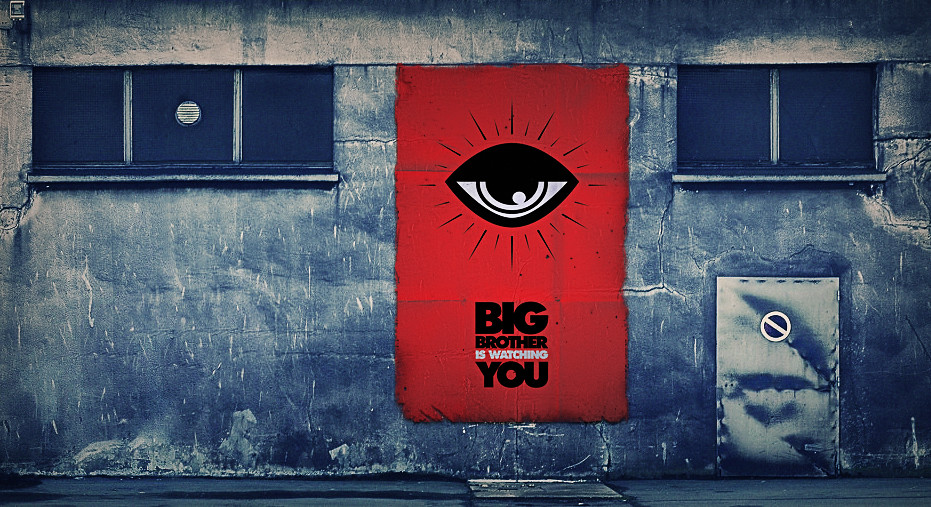
A 1984 book summary should never stop at Winston Smith, Big Brother, or George Orwell’s frightening vision of the future. The novel details what happens when a powerful system trains people to fear their own thoughts, distrust their own memories, and accept whatever version of truth it gives them.
That is what makes 1984 so uncomfortable to read. Orwell creates a world that feels cold, controlled, and suffocating. Beneath the darkness, he asks something deeply human: what remains of a person when truth, privacy, love, and language no longer feel safe?
The World Winston Smith Is Trapped In
Winston Smith lives in a world where the Party sees almost everything and controls almost everything. Rules, screens, slogans, fear, and the constant presence of Big Brother shape his life.
The Orwell Foundation notes that George Orwell’s Nineteen Eighty-Four was published in 1949. Decades later, the world Orwell imagined still feels disturbingly easy to understand.
Winston works at the Ministry of Truth, but the name itself reveals part of the horror. He does not protect truth. He rewrites the past so it matches whatever the Party wants people to believe today.
From the beginning, the book makes you feel Winston’s confinement. He does not only live under a political system. He lives inside a world where power edits reality itself.
Big Brother Is More Than a Symbol of Surveillance
One of the most famous lines from the novel is:
“Big Brother is watching you.”
The line works because it says so much with so little. It captures the fear that hangs over the entire book.
Big Brother is not just a face on a poster. He represents the feeling of being watched so completely that you begin to police yourself. Winston worries not only about what he says, but also about his expressions, his instincts, and the private thoughts that pass through his mind.
That is what makes the novel so unsettling. The Party does not simply demand obedience. It wants people to fear their own inner lives.
When Rewriting the Past Becomes a Form of Control
One of the most frightening parts of 1984 is Winston’s work rewriting history. Party workers change old records. They erase people who fall out of favor from photographs and documents. Yesterday’s truth can become today’s lie.
As you read those scenes, you feel how fragile memory becomes when power decides what people may remember.
This is where Orwell’s warning becomes sharper. When those in power rewrite the past whenever it becomes inconvenient, people lose the ability to argue from truth. They cannot point to evidence. They cannot trust records. Soon, they cannot even feel sure that their own memories matter.
Winston’s quiet desire to remember things correctly becomes a form of rebellion. In a world built on lies, memory itself becomes dangerous.
Newspeak and the Slow Death of Independent Thought
The Party’s control of language creates one of the most chilling ideas in the book. Newspeak does not simply offer a new vocabulary. It shrinks what people can think.
When words disappear, certain thoughts become harder to form. As language narrows, rebellion becomes harder to imagine.
That idea stays with you because Orwell understood the power of words. Language can help people tell the truth, name injustice, express love, confess fear, and defend freedom. But people can also twist language until others no longer know how to say what they mean.
This is one reason 1984 pairs so naturally with quotes. Orwell knew that words never remain neutral. They can protect truth, or they can help bury it.
Winston’s Rebellion Begins With Remembering
Winston is not a perfect hero, which makes him feel more human. He feels afraid, lonely, uncertain, and often powerless.
Still, his rebellion begins in a small and deeply personal way. He wants to remember. He wants to write. He wants to believe that truth exists even when the Party denies it.
One of the strongest lines from the novel says:
“Freedom is the freedom to say that two plus two make four.”
That quote matters because it reduces freedom to something basic and undeniable. Freedom begins with the right to say what is true. Not what feels convenient. Not what receives approval. Not what power demands. Just what is true.
For Winston, even that simple truth becomes dangerous.
Why 1984 Still Feels Uncomfortably Relevant
1984 still feels relevant because Orwell did not write only about one fictional government. He wrote about fear, control, truth, and the human need to think freely.
The book reminds us that societies can lose freedom in more than one way. Force can take it, but silence, confusion, rewritten history, and corrupted language can weaken it too.
Readers continue to return to Orwell’s words because his warnings feel dark but not empty. They remind us to pay attention to truth, language, memory, and the quiet ways people can learn to stop questioning.
For more memorable lines from the novel, read our collection of 1984 George Orwell quotes about truth, power, freedom, language, and control.
Final Thoughts
1984 is not an easy book, but Orwell makes it difficult for a reason. He leaves readers with the uneasy feeling that truth needs protection. We cannot simply take it for granted.
Winston’s story hurts because he does not feel larger than life. He feels ordinary, fragile, and deeply human. He wants love, memory, privacy, and truth. More than anything, he wants the freedom to think honestly in a world that punishes honesty.
That is why Orwell’s warning still matters. 1984 reminds us that truth, language, and independent thought are not small things. They help keep a person human.
Leave a Reply