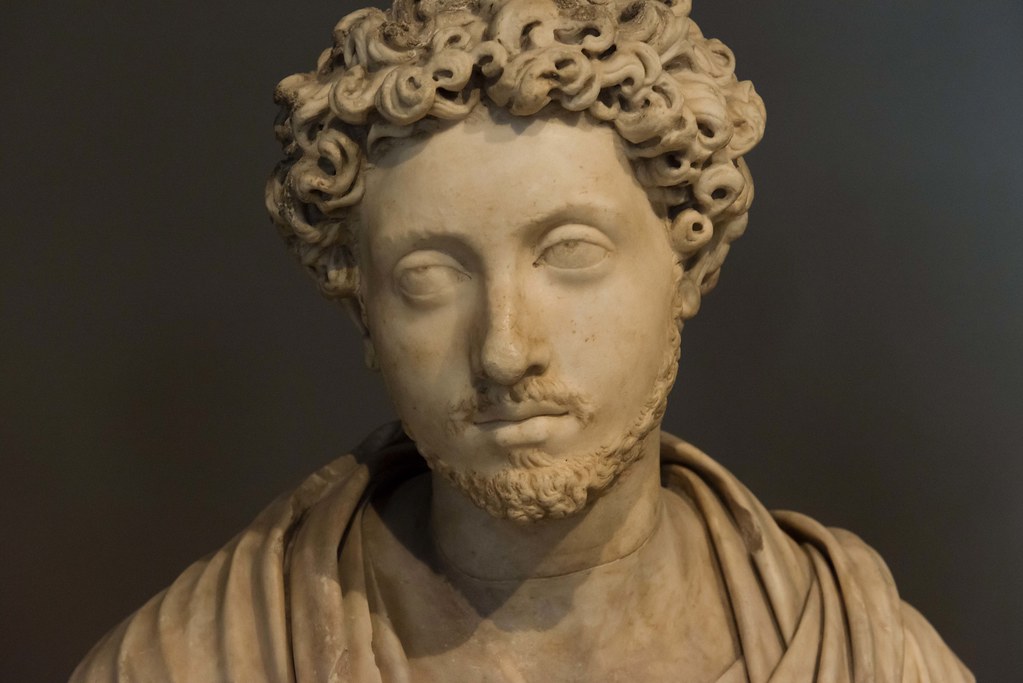
A Roman emperor who wrote about reason, self-control, and accepting fate might seem an unlikely guide to religious belief. Yet the question “Did Marcus Aurelius believe in God?” leads straight into the heart of his philosophy. His reflections often return to the gods and to his belief that human life belongs within a larger, ordered universe.
The short answer is yes, though his understanding of the divine grew from Roman religion and Stoic philosophy. Reading his words in that setting helps explain both his faith and the questions he continued to consider.
JUMP TO:
What Marcus Aurelius Said About the Gods
Marcus gives a direct answer near the end of Meditations. Responding to people who question his worship, he explains that his belief rests on what he sees as the gods’ activity in his life.
“Thus then with respect to the gods, from what I constantly experience of their power, from this I comprehend that they exist, and I venerate them.”Marcus Aurelius, Meditations, Book XII, Translated by George Long. Excerpt.
This is a personal statement of belief. Marcus describes worship rooted in experience, suggesting that the divine was more than a familiar phrase in his writing.
His gratitude appears elsewhere as well. In Book I, he thanks the gods for the people, guidance, and events that helped shape his life. Our quotes from Marcus Aurelius on life will show how closely these concerns connect with his thoughts on character and duty.
To answer whether Marcus Aurelius believed in God fully, however, we need to understand what those religious terms meant to him. His references to God, gods, and nature belong to a world of ideas that differs from the one many readers bring to the page.
What God Meant in His Stoic Philosophy
For Marcus, the universe had an order in which each part belonged to a greater whole. Stoicism understood divine reason as active throughout nature, giving structure to the world and connecting human beings with one another.
The term “logos” is often used for this guiding reason. In plain language, it refers to the reason that orders the universe, within which our own ability to reason has a place.
Marcus expresses that connection in a passage from Book VII.
“For there is one universe made up of all things, and one god who pervades all things, and one substance, and one law, [one] common reason in all intelligent animals, and one truth; if indeed there is also one perfection for all animals which are of the same stock and participate in the same reason.”Marcus Aurelius, Meditations, Book VII, Translated by George Long. Excerpt.
The central idea is unity. Marcus sees human life within a connected world, where shared reason gives us duties toward other people.
His reference to “one god” therefore needs its surrounding context. Here, he describes a divine presence throughout the universe, while elsewhere he speaks freely of multiple gods. The Internet Encyclopedia of Philosophy explains this Stoic outlook through the idea of the universe as a single living whole identified with God.
This also helps explain “providence,” another important term in his beliefs. Providence means that events belong to a larger divine order, even when a person struggles to understand them.
For Marcus, trusting that order helped him meet life’s challenges with courage and fairness.
Was Marcus Aurelius a Christian?
Marcus Aurelius belonged to the religious world of ancient Rome and followed Stoic philosophy. His references to God should be understood within that setting, rather than read as evidence that he held Christian beliefs.
Some of his moral concerns sound familiar to Christian readers. Patience, generosity, and concern for others appear in both traditions, but shared values can rest on different beliefs about God.
The passage from Book VII places God within the life and order of the universe. It offers no basis for linking Marcus’s beliefs with Christian teachings about Jesus, salvation, or the resurrection.
His letters provide a more personal glimpse of his religious practice. In a birthday letter to Fronto, he calls on several gods and asks Aesculapius to protect his teacher’s health. That loving prayer helps place his beliefs in the Roman religious world he knew.
Readers can find meaning in his work while keeping those differences in view. Understanding Marcus on his own terms makes reading his philosophy more rewarding.
Why He Considered Providence or Atoms
The clearest challenge to this picture comes from Marcus himself. At several points in Meditations, he considers two explanations of the world, one governed by providence and another arising from the movement of atoms.
The contrast draws on a disagreement between ancient schools of philosophy. Stoics understood the universe as divinely ordered. Epicureans explained its workings through atoms and empty space, without gods directing human affairs.
Why would someone who believed in providence keep returning to the alternative? Scholars have offered different readings. These include doubts about the physical world and a practical exercise in living well under either explanation.
The Stanford Encyclopedia of Philosophy discusses these views in its section on providence and atoms. It also stresses the need to read Marcus’s remarks as part of his effort to guide his own responses to life.
That purpose gives the passages a different emphasis. Marcus repeatedly asks how he should act within the world he encounters, even when its workings remain difficult to grasp.
When considering “Did Marcus Aurelius believe in God?”, these alternatives deserve attention alongside his clear statements of belief. They reveal the questions he worked through, rather than settling the matter through a single modern label.
How His Beliefs Shaped Prayer and Daily Life
Marcus’s reflections on prayer bring his religious beliefs into the practical concerns of an ordinary day. In Book IX, he asks whether people might pray for help with their fears and desires, instead of focusing entirely on changing what happens around them.
He then considers a possible objection. If our responses already lie within our power, what place remains for help from the gods?
“And who has told thee that the gods do not aid us even in the things which are in our power? Begin, then, to pray for such things, and thou wilt see.”Marcus Aurelius, Meditations, Book IX, Translated by George Long. Excerpt.
Divine help and personal effort can work together in this passage. Marcus invites prayer for the strength to respond well, while reminding us that we remain responsible for our choices.
A modern example might involve waiting for an important decision that rests with someone else. Alongside hoping for a good outcome, a person could pray for patience during the wait and the wisdom to respond well when the answer arrives.
The example reflects the direction of Marcus’s advice. Prayer turns toward the character we bring to uncertainty, as well as the events we hope to change.
His beliefs also shaped his view of other people. If human beings share reason and belong to the same larger whole, how we treat one another matters. The divine order he describes asks something of him in the next conversation or decision.
This gives his faith a demanding practical purpose. Respect for the gods belongs beside the effort to act justly, including when anger or disappointment makes that effort difficult.
Understanding His Faith in Context
So, did Marcus Aurelius believe in God? His writings support a clear yes, understood through his belief in the gods and the divine reason governing nature. His Stoic outlook helped him make sense of those beliefs, while his prayers and gratitude gave them a personal voice.
The questions in Meditations add depth to that picture. Marcus continued to examine how the world worked and what his place within it required of him. Through those reflections, he returned to a task that readers can still recognize, meeting an uncertain life with care for others and responsibility for their own actions.
Leave a Reply