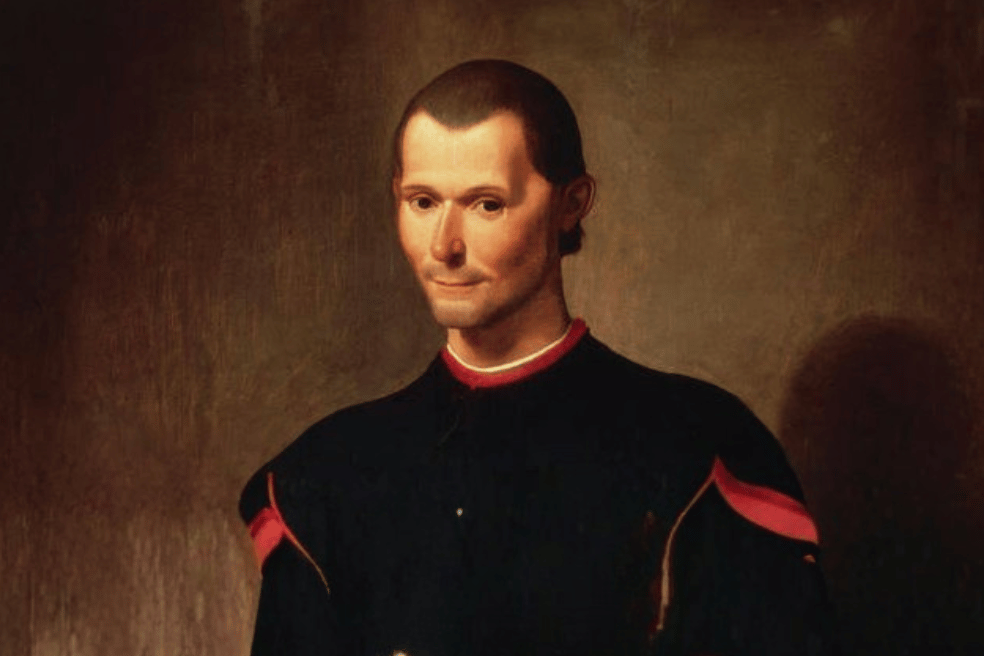
Machiavelli has spent five centuries being blamed for almost every ruthless piece of advice about politics, including several things he never actually said. Yet the most revealing Machiavelli quotes on power are more complicated than the internet version of him suggests.
He wrote about fear, reputation, loyalty, deception, judgment, and the uncomfortable gap between how leaders should behave and how power often works in practice.
Some of his conclusions are harsh. Others sound surprisingly familiar in an age of personal brands, carefully managed reputations, and leaders surrounded by people who rarely tell them no.
JUMP TO:
- Who Was Machiavelli, and Why Was He So Interested in Power?
- Machiavelli Quotes on Power and Appearance
- Fear, Love, and Loyalty
- What Good Leaders Notice
- Power Needs the Fox and Lion
- Machiavelli Quotes on Human Nature
- Famous Machiavelli Quotes He Never Actually Said
- Was Machiavelli Really as Ruthless as His Reputation?
- The Machiavelli Quote That Explains Him Best
- Why Machiavelli’s Ideas About Power Remain Uncomfortable
Who Was Machiavelli, and Why Was He So Interested in Power?
Niccolò Machiavelli was a Florentine diplomat and political official who spent years observing unstable governments, shifting alliances, wars, and powerful families competing for control of Renaissance Italy.
After the Medici returned to power in Florence in 1512, he lost his government position, was imprisoned and tortured on suspicion of conspiracy, and then withdrew from public life. The Prince followed in 1513.
That background helps explain the book’s unsentimental tone. Machiavelli was less interested in designing an ideal ruler than in asking what allows a ruler to gain power, keep it, and survive when circumstances change. The Stanford Encyclopedia of Philosophy describes The Prince as a work of political realism shaped by Machiavelli’s direct experience of public affairs.
Translations of The Prince vary, so some familiar quotes appear with slightly different wording. The ideas, however, are unmistakably Machiavelli.
Machiavelli Quotes on Power and Appearance
Power is not only about what a leader can do. Machiavelli understood that people also respond to what they believe a leader is.
Five hundred years before social media made reputation measurable in likes and approval ratings, he was already paying attention to image.
1. Appearance Shapes Reputation
Every one sees what you appear to be, few really know what you are.
Niccolò Machiavelli, The Prince, Chapter XVIII
Machiavelli knew most people judge leaders from a distance. They see speeches, decisions, confidence, and public behavior, while only a small circle sees what happens behind closed doors.
The modern version is easy to recognize. A polished public image can shape how we view a CEO, public figure, or brand long before we know whether the reality matches the presentation.
2. People Trust What They See
Men judge generally more by the eye than by the hand.
Niccolò Machiavelli, The Prince, Chapter XVIII
The language is old, but the psychology is not. Visible signals often influence judgment faster than deeper evidence.
Credentials, confidence, presentation, status, and reputation all create impressions. Machiavelli’s warning is not that appearances are meaningless. It is that appearances can become powerful enough to compete with reality.
3. Creating Power Has Risks
He who is the cause of another becoming powerful is ruined.
Niccolò Machiavelli, The Prince, Chapter III
Helping someone gain influence can change the balance between you. Once the other person becomes stronger, gratitude is not guaranteed.
The idea still applies beyond princes and kingdoms. Business alliances, political coalitions, and even workplace partnerships can shift once one side no longer needs the other. Machiavelli expects interests to change with power.
4. Popular Support Matters
The best fortress is to be found in the love of the people.
Niccolò Machiavelli, The Prince, Chapter XX
This is not the Machiavelli most people expect.
A ruler can build walls and collect weapons, but Machiavelli argues that none of those protections is enough if the population deeply hates the person in charge. Power needs some form of public acceptance to remain secure.
In modern leadership, the principle is less dramatic but familiar. Authority on paper is useful. Trust makes it much harder to replace.
Fear, Love, and Loyalty
No discussion of Machiavelli quotes about power can avoid his most famous question: is it better to be loved or feared?
The answer is usually shortened online. Machiavelli’s actual argument is more careful.
5. Feared or Loved?
It is much safer to be feared than loved.
Niccolò Machiavelli, The Prince, Chapter XVII
This is the line everyone remembers. What gets left out is that Machiavelli first says a ruler should ideally be both loved and feared.
His preference for fear appears only when the two cannot exist together. Why? Love depends on another person’s loyalty, while fear gives the ruler more control over the consequences of disobedience.
It is cold reasoning, but it is reasoning rather than a celebration of cruelty.
6. Fear Cannot Become Hatred
If he does not gain love, he at any rate avoids hatred.
Niccolò Machiavelli, The Prince, Chapter XVII
This qualification changes the famous fear argument considerably.
Machiavelli does not recommend terrifying people until they despise you. Hatred makes power unstable because enough resentment eventually creates resistance.
In modern terms, a leader may command compliance through authority, but constant humiliation, unfairness, or abuse creates a different problem entirely.
7. Loyalty Has Conditions
Men are ungrateful, fickle, false, cowardly, covetous.
Niccolò Machiavelli, The Prince, Chapter XVII
Machiavelli did not have an especially optimistic view of human nature.
He believed loyalty often lasts while circumstances remain easy. Pressure reveals whether people are committed to a leader or simply enjoying what the relationship provides.
That sounds cynical because it is. Still, anyone who has watched alliances disappear once money, status, or opportunity changed may recognize the logic.
8. Bought Loyalty Is Fragile
Friendships that are won by awards… cannot be depended upon in time of adversity.
Niccolò Machiavelli, The Prince, Chapter XVII
A relationship built entirely on rewards survives only while the rewards continue.
Machiavelli was talking about political loyalty, but the principle applies neatly to organizations too. If people stay solely because of perks, access, or personal advantage, trouble begins when someone else offers more.
What Good Leaders Notice
Machiavelli’s reputation makes it easy to imagine The Prince as one long guide to manipulation. Yet some of his sharpest observations are about judgment.
Power becomes dangerous when the person holding it stops receiving accurate information.
9. Look at the Team
The first method for estimating the intelligence of a ruler is to look at the men he has around him.
Niccolò Machiavelli, The Prince, Chapter XXII
A leader’s inner circle tells you a great deal.
Capable advisers suggest the leader can recognize talent and tolerate expertise. A room full of flatterers suggests something else.
The same test works remarkably well today. You can learn plenty about a manager by looking at who gets promoted, who gets ignored, and whether disagreement is treated as useful or disloyal.
10. Flattery Is Expensive
There is no other way to guard yourself against flattery than by making men understand that telling you the truth will not offend you.
Niccolò Machiavelli, The Prince, Chapter XXIII
Power tends to attract people who know what the powerful person wants to hear.
Machiavelli’s solution is simple and difficult: create conditions where honest disagreement is safe. Otherwise, advisers learn to protect themselves instead of correcting the leader.
A meeting where everyone agrees immediately may feel efficient. It may also mean nobody wants to be the person who mentions the obvious problem.
11. Reputation Needs Attention
A prince ought, above all things, always endeavour in every action to gain for himself the reputation of being a great and remarkable man.
Niccolò Machiavelli, The Prince, Chapter XXI
Leadership is partly performance in Machiavelli’s world.
People respond not only to results but to the story surrounding those results. A ruler therefore has to think about how decisions shape reputation.
Modern leaders may dislike the theatrical side of authority, yet ignoring perception does not make perception disappear.
12. Neutrality Has a Cost
A prince is also respected when he is either a true friend or a downright enemy.
Niccolò Machiavelli, The Prince, Chapter XXI
Machiavelli distrusts leaders who refuse to commit when the stakes are high.
He argues that clear allegiance earns more respect than endless neutrality. That does not mean rushing into every conflict. Instead, he is warning that refusing to choose can itself become a choice, especially when allies are watching.
Power Needs the Fox and Lion
One of Machiavelli’s most memorable ideas comes from two animals. The lion represents force. The fox represents cunning. A successful ruler, he argues, needs both.
Readers familiar with our Art of War quotes by Sun Tzu may recognize a similar interest in choosing the right strategy for the situation, though Machiavelli’s language is distinctly his own.
13. Strength Misses Traps
The lion cannot protect himself from traps.
Niccolò Machiavelli, The Prince, Chapter XVIII
Raw strength solves certain problems extremely well, but it also creates blind spots.
A powerful competitor can still be outmaneuvered. A strong leader can still misread incentives, alliances, or hidden risks. Machiavelli’s lion fails because force cannot solve a problem it does not see.
14. Cleverness Has Limits
The fox cannot defend himself from wolves.
Niccolò Machiavelli, The Prince, Chapter XVIII
Cunning alone is no safer.
You can spot every trap in the room and still lack the ability to stop someone stronger from acting against you. Machiavelli therefore refuses to choose between intelligence and strength.
Strategy needs both awareness and the ability to act.
15. Use Both Instincts
This may be the best summary of Machiavellian strategy.
Good leaders adjust their approach to the problem in front of them. Some situations reward direct action, but others require patience, information, negotiation, or the ability to recognize what someone else is trying to do.
The person who knows only one way to exercise power eventually meets a problem that requires another.
16. Fortune Leaves Some Choice
Fortune is the arbiter of one-half of our actions.
Niccolò Machiavelli, The Prince, Chapter XXV
Machiavelli accepts that luck matters.
Unexpected events can wreck good plans and reward mediocre ones. Yet he refuses to give fortune complete control, arguing that people still have room to prepare, adapt, and respond.
It is a useful middle ground between “everything happens for a reason” and “nothing is under your control.” Circumstances matter, and so does what you do with them.
Machiavelli Quotes on Human Nature
Much of Machiavelli’s political theory grows from a simple assumption: people do not always behave according to their highest principles.
They respond to fear, advantage, reputation, property, pressure, and opportunity. His conclusions can feel severe because his starting point is already skeptical.
17. Deception Finds an Audience
He who seeks to deceive will always find someone who will allow himself to be deceived.
Niccolò Machiavelli, The Prince, Chapter XVIII
Machiavelli thinks deception works partly because people often want to believe what suits the moment.
That insight feels uncomfortably current. Scams, misinformation, weak promises, and too-good-to-be-true offers rarely survive through cleverness alone. They also depend on an audience willing to accept the story.
18. People Remember Losses
Men sooner forget the death of their father than the loss of their patrimony.
Niccolò Machiavelli, The Prince, Chapter XVII
The comparison is deliberately harsh.
Machiavelli’s larger point is that people are intensely protective of property and material interests. A ruler who threatens those interests risks creating resentment that personal fear alone may not control.
It is not one of his warmer observations about humanity, and he does not have many of those.
19. Rewards Work Differently
Benefits should be granted little by little, so that they may be better enjoyed.
Niccolò Machiavelli, The Prince, Chapter VIII
Machiavelli understands that timing changes how people experience reward.
A single benefit can be forgotten quickly. Smaller benefits spread over time keep reminding people who provided them.
Modern marketing departments may prefer the term “engagement strategy,” but Machiavelli had already noticed the principle.
Famous Machiavelli Quotes He Never Actually Said
Machiavelli is so closely associated with ruthlessness that the internet has apparently decided he should receive credit for any sufficiently cynical sentence.
Several famous “Machiavelli quotes” are not reliably found in his works.
“The ends justify the means.”
This is probably the most famous example. The sentence summarizes one interpretation of Machiavelli’s political thought, but he did not write those exact words in The Prince. Wikiquote lists it as his most common misattribution.
“It is double pleasure to deceive the deceiver.”
Also widely circulated, but not reliably Machiavelli. Wikiquote traces a similar idea to La Fontaine rather than The Prince.
“Politics have no relation to morals.”
The line certainly sounds Machiavellian, but the attribution lacks a reliable source. The same problem applies to “Never attempt to win by force what can be won by deception.”
The distinction matters. Machiavelli wrote enough provocative things on his own, but there is no need to improve his résumé for him.
Was Machiavelli Really as Ruthless as His Reputation?
Yes and no.
Machiavelli unquestionably accepts political actions that many modern readers find disturbing. He discusses force, deception, broken promises, and calculated cruelty with a level of calm that helped turn “Machiavellian” into an adjective.
Still, The Prince is not simply an instruction manual for enjoying cruelty. His concern is political survival and the maintenance of the state. Even when he argues that fear can be safer than love, he warns rulers against becoming hated. When discussing harsh actions, he repeatedly connects them to stability and necessity rather than cruelty for its own sake.
Scholars have debated his moral position for centuries. Some read him as deeply amoral, while others see a political realist separating the demands of public power from ordinary private morality. The disagreement is part of what keeps The Prince interesting.
The Machiavelli Quote That Explains Him Best
If I had to choose one of these Machiavelli quotes on power to represent his thinking, I would go back to the fox and the lion.
One must therefore be a fox to recognize traps, and a lion to frighten wolves.
Niccolò Machiavelli
It is more revealing than “better to be feared than loved” because it captures Machiavelli’s obsession with adaptability.
Power is not simply strength. It is knowing when strength works, when intelligence matters more, and when circumstances require you to change course.
Someone who relies only on force becomes predictable, and someone who relies only on cleverness eventually meets a problem that cannot be talked around. Machiavelli wants the ruler capable of both.
Why Machiavelli’s Ideas About Power Remain Uncomfortable
The strongest Machiavelli quotes on power remain provocative because they force a distinction we would often rather avoid: how power ought to behave is not always the same as how power actually behaves.
People respond to incentives. Leaders manage reputation. Advisers flatter. Alliances shift. Public perception can matter as much as private character, and good intentions do not automatically produce political success.
None of this means Machiavelli has to be right about every solution. His darker assumptions about human nature deserve criticism, and some of his recommendations belong firmly to the violent politics of his era.
Yet the questions underneath them remain useful.
Who tells a powerful person the truth? How much does reputation shape authority? What happens when loyalty is built only on reward? When should a leader rely on strength, and when should they recognize the trap before walking into it?
Machiavelli’s real talent was not making power look noble. It was refusing to pretend that power always is.
Leave a Reply