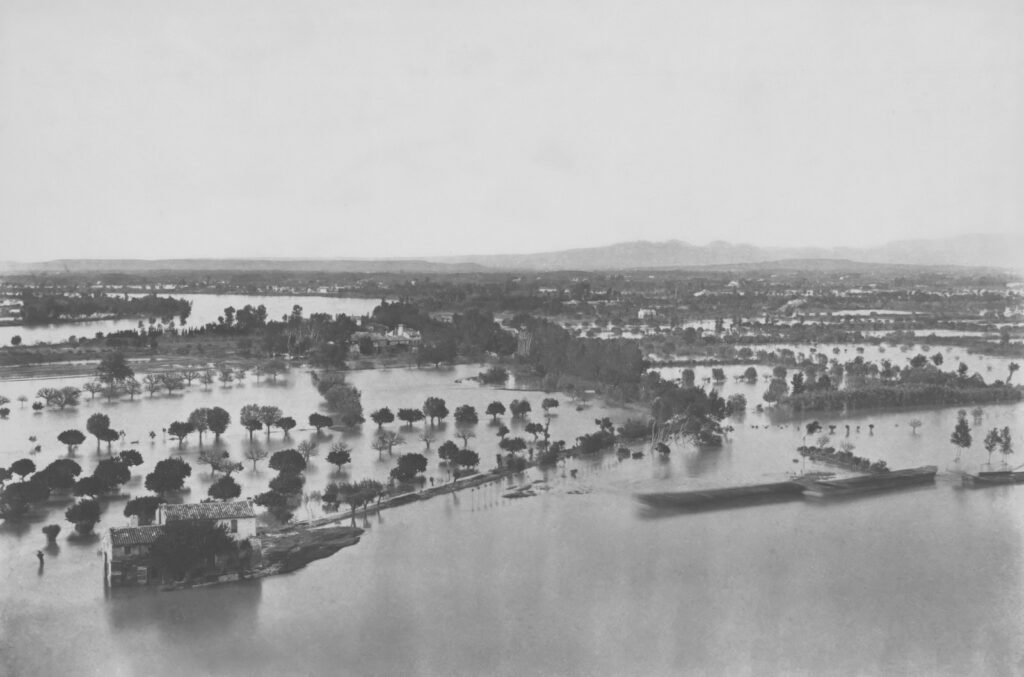
Some flood footage is so overwhelming that the word biblical stops feeling like a cliché. “As in the days of Noah” means that people will carry on with ordinary life, unaware of approaching judgment, before the coming of the Son of Man, much as they did before Noah’s flood.
Jesus uses the comparison in Matthew 24:37–39. Genesis adds another layer by describing Noah’s generation as violent and corrupt. Together, the passages explain why the days of Noah remain such a powerful warning.
JUMP TO:
- Where Does “As in the Days of Noah” Appear in the Bible?
- What Were the Days of Noah Actually Like?
- The Nepal-Tibet Flood Makes the Image Hard to Ignore
- Why Ancient Cultures Remembered Great Floods
- Was Jesus Talking About Wickedness or Sudden Judgment?
- What About the Nephilim?
- Why Does Jesus Also Mention the Days of Lot?
- Are We Living “As in the Days of Noah” Today?
- Will God Flood the Earth Again?
- What Is the Real Warning of the Days of Noah?
- Final Thoughts
Where Does “As in the Days of Noah” Appear in the Bible?
The phrase comes from Matthew 24, during Jesus’s teaching about His return.
But as the days of Noah were, so shall also the coming of the Son of man be.
Matthew 24:37 (KJV)
Jesus then explains the comparison. Before the flood, people were eating, drinking, marrying, and planning their lives. Noah entered the ark, yet the people around him remained unaware of what was coming.
The same warning appears in Luke 17:26: “Just as it was in the days of Noah, so will it be in the days of the Son of Man.”
These are among the powerful Bible verses that stay with us because the image is so easy to understand. Life can feel completely normal right up until it does not.
What Were the Days of Noah Actually Like?
To understand Jesus’s comparison, we also need to return to Genesis.
Genesis 6 describes a world filled with violence and corruption. Human wickedness had grown so serious that God announced judgment through a flood.
God Warns Noah
If you are looking for a Bible verse about flooding, Genesis 6:17 gives one of the clearest warnings:
And, behold, I, even I, do bring a flood of waters upon the earth, to destroy all flesh, wherein is the breath of life, from under heaven; and every thing that is in the earth shall die.
Genesis 6:17 (KJV)
Noah receives the warning before the disaster arrives. He builds the ark while the world around him continues as before.
Genesis also describes Noah as a man who “walked with God.” He does not control what the rest of his generation chooses, but he takes the warning seriously.
The Waters Break Loose
When the flood finally begins, Genesis uses striking language.
In the six hundredth year of Noah’s life, in the second month, the seventeenth day of the month, the same day were all the fountains of the great deep broken up, and the windows of heaven were opened.
Genesis 7:11 (KJV)
The account presents more than a long rainstorm. Water seems to break loose from every direction. The familiar landscape disappears beneath it.
Those words can feel distant when we read them thousands of years later. Then a modern disaster reminds us what fast-moving water can actually do.
The Nepal-Tibet Flood Makes the Image Hard to Ignore
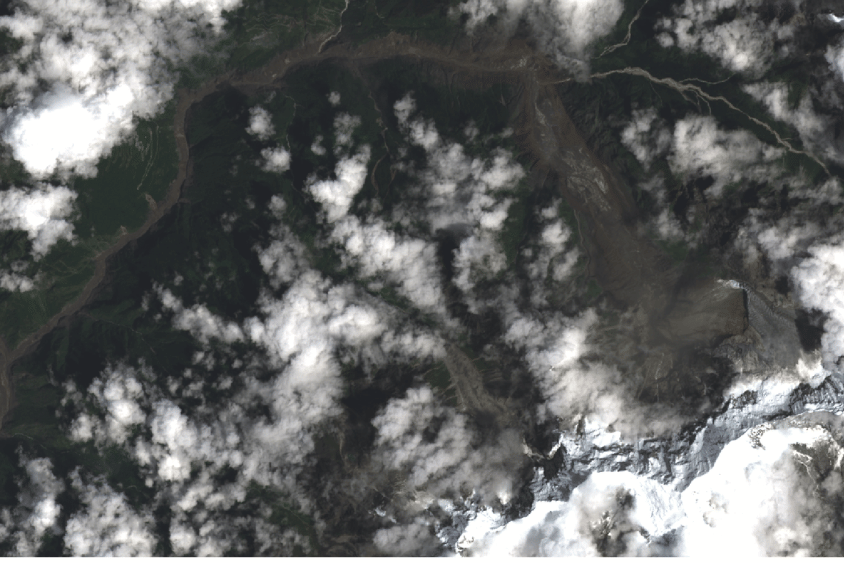
In August 2026, a catastrophic flood tore through the Himalayan border region between Nepal and Tibet. More than 390 people were reported dead, while many others remained missing as rescue teams searched valleys buried beneath mud, rock, and debris.
The disaster reached far beyond local communities. The region attracts trekkers, pilgrims, and tourists from around the world, and foreign visitors from countries including the United States, China, India, Australia, the United Kingdom, and Canada were among those caught in the crisis.
The scale is difficult to process. People had traveled across the world to hike, make a pilgrimage, visit family, or simply experience the Himalayas. Local residents were going about ordinary lives. Then, within minutes, water, mud, rock, and ice swept through valleys, destroying homes, roads, bridges, and entire settlements.
Watching the footage, biblical is the word that comes to mind. Not because this flood proves we are witnessing another Noah-like event, but because it shows how quickly water can transform a familiar world.
Disasters of this size also help explain why flood stories survived for generations. When catastrophe changes the landscape itself, people remember the day their world changed.
The Flood Overwhelms the Land
Genesis describes water rising beyond the boundaries people would normally trust:
Fifteen cubits upward did the waters prevail; and the mountains were covered.
Genesis 7:20 (KJV)
It is difficult to watch an entire river valley change within minutes and not understand why floods became such powerful symbols of judgment, chaos, and human helplessness.
A house feels permanent until water moves it. A road feels solid until it disappears. People make plans because tomorrow normally resembles today. Then, sometimes, it does not.
Why Ancient Cultures Remembered Great Floods
The Bible is not the only ancient source with a major flood story.
Mesopotamian literature includes famous flood accounts in Atrahasis and the Epic of Gilgamesh. Other societies also passed down stories about destructive floods, disappearing lands, volcanic eruptions, and other natural disasters.
Why do such stories survive? One possibility is surprisingly simple. People, no matter the era, remember catastrophes.
A disaster that destroys homes, kills relatives, changes a coastline, or wipes out an entire settlement becomes more than bad weather. Survivors tell their children what happened. Their children tell the next generation. Over time, the memory may grow into history, legend, religious tradition, or some mixture of all three.
Researchers have even studied cases where old oral traditions appear to preserve memories of real geological events. Smithsonian Magazine has explored examples in which ancient stories may reflect floods, volcanic eruptions, vanished islands, and other natural hazards witnessed by earlier communities.
None of this proves that every ancient flood story describes one worldwide event. It also does not settle the historical or geological questions surrounding Genesis, but it does show why catastrophic floods are so difficult for human cultures to forget.
When water has erased the world you knew, you tell the story.
Was Jesus Talking About Wickedness or Sudden Judgment?
This is where interpretations of “as in the days of Noah” often split.
Genesis clearly describes Noah’s generation as corrupt and violent. Because of this, many Christians understand Jesus to be warning that similar moral conditions will appear before His return.
There is a biblical basis for connecting Noah’s days with wickedness. However, look closely at what Jesus actually emphasizes in Matthew 24. He does not say, “They were violent; therefore watch for violence.”
Instead, He talks about people eating, drinking, marrying, and giving in marriage. None of those things are sinful.
Jesus Points to Suddenness
The key line comes in the next verse:
And knew not until the flood came, and took them all away; so shall also the coming of the Son of man be.
Matthew 24:39 (KJV)
The shock lies in the normality. People were having dinner. Couples were planning marriages. Families were making plans for next month. Then the flood came.
So Genesis gives us the moral condition of Noah’s world, while Matthew places special emphasis on unawareness and sudden judgment.
Both ideas belong to the story, but we should not confuse them.
What About the Nephilim?
Genesis 6 also mentions the Nephilim shortly before the flood account, which has produced centuries of debate.
Some interpreters believe the “sons of God” in Genesis 6:1–4 were fallen spiritual beings. Others understand them as powerful human rulers or members of another human line. Those debates can be fascinating, but Matthew 24 does not mention the Nephilim.
Jesus does not tell His followers to watch for giants or fallen angels as the sign that the days of Noah have returned. His stated comparison focuses on people living normally while remaining unaware of what is approaching.
For this article, that is the safer place to keep our attention.
Why Does Jesus Also Mention the Days of Lot?
Luke 17 gives us another clue. After comparing His future coming with Noah’s flood, Jesus immediately turns to Lot.
People in Lot’s day were eating, drinking, buying, selling, planting, and building. Then judgment came upon Sodom. Again, notice the activities Jesus lists.
Buying is not sinful. Planting crops is not sinful. Building a house is not sinful. His point is not that ordinary life is evil. The danger is becoming so absorbed in ordinary life that we begin to treat it as permanent.
Noah’s neighbors had routines. So did Lot’s. Judgment interrupted both.
Are We Living “As in the Days of Noah” Today?
Every generation that reads Matthew 24 eventually asks this question.
We can certainly find things in modern society that resemble Genesis 6. Violence exists. Corruption exists. People can become indifferent to God and deeply absorbed in daily life.
The recent Himalayan flood also reminds us how suddenly circumstances can change.
However, Jesus warns against turning watchfulness into date-setting. Just before the comparison with Noah, He says that no one knows the day or hour. So the point of the passage is not to examine every earthquake, war, flood, or headline and announce that we have solved the prophetic calendar.
The point is readiness.
A natural disaster can remind us of that truth without becoming proof that a particular prophecy has just been fulfilled.
Will God Flood the Earth Again?
The terrible scale of modern floods can also raise another question: Does the Bible say God will destroy the earth with water again? Genesis gives a direct answer. After Noah leaves the ark, God establishes a covenant with him and with every living creature.
God Makes a Covenant
And I will establish my covenant with you, neither shall all flesh be cut off any more by the waters of a flood; neither shall there any more be a flood to destroy the earth.
Genesis 9:11 (KJV)
The rainbow becomes the sign of that covenant. So when enormous floods occur today, Christians do not need to interpret them as the beginning of another Noah-style destruction of the earth.
Floods can still destroy cities and take thousands of lives. They can leave scenes that look almost unimaginable. But Genesis ends the flood story not only with destruction. It ends with a promise.
What Is the Real Warning of the Days of Noah?
The phrase “as in the days of Noah” often attracts dramatic theories about the end times. Yet Jesus gives us a warning that is both simpler and more uncomfortable. Do not assume that because today feels normal, tomorrow is guaranteed to look the same.
The people before the flood still had meals to prepare and weddings to plan. The people in Lot’s day still bought land and planted crops. Life felt ordinary. Jesus tells His followers to stay awake spiritually even while doing ordinary things.
That does not mean living in fear of every disaster. It means refusing to let routine convince us that the things we can see are the only things that matter.
Noah prepared because he took God’s warning seriously, while the rest kept living as though nothing could interrupt their plans.
Final Thoughts
The “as in the days of Noah” meaning is less about predicting the next catastrophe and more about recognizing how easily ordinary life can make us feel secure. Genesis describes a violent and corrupt generation, while Jesus stresses how unaware people remained until the flood arrived.
Modern disasters can make that image painfully real without becoming prophecy themselves.
If Noah’s generation was caught off guard because life still felt normal, what might Jesus be asking us to notice while we go about ours?
*Scripture quotations are from the King James Version (KJV).
Leave a Reply