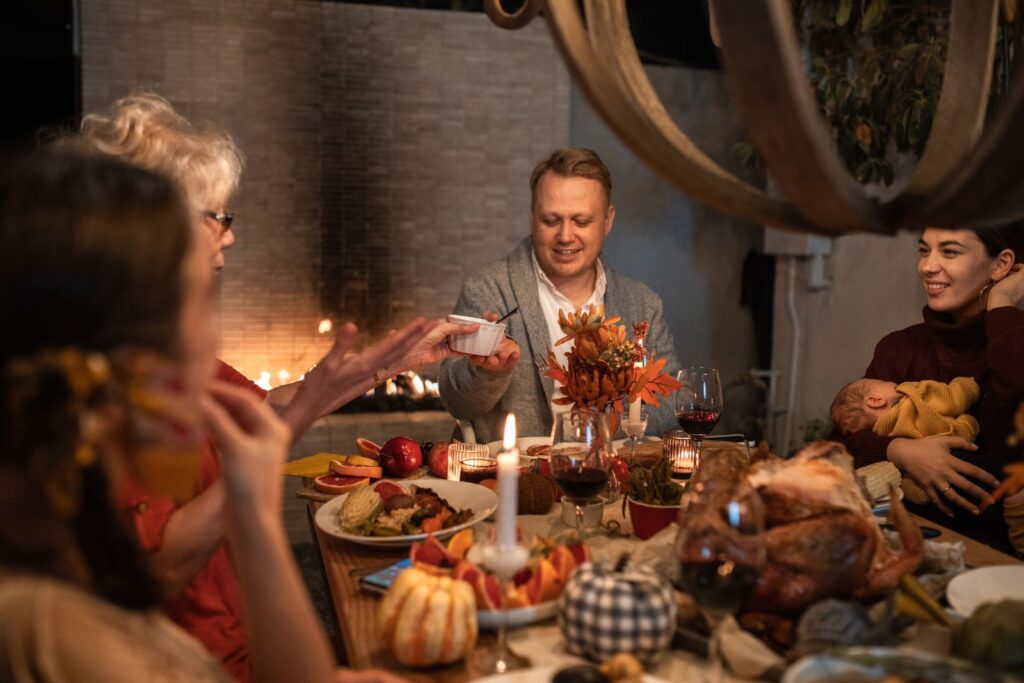
A shared meal gives us a reason to gather, but the true meaning of Thanksgiving reaches into how we care for one another. For many people, the holiday offers a chance to recognize what has helped them through the year and respond with generosity. Learning its history adds depth to that gratitude and helps us understand why the day means different things to different people.
We can cherish the people around our table while looking honestly at the past. A thoughtful Thanksgiving makes room for both, including those whose year has brought more hardship than joy.
JUMP TO:
What Does Thanksgiving Mean?
Thanksgiving is the act of expressing gratitude, often to God, for what we have received. In the United States, the holiday brings together traditions of prayer, harvest celebrations, and family gatherings, though people observe it in different ways.
Some families begin with grace before the meal, while others share what they have appreciated during the year. Making a favorite recipe or welcoming someone who would otherwise spend the day alone can also give thanks a practical form.
Our collection of Thanksgiving quotes offers words from literature for moments when appreciation is easier to feel than to express. A passage can begin the conversation, while a personal memory gives it warmth.
Understanding the holiday also means looking beyond the familiar story of a single meal. Its history developed over centuries, bringing together events that were not originally one tradition.
The History Behind Thanksgiving
The history behind Thanksgiving includes Native traditions of giving thanks, colonial gatherings, and later efforts to create a national holiday. Keeping these developments distinct helps explain how the day took its present form.
Giving Thanks Before Plymouth
The Wampanoag practiced daily and seasonal traditions of giving thanks long before English settlers arrived. Gratitude was already part of their relationship with the land and the food that sustained their communities.
The Smithsonian’s account of Native perspectives on Thanksgiving explains why this history belongs in the story. Beginning with the Mayflower overlooks people whose lives and traditions were established long before 1620.
Sharing the Harvest
In autumn 1621, English colonists at Plymouth held a harvest celebration attended by the Wampanoag leader Ousamequin, also known as Massasoit, and about 90 men. Edward Winslow’s surviving account describes three days of feasting and records that Native participants brought five deer.
He closed his description with these words:
And although it be not always so plentiful as it was at this time with us, yet by the goodness of God, we are so far from want that we often wish you partakers of our plenty.Edward Winslow, letter dated 1621, published in Mourt’s Relation in 1622, modern-spelling transcription.
Winslow expresses relief after scarcity and a wish that readers in England could share the abundance. His account offers one colonist’s view, rather than a full explanation of what the gathering meant to everyone present.
Becoming a National Holiday
In 1789, George Washington proclaimed a day of public thanksgiving under the new Constitution. Later presidents chose different dates, so it was not yet the regular November holiday we know today.
Writer and editor Sarah Josepha Hale later campaigned for a shared national observance. Her September 1863 letter to Abraham Lincoln helped persuade him to proclaim a day of thanksgiving the following month.
Lincoln called for the last Thursday in November to be a day of
. Much later, after disagreement over Franklin D. Roosevelt’s decision to move the holiday, Congress passed a law in 1941 establishing the fourth Thursday in November as the federal Thanksgiving holiday.
Why Wampanoag Perspectives Belong in the Story
The familiar image of Pilgrims and Native people sharing a friendly meal captures only a small part of a longer history. On its own, it can suggest that the gathering led to lasting peace.
The Smithsonian explains that later versions of the “first Thanksgiving” story often left out Wampanoag voices. A fuller account includes the harm caused by colonization and recognizes Native people as living communities with their own histories.
For some Indigenous people, Thanksgiving is a day of mourning. United American Indians of New England has organized a National Day of Mourning since 1970, after Wamsutta Frank James was prevented from giving his planned speech at a public celebration.
Native people do not all approach the holiday in the same way. Listening to their views helps us understand experiences beyond our own while leaving space for the traditions we hold dear.
We can appreciate a family gathering and acknowledge that the national story has often been incomplete. Learning more gives us a chance to celebrate with greater care.
Gratitude When Life Has Been Difficult
Thanksgiving can feel complicated after a year of illness, loss, or money worries. Being asked to name your blessings may be welcome, but it can also hurt when the person you most want beside you is missing.
Lincoln issued his 1863 proclamation while the Civil War was still underway. After describing the blessings he believed the nation had received, he wrote:
It has seemed to me fit and proper that they should be solemnly, reverently, and gratefully acknowledged as with one heart and one voice by the whole American people.Abraham Lincoln, Thanksgiving Proclamation, October 3, 1863
His appeal for gratitude also included concern for widows, orphans, mourners, and others suffering because of the war. Thanksgiving did not require the nation’s pain to be over before its people could recognize what remained good.
That concern can guide a kinder gathering today. Someone may appreciate the friend who kept calling through a hard season while still feeling worn down by what happened. Another person may enjoy dinner and need a quiet moment afterward to grieve.
Allow people to share as much or as little as they wish. A welcoming table has room for someone who is grateful to be there but cannot feel cheerful.
Faith and the Practice of Giving Thanks
Religious thanksgiving is an important part of the holiday’s history. Washington and Lincoln addressed their gratitude to God, and many families continue that practice through prayer before the meal.
For Christians, giving thanks can express trust as well as appreciation. A prayer may recognize the good in a year while asking for strength to face what remains difficult. Our Thanksgiving Bible verses explore this connection between gratitude and faith.
Other households celebrate without prayer or bring together people with different beliefs. They may pause to thank those who prepared the food or remember someone whose support helped them through the year.
Whatever form it takes, gratitude feels more personal when it names something real. Remembering a neighbor who brought meals during an illness gives weight to words that might otherwise pass unnoticed.
Putting Thanksgiving Into Practice
Other people experience our gratitude through what we say and do. Thanksgiving offers a chance to express it with care, without needing a perfect meal or an elaborate celebration.
Thank Someone With Specificity
Tell someone what you remember about their kindness. Perhaps they listened when you needed to speak honestly or helped with a task you could no longer manage alone.
If you are writing from a distance, these Thanksgiving wishes can provide a starting point. Add a sentence about your relationship so the person knows why you are thankful for them.
Share the Work
A prepared table represents hours of effort that guests may never see. Someone planned the food and made room in the house, often while handling other demands.
Offer help before the host has to ask. Bringing a dish or staying to wash up lets appreciation take a useful form and gives the host more time to enjoy the gathering.
Make Room for Others
An invitation may mean a great deal to someone spending the holiday alone. Ask what would feel comfortable, since a busy gathering may not be what they need.
A quiet visit or a meal delivered to their door could be more welcome. The aim is to help someone feel remembered in a way that suits them.
Give With Care
If you have something to share, find out where it would help. Ask a local food pantry what it needs or support a community group whose work you know.
Thoughtful giving also respects the person receiving it. Listen to what people ask for and allow them to choose what help they accept.
Keep Gratitude in Practice
Appreciation can continue long after the meal. Check on the friend who found the holiday hard, or thank someone whose steady help you have come to take for granted.
Following through on a promise gives lasting meaning to what you said at the table. These ordinary acts help people feel valued throughout the year.
What We Carry Beyond the Table
The true meaning of Thanksgiving is not the same in every home. Some people approach it through faith, while others focus on family, remembrance, or learning more about the past.
We can respect those differences while making our own gratitude more generous. A meaningful Thanksgiving leaves someone knowing that their kindness was remembered, their absence was felt, or their place at the table was gladly kept.
For more inspirational words, our Thanksgiving inspiration guide brings together readings and messages to help you put that appreciation into words.
Leave a Reply