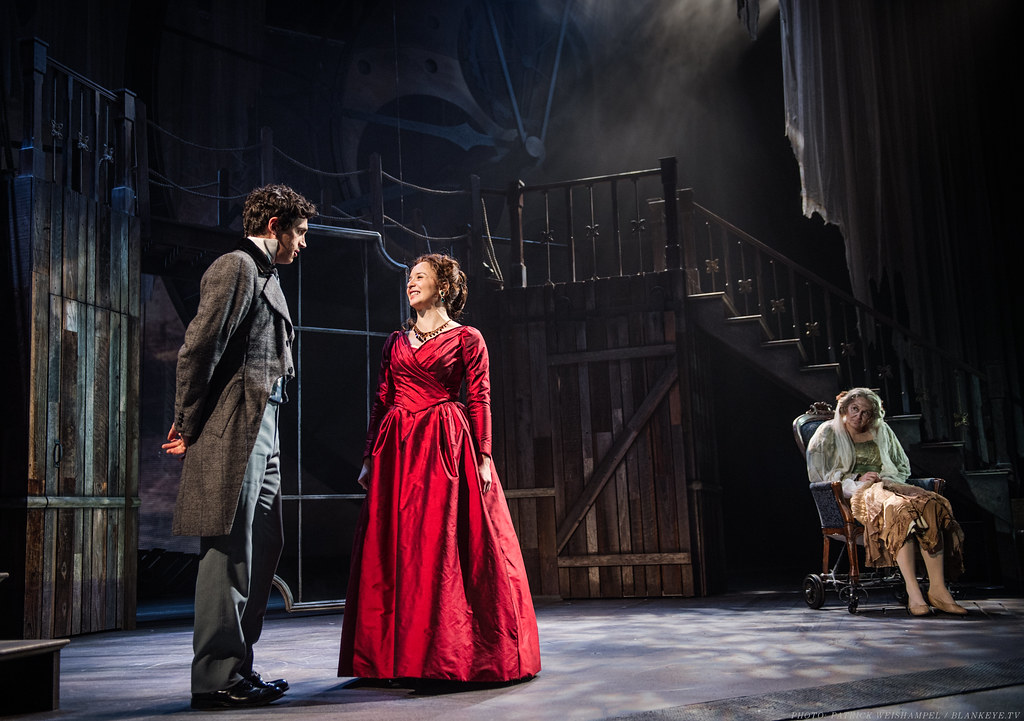
Pip first meets Estella in a house where disappointment has hardened into a way of life. Their relationship in Great Expectations begins with fascination and humiliation, as Miss Havisham encourages an attachment whose consequences neither child can understand.
Dickens follows that attachment through Pip’s rise in society and the collapse of his expectations. To understand it, we have to distinguish what Pip hopes Estella feels from what she actually tells him.
JUMP TO:
- Does Estella Love Pip?
- Pip and Estella’s Relationship at a Glance
- Why Does Pip Love Estella?
- Does Pip Love Estella—or His Idea of Her?
- Miss Havisham Teaches the Wrong Kind of Love
- Why Does Estella Refuse to Mislead Pip?
- The Love Pip Fails to Notice
- What Finally Changes Between Them?
- Seeing Each Other More Clearly
Does Estella Love Pip?
Estella’s feelings for Pip resist a simple yes or no. For much of the novel, she warns him against expecting romantic love from her, while he continues to imagine a future together. In the revised ending, she recognizes the value of his affection and speaks with greater tenderness.
Their final meeting allows the possibility of reconciliation, but it never explicitly confirms a marriage. Dickens leaves readers to consider how much has changed between them and whether that change can sustain the future Pip hopes for.
Pip and Estella’s Relationship at a Glance
They meet as children at Satis House. Estella insults Pip’s manners and appearance while Miss Havisham watches the damage take hold. Pip leaves fascinated but hurt. By the time he reaches home, he feels ashamed of a life that had seemed respectable that morning.
Later, an unexpected fortune allows him to live as a gentleman. He assumes Miss Havisham arranged it so he could marry Estella. She did not. When Estella chooses Bentley Drummle instead, Pip’s imagined future collapses.
Dickens refuses to give their romance a tidy answer. For more passages following Pip’s changing ideas about love and worth, explore our Great Expectations book quotes.
Why Does Pip Love Estella?
Estella’s beauty attracts Pip, but her contempt gives his fascination a more troubling force. During their first card game, she draws his attention to the signs of his upbringing:
And what coarse hands he has! And what thick boots!
Estella, Great Expectations, Chapter 8
Pip begins to examine his hands and boots through Estella’s eyes. Details he once accepted now seem to mark him as inferior, and her approval acquires a significance beyond affection. Being loved by her would seem to overturn the judgment that first made him ashamed.
Satis House gives this longing a misleading setting. Its wealth impresses him even as its stopped clocks and decaying rooms suggest a life arrested by disappointment. He imagines gentility as an escape without recognizing how little happiness it has brought the people who possess it.
His inheritance later appears to confirm that imagined future. Convinced that Miss Havisham is his benefactor, Pip interprets his new prospects as preparation for marriage to Estella. The connection rests on his own assumptions, but he organizes his hopes around it.
Does Pip Love Estella—or His Idea of Her?
PPip recognizes that loving Estella makes him unhappy, yet recognition offers little protection. His older, narrating self recalls the persistence of that attachment:
I loved her against reason, against promise, against peace, against hope, against happiness, against all discouragement that could be.
Pip, Great Expectations, Chapter 29
The repeated “against” records how thoroughly Pip understands the objections to his own desire. His judgment and attachment pull in different directions, leaving him able to describe the danger without freeing himself from it.
That distinction complicates the idea that he simply loves an imaginary woman. He notices Estella’s coldness, but continues to expect a future she has never promised. His mistake lies partly in treating the strength of his feelings as evidence that they must eventually be returned.
A Cambridge analysis of Great Expectations notes that Estella never asks Pip to love her. Miss Havisham pushes him toward obsession, but Pip also builds the trap. Estella is both a person and a role he has written for her.
Miss Havisham Teaches the Wrong Kind of Love
Miss Havisham does not leave Pip’s feelings to chance. She raised Estella to avenge her own betrayal, and Pip offers exactly the open heart her plan requires.
Her instructions sound less like romantic guidance than a curse:
Love her, love her, love her! If she favours you, love her. If she wounds you, love her.
Miss Havisham, Great Expectations, Chapter 29
Under Miss Havisham’s rules, pain proves devotion. Rejection is not a reason to leave; it is a test that demands even more loyalty. Pip accepts this idea because it flatters what he already wants to believe.
Estella pays for the lesson too. Miss Havisham trains her to attract love while withholding her own, then feels wounded when Estella cannot offer warmth to her. She has taught a child to guard every door and is surprised to find herself standing outside.
Pip and Estella are not equally responsible for the harm between them, nor are they simply victim and villain. Each carries a damaged idea of love differently.
Why Does Estella Refuse to Mislead Pip?
Estella distinguishes Pip from the men she deliberately encourages. When he questions her treatment of Drummle, their exchange reveals a limited but significant form of consideration:
Estella: “Do you want me then … to deceive and entrap you?”
Pip: “Do you deceive and entrap him, Estella?”
Estella: “Yes, and many others,—all of them but you.”—Charles Dickens, Great Expectations, Chapter 38
Estella’s refusal to deceive Pip offers evidence of consideration, though it falls short of a declaration of love. She gives him a warning he would rather not accept. Reading that warning as a concealed promise would repeat Pip’s habit of turning her words toward his preferred conclusion.
The Love Pip Fails to Notice
Estella is not the only person whose love Pip misunderstands. He has a small talent for valuing affection in inverse proportion to how freely it is given.
Joe loves him without asking for polish or status, yet Pip feels ashamed of his manners. Biddy sees through Pip’s excuses, but familiarity makes her easy to overlook.
Magwitch is a harder lesson. Pip imagined a wealthy patron guiding him toward Estella; his real benefactor is a transported convict. Only when he cares for Magwitch as a person does Pip act with genuine loyalty.
Pip suffers because Estella cannot return his love, while Joe and Magwitch endure his failure to value theirs. He learns more by serving them than he ever learned by waiting for her.
What Finally Changes Between Them?
In the revised ending, Pip and Estella meet again among the ruins of Satis House. Pip has lost his fortune, and Estella has endured a cruel marriage to Drummle. Their conversation returns them to the place where their expectations first took shape, under circumstances neither once imagined.
Estella describes the change in her own terms:
I have been bent and broken, but—I hope—into a better shape.
Estella, Great Expectations, Chapter 59
Estella now acknowledges a capacity for understanding that her earlier education discouraged. Her words express how she interprets her experience; they need not be read as Dickens prescribing suffering as a cure for emotional reserve. Pip, meanwhile, listens without the old certainty that she has been intended for him.
Their meeting permits reconciliation while leaving its future uncertain. Our guide to the Great Expectations ending compares Dickens’s two versions and the different possibilities they allow.
Our guide to the Great Expectations ending looks at Dickens’s two versions and the possibilities each one leaves open.
Seeing Each Other More Clearly
Pip spends much of the novel interpreting Estella through the future he wants. Their final conversation permits something more attentive, as he hears her account of herself without the same confidence that he already knows their destination.
Whether they ultimately share a life remains open. The more convincing change is in how they meet, with greater understanding and fewer claims upon each other. Affection has room to grow when another person no longer has to prove our worth.
Leave a Reply