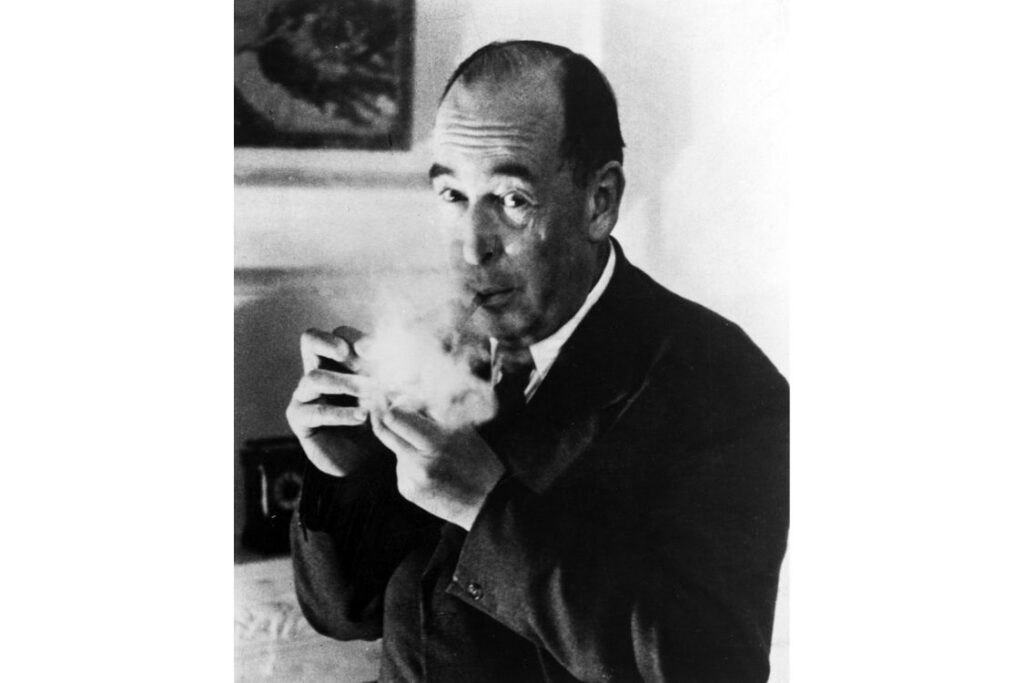
C.S. Lewis could turn a wardrobe into a doorway, a devil into a narrator, and a familiar excuse into something rather difficult to defend. His writing moves between fantasy, Christian belief, friendship, and grief, often finding the most searching questions in ordinary life.
Explore C.S. Lewis quotes, books, and their meanings through the collections below. Whether you arrive with a favorite passage or a question you cannot quite put down, there is more to discover beyond the sentence everyone shares.
TABLE OF CONTENTS:
Find Your Starting Point
You do not need to read Lewis in any particular order to explore his ideas. Start with the subject that interests you, then follow the connections between his books.
| If you want to explore | Start here |
|---|---|
| Memorable passages about faith, pride, and human nature | Mere Christianity quotes |
| An introduction to Lewis’s arguments about Christian belief | Mere Christianity summary |
| Love, friendship, marriage, and vulnerability | C.S. Lewis love quotes |
| Grief, absence, and faith after loss | A Grief Observed quotes |
| Suffering and the meaning of God’s “megaphone” | The Problem of Pain explained |
Meet the Writer Behind the Words
Clive Staples Lewis was a Belfast-born writer and literary scholar who taught at Oxford and later Cambridge. Born in 1898, he wrote fiction, literary criticism, Christian apologetics, essays, and letters before his death in 1963.
His route to Christian belief was gradual. After leaving the faith of his childhood, Lewis passed through atheism before returning to belief in God and then Christianity. The C.S. Lewis Foundation’s biographical timeline traces that journey alongside his teaching, friendships, and writing.
This range helps explain why readers encounter such different versions of Lewis. There is the storyteller behind Narnia, the careful debater of Mere Christianity, and the grieving husband who questions his own assurances. Reading across those works gives a fuller picture than any single quotation can offer.
Faith, Pride, and the Human Heart
Mere Christianity begins with something familiar enough to hear in a family argument. We expect fairness from other people, even when our own behavior needs a generous explanation.
From there, Lewis develops his case for Christian belief and considers its demands on everyday life. Pride, forgiveness, love, and moral choices receive close attention, along with the uncomfortable gap between knowing what is right and doing it.
Faith Through Changing Moods
“Faith is the art of holding on to things your reason has once accepted, in spite of your changing moods.”C.S. Lewis, Mere Christianity, Book III, Chapter 11
Here, Lewis is discussing what happens after someone has accepted a belief through reason. Emotions can still unsettle that conviction, so he considers how a person might hold steady through those changes.
Our Mere Christianity quote collection places passages like this within their chapters and arguments. For an introduction to the book’s main ideas, begin with the Mere Christianity summary.
Love Beyond the Easy Sentences
Lewis writes about affection, friendship, romance, and charity with an eye for both their beauty and their difficulties. In The Four Loves, he considers how love enriches a life while also exposing people to disappointment, possessiveness, and loss.
Consequently, his writing offers more than declarations of devotion. It asks what we want for the people we love, how we treat them, and whether our attachment leaves room for their freedom.
The Risk of Caring
“To love at all is to be vulnerable.”C.S. Lewis, The Four Loves
The sentence acknowledges a cost that affection cannot entirely avoid. Caring about someone means their life can affect yours deeply, and no amount of caution can guarantee freedom from sorrow.
Explore our C.S. Lewis love quotes for passages about friendship, marriage, generosity, and the difference between loving someone and simply enjoying how they make you feel.
Grief Without Easy Answers
In A Grief Observed, Lewis writes after the death of his wife, Joy Davidman. His observations move through absence, anger, memory, and difficult questions about the God he had spent years defending.
The book is intimate and unsettled. Thoughts change as he revisits them, while moments of clarity exist beside renewed confusion.
When Loss Resembles Fear
“No one ever told me that grief felt so like fear.”C.S. Lewis, A Grief Observed, Chapter I
Lewis opens by noticing an unexpected resemblance between bereavement and fear. The comparison gives language to his own disorientation without claiming that everyone must experience loss in the same way.
Our A Grief Observed quotes and interpretations follow the book’s movement through grief, faith, and the struggle to remember a loved person clearly.
The Questions Suffering Raises
The Problem of Pain approaches suffering through Christian argument. Lewis asks how pain can exist in a world created by a good and powerful God, considering freedom, human choices, and our resistance to dependence.
His description of pain as God’s “megaphone” needs that wider context. It should not be reduced to a cheerful slogan about hardship, particularly when someone is living through it.
Read our guide to C.S. Lewis and The Problem of Pain for an explanation of the image and its limits. Alongside A Grief Observed, the book opens a difficult conversation about explaining suffering and experiencing it personally.
Through the Wardrobe and Into Narnia
In The Lion, the Witch and the Wardrobe, four children enter a world held under the White Witch’s rule. Their encounters with temptation, betrayal, courage, and forgiveness give the adventure its emotional weight.
Aslan stands at the center of that story, but the children’s choices deserve attention too. Edmund’s desire, Lucy’s trust, and the siblings’ changing loyalties help turn large moral questions into events readers can feel.
When reading Narnia quotations, look for the speaker and the scene as well as the words. A line spoken by a frightened child serves a different purpose from a narrator’s observation, and dialogue remembered from a film may differ from the book.
A Devil’s View of Human Nature
The Screwtape Letters takes a different route into moral questions. Through letters from the senior devil Screwtape to his nephew Wormwood, Lewis examines temptation, distraction, pride, and self-deception.
The perspective reverses the book’s moral language. Screwtape calls God “the Enemy” because he speaks from the devils’ side, and his advice reveals the habits Lewis wants readers to question.
That makes context especially important. Before treating a sentence as Lewis’s advice, ask who is speaking and what the satire exposes. A devil can sound surprisingly reasonable when he is recommending your favorite excuse.
Did Lewis Really Say That?
A familiar name beneath a quotation is a starting point for checking, not proof of authorship. Lewis is frequently credited with sayings that come from other writers, paraphrases, or adaptations.
The C.S. Lewis Foundation’s guide to misattributed quotes documents several examples. It also distinguishes lines from film scripts from words Lewis wrote himself.
When choosing a passage to share, look for a named book, essay, letter, or speech. Then check the surrounding text, especially when the quotation has been shortened. The source tells you where the words came from; the context helps you understand what they are doing.
Follow the Question That Stays
You might come to Lewis for a sentence about love and find yourself thinking about friendship. A passage on faith may send you toward pride, while a page about grief may change how you understand an earlier argument.
Start with the subject closest to your life, then give the surrounding pages a chance. Which of Lewis’s questions would you like to spend more time with?