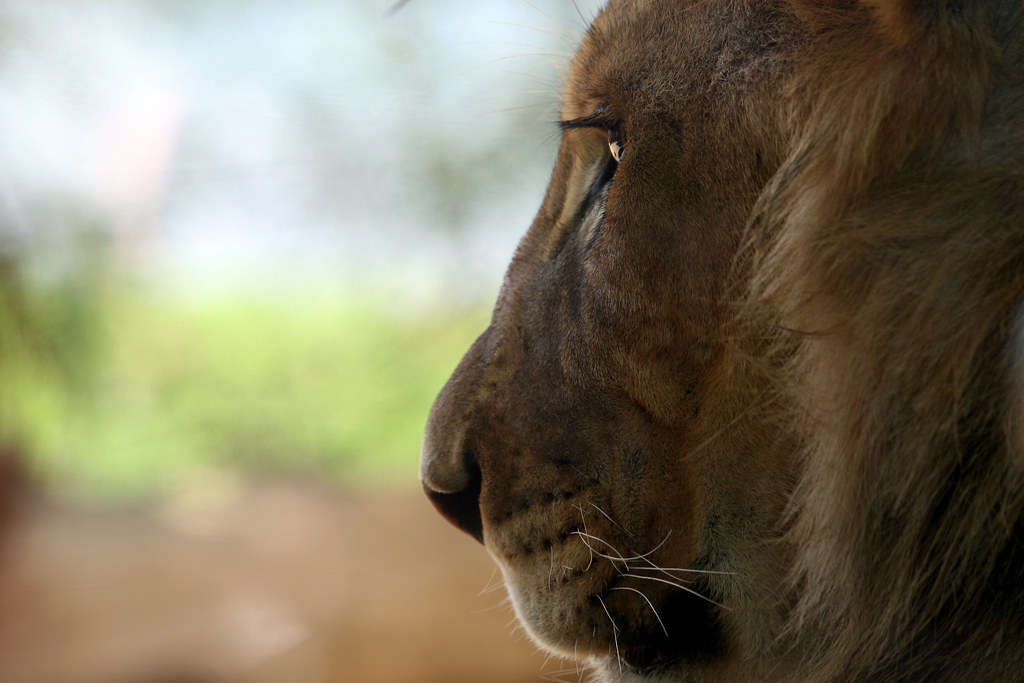
A lion who gives his life for a traitor and rises again invites a question that reaches beyond Narnia’s borders. Is Aslan Jesus? In C.S. Lewis’s imagined world, yes. Lewis pictured how Christ might appear in a land of talking animals, giving him the form of a lion.
The connection goes beyond the resemblance between their deaths and resurrections. Aslan’s words point toward an identity outside Narnia, while his encounters with the children reveal how Lewis understood divine goodness. The books offer their clearest clues through the story itself.
How Aslan Connects to Lewis’s Christian Writing
Lewis explored Christian belief through both fiction and nonfiction, as our C.S. Lewis hub shows. In Narnia, readers encounter questions about forgiveness through the characters’ choices and the consequences they face.
For someone meeting Aslan for the first time, those consequences come before any religious interpretation. Edmund’s betrayal puts his family in danger, and his rescue depends on help he cannot earn. The Christian connection gives that rescue a deeper meaning, but the story first asks readers to care about a frightened boy who has made a terrible mistake.
Did Lewis Mean Aslan as an Allegory?
Lewis distinguished Aslan from a conventional allegorical figure. In an allegory, a character might stand for an abstract quality such as greed or despair. His premise was closer to imagining what could happen if another world existed and Christ entered it.
The term often used for this approach is supposal. Here, it means considering how Christ might appear and act under different circumstances. Literary scholar Louis Markos explains this distinction in his discussion of Aslan and Jesus, describing Aslan as Christ within Narnia’s imagined world.
Calling the books Christian allegory remains a common shorthand, and it points toward real connections. However, Lewis’s distinction leaves room for Narnia to tell its own story. Its Christian meaning does not require every character or event to have a matching entry in the Bible.
What Is Aslan’s Other Name?
One of the clearest clues appears near the end of The Voyage of the Dawn Treader. Aslan tells Edmund and Lucy they will not return to Narnia, and Lucy fears they will lose him when they leave. Edmund then asks whether Aslan exists in their world too.
Aslan answers that he does, adding:
“But there I have another name. You must learn to know me by that name.”Aslan, C.S. Lewis, The Voyage of the Dawn Treader
The passage appears in the novel’s text, rather than originating in a film adaptation. Although Aslan does not say “Jesus” in this exchange, his answer directs the children toward knowing him beyond Narnia.
The surrounding scene strengthens the Christian reading. The children first encounter a Lamb who offers them breakfast before changing into Aslan. Their farewell therefore carries the promise of a continuing relationship, even though they must leave the world where they first knew him.
Why Does Aslan Sacrifice Himself for Edmund?
In The Lion, the Witch and the Wardrobe, Edmund’s betrayal gives the White Witch a claim on his life under the Deep Magic. Aslan secures his release by agreeing to die in his place. The Witch kills Aslan at the Stone Table while Susan and Lucy watch from hiding.
After returning to life, Aslan explains that the Witch did not understand what would happen when an innocent victim willingly died in a traitor’s place. His explanation culminates in the words:
“Death itself would start working backwards.”Aslan, C.S. Lewis, The Lion, the Witch and the Wardrobe
The broken Table and Aslan’s return connect the scene to Christ’s sacrifice and resurrection. Edmund receives a rescue he could not arrange for himself, while Aslan willingly bears its cost.
Yet Edmund’s betrayal does not make him simply another Judas. His story continues through forgiveness and changed behavior, so reading him as someone who needs mercy explains more of his journey than assigning him a single biblical counterpart.
Is Aslan God or Jesus?
Within the Christian understanding Lewis draws upon, these descriptions are compatible. Jesus is God the Son, so identifying Aslan with Christ also gives him a divine identity within the fiction. “Jesus” is the more specific answer to the question of whom Lewis imagined Aslan to be.
Goodness Without Being Tame
Before the children meet Aslan, they wonder whether approaching a lion is safe. Mr. Beaver answers Lucy’s concern with a distinction that shapes their expectations:
“Who said anything about safe? ’Course he isn’t safe. But he’s good.”Mr. Beaver about Aslan, C.S. Lewis, The Lion, the Witch and the Wardrobe
Mr. Beaver reassures the children about Aslan’s character without promising a comfortable encounter. Within the Christian reading, this presents divine goodness as something they can trust, even when its power frightens them.
A reader does not need to share Lewis’s beliefs to understand this choice. Recognizing Aslan’s Christian identity can deepen a reading of Narnia while leaving room for readers to respond from their own beliefs and experiences.
Reading Aslan Beyond the Symbolism
Once the Christian connection is clear, it can be tempting to treat Narnia as a puzzle whose characters all need decoding. That approach can draw attention away from the relationships that make the books worth reading.
Edmund’s rescue, for example, asks readers to consider how they respond to someone who has hurt them and later seeks forgiveness. The religious meaning adds depth to that question without removing its human difficulty. Knowing whom Aslan represents gives us a clearer understanding of the story, while watching how the children respond to him gives us something to reflect on.
Leave a Reply