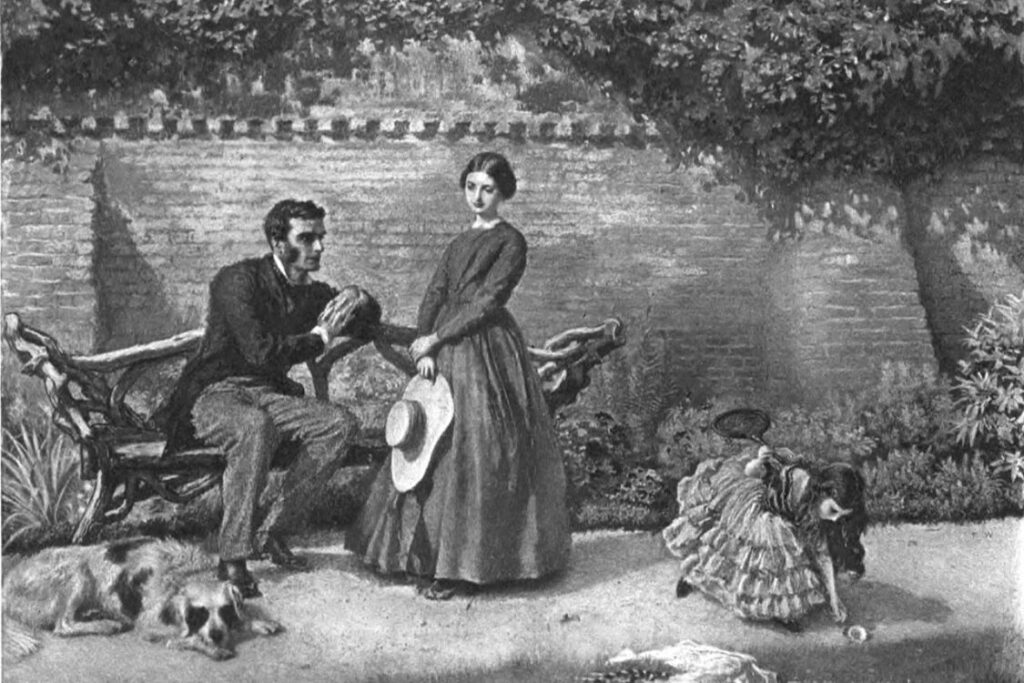
Jane leaves Thornfield while she is still deeply in love with its master, carrying a grief that makes every step difficult. The Jane Eyre ending brings her back to Rochester, though neither the house nor the man she remembers has escaped the effects of his secret.
This article includes spoilers through the final chapter. Jane and Rochester eventually marry, but their reunion raises a question more interesting than whether love survives separation.
What must change before she can accept the happiness she once had to refuse?
JUMP TO:
How Does Jane Eyre End
After hearing what seems to be Rochester’s voice calling her name, Jane returns to Thornfield and finds the house in ruins. An innkeeper explains that Rochester’s wife, Bertha Mason, set the fire and died after jumping from the roof.
Rochester helped the servants escape and tried to save Bertha, but his injuries left him blind and cost him a hand. Jane finds him living at Ferndean, where their reunion leads to marriage.
Writing ten years later, Jane describes their companionship and the partial return of his sight in one eye, enough to see their firstborn son. Her happiness rests on choices explored further in our Jane Eyre quotes on freedom and self-respect.
The Jane Eyre Plot Twist That Changes Everything
The main Jane Eyre plot twist occurs in Chapter 26, when a lawyer interrupts Jane and Rochester’s wedding. Richard Mason confirms that Rochester is already married to his sister, Bertha, who is kept locked away at Thornfield.
The laughter upstairs, the bedroom fire, and the stranger who tears Jane’s wedding veil suddenly have a frightening explanation. The home she had begun to trust hides a history Rochester has deliberately kept from her.
The discovery also changes the meaning of Rochester’s courtship. He invited her to share his life while hiding something she needed to know before choosing him.
Rochester begs her to live abroad with him, but Jane believes that accepting would go against her conscience. She leaves without knowing where she will find shelter, much less whether she will ever feel such love again.
Why Jane Returns to Rochester
Jane’s return begins with a mystery. As St. John Rivers urges her toward a missionary marriage, she hears Rochester calling her name and answers him across the distance.
Rochester later describes calling to her at the same time and hearing her reply. Jane realizes their accounts match but keeps it to herself, leaving their experience unexplained.
Yet the call cannot settle what separated them. Jane sets out without knowing Bertha has died, and seeking Rochester does not mean she will accept his earlier offer.
She has also inherited money and discovered relatives who welcome her. Having divided the fortune with her cousins, she keeps enough to support herself wherever she chooses.
“I told you I am independent, sir, as well as rich: I am my own mistress.”
Jane to Rochester, Jane Eyre, Chapter 37
Bertha’s death allows them to marry, while Jane’s independence gives her a genuine choice. Rochester admits his wrongdoing and accepts help from the woman he once expected to protect. Their reunion allows tenderness to pass between them on more equal terms.
What “Reader, I Married Him” Means
The final chapter opens with a confidence that contrasts with Jane’s earlier uncertainty.
“Reader, I married him.”
Jane’s narration, Jane Eyre, Chapter 38
Jane places herself at the center of the action. After years of being judged and instructed, she tells the reader what she has decided, without asking anyone to approve it.
The wedding receives little attention beside the marriage that follows. In the novel’s final chapter, Jane dwells on their conversations and the pleasure of companionship that remains welcome after ten years.
For someone whose childhood home offered so little acceptance, that ease carries particular sweetness. She can speak freely with the person she loves, enjoying closeness without the constant strain of defending her place beside him.
Is the Jane Eyre Ending Happy
For Jane, the ending is happy. She marries Rochester, remains close to her cousins, and describes her married life with lasting satisfaction, although his sight never fully returns.
The Jane Eyre ending still carries a sorrow that marriage cannot resolve. Bertha dies before the couple can legally marry, and her own account of her life remains largely beyond our reach.
Much of what we learn about her marriage comes from Rochester, who has reasons to defend his actions. We can welcome Jane’s happiness while remaining troubled by Bertha’s confinement and death.
Rochester’s injuries also deserve careful thought. His willingness to admit wrongdoing offers stronger evidence of moral change than disability itself. Jane’s devotion has value because she chooses it freely, without treating his suffering as a duty to stay.
Why the Novel Ends With St. John
“Reader, I married him” begins the final chapter, rather than closing the novel. Brontë gives the final words to St. John Rivers, who is working in India and expecting death with confidence in his faith.
Jane admires his devotion despite refusing his proposal. She understands that the purpose sustaining him would leave her lonely within their marriage, however useful she might be to his work.
Her refusal of St. John completes an important part of her journey. Having resisted a love that went against her conscience, she now resists a duty that would deny her feelings. Both decisions protect her right to choose a life she can wholeheartedly embrace.
His ending places another kind of fulfillment beside her happiness with Rochester. Jane can respect the life he has chosen while trusting her own judgment about the life she wants.
A Love That Leaves Room for You
The Jane Eyre ending reminds us how much courage it takes to leave someone we still love when staying would mean betraying ourselves. Jane’s eventual happiness offers hope that self-respect need not close the door on affection. We can cherish another person deeply without giving them the final word over our lives.
Leave a Reply