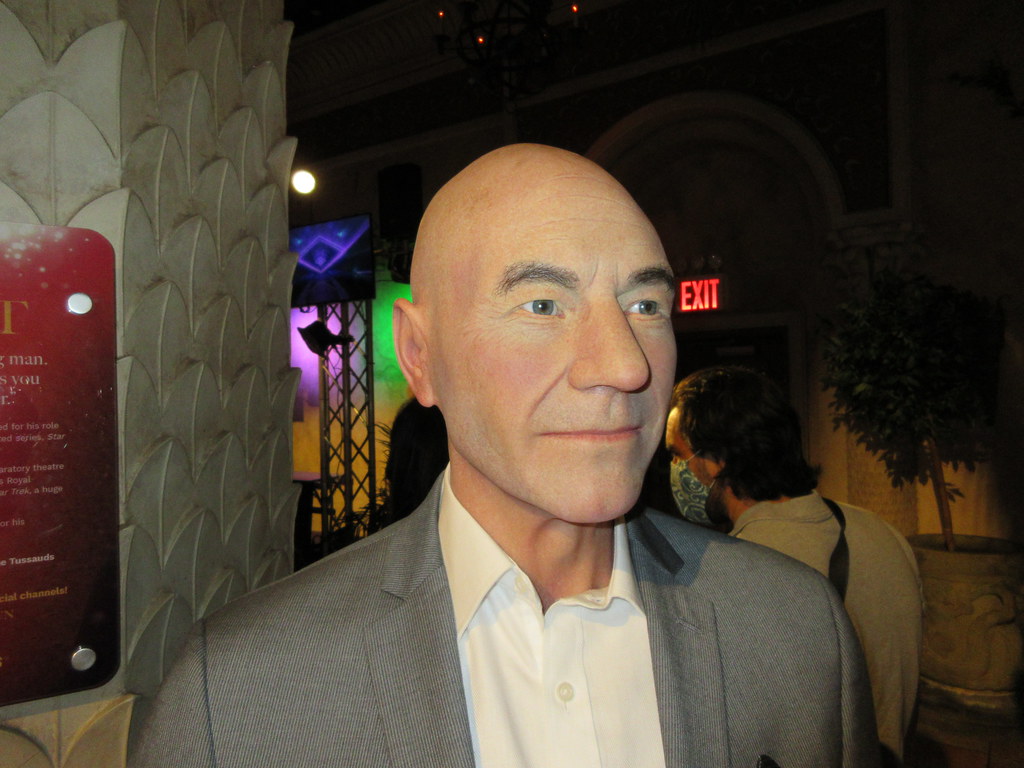
Captain Jean-Luc Picard can face a hostile alien with a measured speech, silence an officer with a glance, and make a command sound like a matter of principle. Yet some of the best Captain Jean-Luc Picard quotes come from quieter encounters, when a friend needs reassurance, a young officer needs the truth, or the captain himself needs to listen.
Played by Patrick Stewart in Star Trek: The Next Generation and its films, Picard combines discipline with compassion and a distinctly dry sense of humor.
These 15 quotes reveal his character through the people who hear them, from Data on the Enterprise to his friends around the poker table.
JUMP TO:
Captain Jean-Luc Picard Quotes About Life and Leadership
Picard can settle routine business with “Make it so,” but the people under his command sometimes need more than an order. Patrick Stewart brings a similar gift for mentorship to Charles Xavier, whose words appear in our Professor X quotes collection.
1. Losing Without Making Mistakes
“It is possible to commit no mistakes and still lose. That is not a weakness. That is life.”Picard to Data, The Next Generation, “Peak Performance” (Season 2, Episode 21)
After losing a strategy game, Data assumes that defeat proves a flaw in his performance. Picard sees the problem immediately. Data has confused an unwelcome result with a mistake.
His advice does not promise that hard work always wins. Instead, he asks Data to accept that circumstances and other people’s choices can defeat even a sound strategy.
It is a bracing lesson for an android accustomed to precision, and a useful one for anyone who has replayed a decision they could not reasonably have made better.
2. The Duty of Truth
“The first duty of every Starfleet officer is to the truth.”Picard to Wesley Crusher, The Next Generation, “The First Duty” (Season 5, Episode 19
Wesley helps conceal the circumstances of a fatal Academy flying accident. Picard knows how much the young man fears losing his friends and his future, but he refuses to make dishonesty easier to live with.
Where Data needs reassurance, Wesley needs someone who will hold him to a higher standard. Picard’s disappointment carries weight precisely because his affection for Wesley is genuine.
3. The Time We Have
“Seize the time, Meribor. Live now. Make now always the most precious time. Now will never come again.”Picard as Kamin to Meribor, The Next Generation, “The Inner Light” (Season 5, Episode 25)
While living an entire lifetime as Kamin on Kataan, Picard speaks to his daughter as their planet faces disaster. The advice is tender because he knows how little their family can change about what lies ahead.
For a man who usually measures time in missions and duty shifts, this borrowed life teaches him the worth of ordinary days.
Picard Quotes About Justice and Duty
His loyalty to Starfleet never prevents him from questioning its decisions. When a rule threatens someone’s dignity, Picard expects the institution to answer for it.
4. Data’s Right to Choose
“Your Honor, Starfleet was founded to seek out new life. Well, there it sits!”Picard to Judge Phillipa Louvois, The Next Generation, “The Measure of a Man” (Season 2, Episode 9)
Starfleet wants to dismantle Data for research, treating him as equipment rather than an officer with a will of his own. In court, Picard points to the contradiction in the organization’s ideals: it seeks new life while refusing to recognize the life before it.
His argument is forceful because the question is no longer abstract. Data is present, listening as others debate whether his future belongs to him.
5. When Orders Challenge Conscience
“There are times, sir, when men of good conscience cannot blindly follow orders.”Picard to Admiral Haftel, The Next Generation, “The Offspring” (Season 3, Episode 16)
When Starfleet orders Data’s daughter Lal taken from the Enterprise, Picard objects. He respects the chain of command, but he cannot ignore the harm of separating a father from his child simply because their lives are artificial.
Picard’s refusal is not rebellion for its own sake. He asks Starfleet to live up to the principles it teaches its officers.
6. The First Broken Freedom
“With the first link, the chain is forged. The first speech censured, the first thought forbidden, the first freedom denied, chains us all irrevocably.”Picard quoting Judge Aaron Satie to Admiral Norah Satie, The Next Generation, “The Drumhead” (Season 4, Episode 21)
A security investigation aboard the Enterprise has turned into a campaign of suspicion. Picard challenges Admiral Satie with the words of her own father, a judge whose reputation she reveres.
The warning exposes how readily fear can excuse an assault on freedom. By invoking someone Satie claims to honor, Picard makes the challenge both principled and painfully personal.
7. Justice Beyond the Rules
“There can be no justice so long as laws are absolute.”Picard, The Next Generation, “Justice” (Season 1, Episode 8)
Wesley faces execution for accidentally breaking a law on the planet Rubicun III. Picard refuses to accept a punishment that leaves no room for intent or mercy.
He is hardly a captain who dislikes rules. His objection is that law loses its purpose when obedience counts for more than fairness.
Courage and Conviction Under Pressure
Even at his most commanding, Picard prefers reason to bluster. His composure, however, should never be mistaken for an unwillingness to fight.
8. Humanity on Trial
“If we’re going to be damned, let’s be damned for what we really are.”Picard, The Next Generation, “Encounter at Farpoint” (Season 1, Episode 1)
Q puts humanity on trial, inviting Picard to defend a species with a violent past. Picard refuses to pretend that people are faultless, but he will not let their worst history define all they might become.
The declaration sets the tone for his command: humanity deserves a chance to learn, not a flattering verdict based on a lie.
9. A Challenge to Duras
“You may test that assumption at your convenience.”Picard to Duras, The Next Generation, “Sins of the Father” (Season 3, Episode 17)
Duras doubts that a human serving as Worf’s advocate would be willing to fight. Picard answers with impeccable courtesy and a threat that needs no raised voice.
It is one of his driest moments. Duras has mistaken a preference for diplomacy for a lack of courage, and Picard is quite willing to correct him.
10. The Patience to Understand
“In my experience, communication is a matter of patience, imagination.”Picard, The Next Generation, “Darmok” (Season 5, Episode 2)
The Tamarian captain Dathon speaks through stories that Picard cannot initially decipher. Their attempts to understand each other become urgent when they must survive a threat together.
Picard learns that communication asks more of us than finding the right words. It requires curiosity about the other person’s world. The official Star Trek discussion of “Darmok” offers more context on this unusual encounter.
11. There Are Four Lights
“There are four lights!”Picard to Gul Madred, The Next Generation, “Chain of Command, Part II” (Season 6, Episode 11)
Madred tortures Picard, trying to make him say there are five lights when only four are before him. Picard’s defiance has become famous, but the aftermath gives it greater weight.
He later tells Counselor Troi that he nearly believed the lie. His courage was not proof that he could not be broken; it was the struggle to hold on to what he knew while suffering threatened his judgment.
The Man Behind the Uniform
The captain who counsels others is less comfortable admitting his own wounds. These moments allow someone else to see past his rank.
12. The Pain Beneath Command
“They took everything I was. They used me to kill and to destroy, and I couldn’t stop them.”Picard to Robert Picard, The Next Generation, “Family” (Season 4, Episode 2)
After the Borg force him to become Locutus, Picard returns to his family’s vineyard. An argument with his brother Robert finally breaks through the control he maintains in public.
His confession is less about defeat than the shame of being used to harm people he was sworn to protect. Robert cannot change the past, but he makes room for Jean-Luc to admit what it cost him.
13. The Life He Chose
“I would rather die as the man I was than live the life I just saw.”Picard to Q, The Next Generation, “Tapestry” (Season 6, Episode 15)
Q lets Picard revisit a reckless choice from his youth. Avoiding the injury also changes the course of his life, leaving him safer but far less fulfilled.
Picard does not decide that recklessness is wise. He accepts that his mistakes and ambitions are woven into the person he has become, and that a life without regret might also lack the courage he values.
14. When Lily Challenges Picard
“The line must be drawn here! This far, no further!”Picard to Lily Sloane, Star Trek: First Contact (1996)
As the Borg overrun the Enterprise, Picard refuses to retreat. His words sound like the captain at his most resolute, but Lily hears something he will not admit: his determination has become personal revenge.
She compares him to Captain Ahab, and he angrily rejects the charge before recognizing its truth. The reversal is essential to Picard’s character. After years of telling others what they need to hear, he must accept a hard truth from someone who is not impressed by his rank.
15. The Final Poker Game
“So, five-card stud, nothing wild… and the sky’s the limit.”Picard to his senior officers, The Next Generation, “All Good Things…” (Season 7 finale)
Picard finally joins his officers at their regular poker game, stepping across a distance he has maintained for years. His crew have become friends, though he has often kept that affection behind the formality of command.
The last line is playful rather than grand. For once, the captain is not guiding the Enterprise toward another mission; he is taking a seat among people whose company he has learned to treasure.
The Wisdom of Knowing When to Listen
Picard can comfort Data, demand honesty from Wesley, and defend a principle when powerful people would rather ignore it. Yet some of his finest moments come when someone challenges his own judgment.
From the bridge to the poker table, his greatness rests not in always knowing the answer, but in remaining willing to hear one.
Leave a Reply