
We Who Wrestle With God: Perceptions of the Divine by Jordan B. Peterson is not the kind of book you rush through. It asks you to slow down, sit with old stories, and think about why they still feel so personal today.
At its heart, this is a book about faith, struggle, sacrifice, responsibility, and the search for meaning. It is about the moments when belief does not feel simple, when suffering raises difficult questions, and when a person has to decide whether to run from responsibility or face it.
What Is We Who Wrestle With God About?
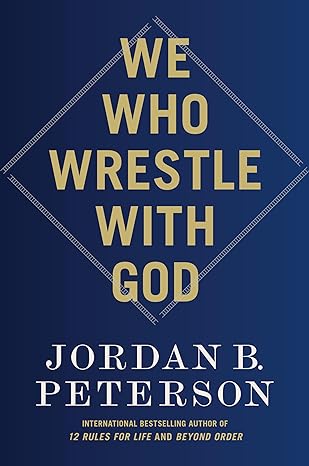
We Who Wrestle With God is about the deep human struggle with God, truth, and meaning. Peterson looks at Biblical stories not only as ancient religious accounts, but as stories that reveal something lasting about human nature.
The book reflects on themes like creation, rebellion, sacrifice, suffering, responsibility, and the divine. In the publisher’s description, Peterson is described as analyzing Biblical accounts of rebellion, sacrifice, suffering, and triumph, and how those stories shape us culturally and psychologically.
That is what makes the book interesting. It does not treat these stories as distant or outdated. It reads them as stories about the same things people still wrestle with now: envy, pride, fear, obedience, resentment, courage, and the burden of choosing what is right.
Why the Book Feels So Personal
The title itself captures the feeling of the book. To wrestle with God is not only to question God. It can also mean wrestling with truth, conscience, responsibility, and the parts of ourselves we would rather not face.
There are seasons when faith feels peaceful. There are also seasons when faith feels like a struggle. This book spends a lot of time in that second place.
It reminds us that belief is not always neat. Sometimes faith asks us to surrender what we wanted. Sometimes it asks us to carry something heavy. Sometimes it asks us to keep walking even when we do not fully understand the road.
One Meaningful Quote From the Book
One of the most meaningful lines from Peterson’s discussion of sacrifice is:
“When we sacrifice, we are bargaining with the future.”
This short quote carries a lot of weight. Peterson shared this line in a public excerpt from We Who Wrestle With God, where he reflects on sacrifice as giving up something valuable now in faith that the future may become better because of it.
That idea sits close to the heart of the book. Sacrifice is not presented as pointless loss. It is shown as a serious act of faith. You give up comfort, pride, ease, or immediate desire because you believe something higher is worth more.
That is also why Biblical stories still speak so strongly. Abraham’s obedience, Jonah’s resistance, Cain’s resentment, and Noah’s preparation all carry the same question in different forms: What are you willing to give up for what is good?
Why the Biblical Stories Still Matter
One of the strongest parts of We Who Wrestle With God is how it makes familiar Biblical stories feel human again. These are not just stories from long ago. They are mirrors.
Cain and Abel are not only about two brothers. Their story is also about resentment, comparison, and the danger of blaming others instead of facing what is wrong in the heart.
Abraham’s story is not only about faith. It is also about trust, surrender, and the painful cost of obedience.
Jonah’s story is not only about a prophet running from God. It is about avoidance, calling, and the uncomfortable truth that running from responsibility does not always make us free.
These stories have lasted because they still describe us. They show the battles people face quietly every day.
Why It’s Worth Reading
We Who Wrestle With God is worth reading if you enjoy books that make you think deeply about faith, meaning, and responsibility. It is not written like a simple devotional, and it is not the kind of book you read just to collect quick answers.
Its value is in the way it forces you to sit with big questions.
- What are you avoiding?
- What truth are you resisting?
- What burden are you being asked to carry?
- What would your life look like if you chose responsibility over resentment?
Those questions are not always comfortable, but they are useful. That is what makes the book memorable. It not only explains Biblical stories, but it also invites the reader to see their own life inside them.
Who Should Read This Book?
This book may be a good fit for readers who enjoy Jordan Peterson’s reflections on the Bible, psychology, mythology, morality, and meaning. It may also appeal to people who are curious about why Biblical stories continue to shape the way we think about suffering, courage, sacrifice, and responsibility.
If you prefer short and simple spiritual writing, this may not be the easiest place to start. Peterson’s style can be dense, and some passages ask for patience.
But if you like books that make you pause, underline sentences, and return to the same idea later, We Who Wrestle With God is worth considering.
For more memorable passages from the book, you can also read our collection of We Who Wrestle With God quotes about faith, suffering, sacrifice, responsibility, and meaning.
Final Thoughts
We Who Wrestle With God is a challenging book, but that feels fitting. It is a book about struggle, and it does not pretend that faith, truth, or responsibility are always easy.
Instead, it reminds us that wrestling is not always a sign of weakness. Sometimes the struggle is where growth begins. Sometimes the questions we carry are part of the path toward meaning.
For readers willing to sit with difficult ideas, Jordan Peterson’s We Who Wrestle With God offers a thoughtful look at why ancient Biblical stories still speak to modern life.
Leave a Reply