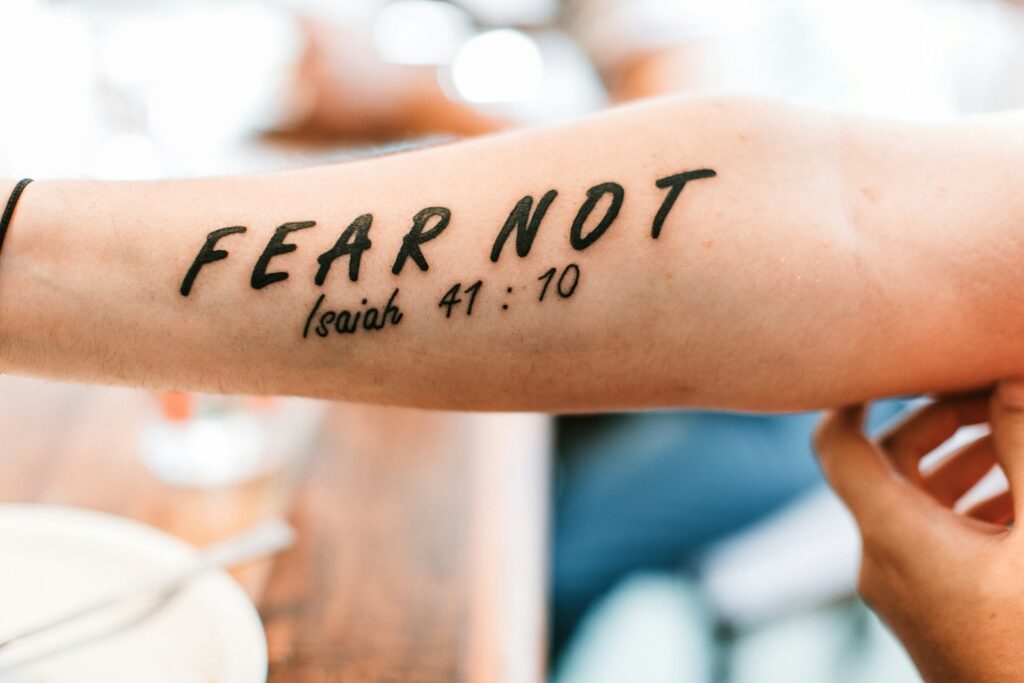
Isaiah 41:10 means God’s people do not have to let fear rule them because God is present, faithful, and strong enough to sustain them. The verse does not promise a life without danger. It gives us a reason to trust God in the middle of it.
That difference matters. “Do not fear” can sound dismissive when someone faces illness, loss, financial pressure, or an uncertain future. In this passage, however, God does not scold frightened people from a distance. He reassures them with His presence.
The Holy Bible
ESV Version
What Does Isaiah 41:10 Say?
“Fear not, for I am with you; be not dismayed, for I am your God; I will strengthen you, I will help you.” (Isaiah 41:10, ESV)
The verse concludes with God promising to uphold His people with His righteous right hand.
Isaiah 41 addresses Israel as God’s chosen servant. The people faced the consequences of exile and the power of surrounding nations, but God had not rejected them. Their security did not depend on military strength or favorable circumstances. It rested on the God who had called them.
BibleProject’s explanation of Isaiah 41:10 places the reassurance within Israel’s exile and God’s promise to sustain His people. Remembering that original context keeps us from treating the verse as a guarantee that nothing painful will happen.
What Are the Five Promises in Isaiah 41:10?
1. “I Am With You”
God answers isolation first. Fear often tells us that we are alone with a problem no one understands. His presence does not make the problem imaginary, but it changes who faces it with us.
Hagar discovered this in Genesis 16. Alone and distressed in the wilderness, she encountered the God who saw her. Her circumstances remained complicated, but she was not invisible.
2. “I Am Your God”
This is relational language. God does not simply possess power in the abstract. He identifies Israel as His people and reminds them that they belong to Him.
When David faced Goliath, he did not pretend the giant was harmless. His confidence came from knowing whom he represented. Faith looks honestly at the problem while remembering that the problem is not greater than God.
3. “I Will Strengthen You”
God does not always remove weakness before asking us to move. Sometimes He supplies strength within it.
Moses felt inadequate when God called him to confront Pharaoh. He questioned his ability and worried about his speech. God answered by promising to be with him. The calling depended more on God’s presence than on Moses’ confidence.
This is why Isaiah 41:10 belongs among meaningful God is my strength quotes. Its comfort comes from God’s promise to supply what frightened people lack.
4. “I Will Help You”
God’s help may arrive through wisdom, endurance, another person, an opened door, or the courage to accept a closed one. Scripture frequently shows Him working through practical means.
When Moses became tired during Israel’s battle with Amalek, Aaron and Hur held up his hands. God’s provision included faithful people standing beside an exhausted leader.
5. “I Will Uphold You”
To be upheld means that your safety does not depend entirely on how tightly you can hold everything together. You may feel unsteady without being abandoned.
Peter began sinking after stepping onto the water in Matthew 14. Jesus reached out and caught him. The story does not celebrate perfect faith. It reveals Christ’s readiness to help someone who cries out in fear.
Does “Do Not Fear” Mean Christians Should Never Feel Afraid?
No. Many faithful people in the Bible experienced fear. David wrote, “When I am afraid, I put my trust in you” (Psalm 56:3, ESV). He brought fear into trust rather than treating it as proof that trust was absent.
The command invites us not to make fear our master. We can acknowledge the medical result, uncertain job, difficult conversation, or troubling news and still choose the next faithful action.
Seeking professional support may be part of that response. Prayer and Scripture can support emotional well-being, but they should never shame someone with anxiety or replace appropriate medical or mental health care.
How Can You Apply Isaiah 41:10 Today?
Read the verse slowly and place your specific fear beside each promise:
- I am afraid, but God is with me.
- I feel disoriented, but He is still my God.
- I feel weak, but He can strengthen me.
- I do not know what to do, but He can help me.
- I feel as though I might fall, but He can uphold me.
Then choose one grounded response. Make the appointment. Ask for advice. Apologize. Rest. Begin the task. Tell someone trustworthy that you are struggling.
People sometimes search for God give you strength quotes because they need something comforting to send a friend. Isaiah 41:10 offers more than a pleasant saying. It points the reader toward God’s character without promising that the struggle will disappear immediately.
For more passages about God’s presence and care, read these encouraging Bible verses for hard times, fear, and uncertainty.
Remember Who Holds You
Isaiah 41:10 does not tell you to become fearless through willpower. It turns your attention away from the size of your courage and toward the faithfulness of God.
You may still feel nervous when you take the next step. That does not make the promise less meaningful. God’s reassurance rests on who He is, not on your ability to feel strong every moment.
Scripture source: Scripture quotations come from the English Standard Version.
ESV attribution: Scripture quotations are from the ESV® Bible (The Holy Bible, English Standard Version®), copyright © 2001 by Crossway, a publishing ministry of Good News Publishers. ESV Text Edition: 2016. Used by permission. All rights reserved.
Leave a Reply