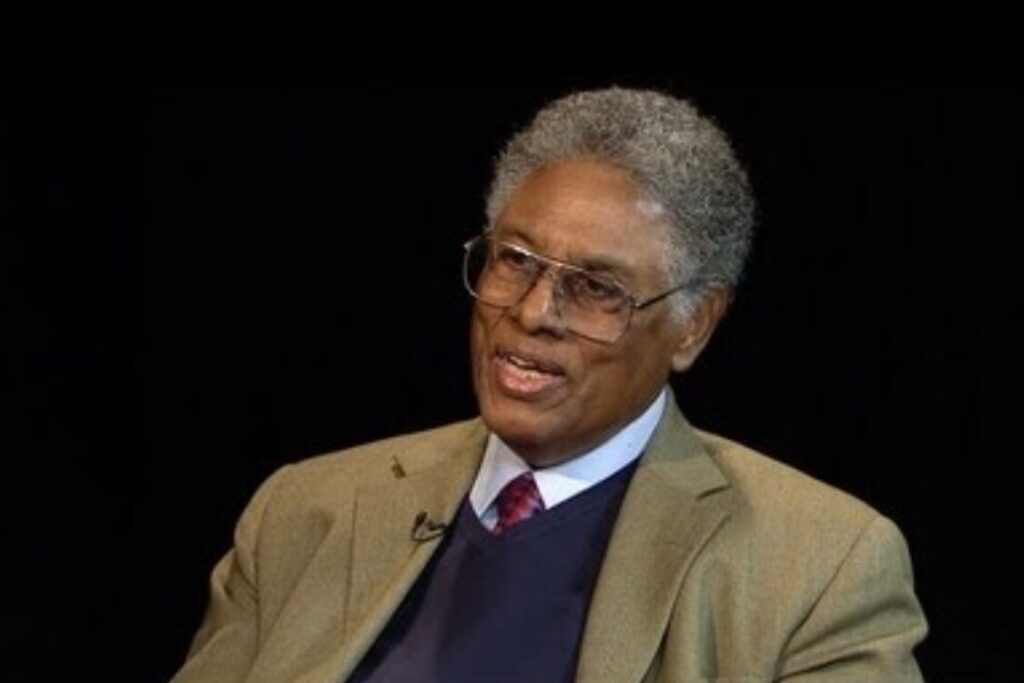
Equality of outcome sounds simple at first: make results more equal, and society becomes fairer. But Thomas Sowell pushes readers to ask a harder question. What if unequal outcomes come from many causes, not just injustice? That is where the Thomas Sowell equality of outcome debate becomes more interesting, and yes, much less comfortable at dinner.
Sowell does not write to make difficult ideas feel easy. He writes to make readers examine the assumptions behind them, especially when those assumptions sound compassionate, popular, or morally obvious.
Sowell Separates Equal Opportunity From Equal Results
Thomas Sowell often separates equal opportunity from equal results. He does not argue that discrimination never exists. He argues that unequal outcomes do not automatically prove one simple cause.
This distinction matters because equal opportunity and equality of outcome are not the same thing.
In simple terms:
- Equality of opportunity asks whether people have fair access to rights, education, work, law, and basic protections.
- Equality of outcome asks whether results should be made more equal across people or groups.
Sowell’s concern is the habit of treating unequal results as automatic proof of unfairness before investigating the causes.
The point is not that every unequal result is fair. Sowell’s argument is more careful than that. Unequal outcomes need evidence, context, and analysis before they become proof of injustice.
Why Sowell Distrusts Simple Explanations
Sowell distrusts simple explanations because human outcomes rarely come from one cause. Family structure, age, culture, geography, education, personal choices, skills, incentives, historical events, and timing can all shape results.
In Discrimination and Disparities, Sowell argues against the idea that different outcomes can always be explained by one factor. Hachette Book Group describes the book as a look at what drives economic and social inequality among different groups.
That idea sits close to the heart of his view. Sowell wants readers to slow down before turning inequality into a slogan.
This does not mean people should ignore injustice. It means serious problems deserve serious analysis. If we diagnose the cause incorrectly, we may create solutions that feel compassionate but make things worse.
Equality of Outcome Needs Real-World Examples
This equality of outcome example can make the debate easier to understand. Imagine two students receive the same textbook, the same teacher, and the same test, but they earn different grades.
One person may quickly say, “The outcome is unequal, so something unfair happened.” Maybe that is true. But Sowell would likely ask more questions first.
Did they study the same amount? Did they start with the same background knowledge? Did one have more family support? Did one sleep better, practice more, or care more about the subject?
The point is not that every unequal result is fair. That would be lazy in the opposite direction. The point is that unequal results need investigation before they become proof.
Equity, Equality of Outcome, and the Language Problem
The phrase equity and equality of outcome often appears because people use “equity” and “equality” in different ways. In modern social justice debates, equity often focuses on adjusting systems or resources to reduce outcome gaps.
That can sound compassionate, especially when people want to help those who start from a harder place. Most decent people want children to have a fair chance and want injustice corrected when it exists.
Sowell’s warning is not that compassion is bad. His concern is that efforts to engineer outcomes can create trade-offs people do not like to discuss.
Who decides which outcomes should be equal? How much freedom should society give up to enforce those outcomes? What happens when the policy rewards the wrong incentives?
These questions do not fit neatly on a protest sign, which is rude of them, but they still matter.
The Trade-Offs Behind Fairness
One of Sowell’s most famous lines is:
“There are no solutions. There are only trade-offs.”
That quote helps explain why his views on equality of outcome can feel so sharp. Sowell does not treat public policy like a magic wand. He treats it like a set of choices with costs, incentives, and unintended consequences.
A policy may aim for fairness, but it may also reduce freedom, weaken responsibility, punish effort, or give more power to people who do not have to live with the results.
That is why Sowell keeps returning to trade-offs. He wants readers to ask not only, “Does this sound fair?” but also, “Compared to what, and at what cost?”
Tiny question. Massive inconvenience.
Why Equality of Outcome Sounds Appealing
Equality of outcome sounds appealing because nobody likes unfairness. Most people want a world where effort matters, children get a fair chance, and people do not get crushed by circumstances they did not choose.
That emotional appeal deserves respect. It is not silly to care about unfair outcomes.
But Sowell’s warning is that good intentions do not guarantee good results. A policy can sound kind and still create damage. A promise can feel fair and still require force. A movement can speak beautifully about compassion while avoiding the harder question of whether its ideas work.
This is where his writing often stings. Sowell does not let readers stop at the feeling. He asks them to follow the consequences.
Why Sowell Connects Equality of Outcome to Freedom
Sowell often connects equality-of-outcome debates to freedom. If a society tries to make outcomes equal, someone has to decide which outcomes matter, who has too much, who has too little, and what must be done to close the gap.
That creates a serious question: who gets that power?
This is also why discussions of equality of outcome under socialism often appear in related searches. Many people connect outcome-based fairness with larger debates about government power, redistribution, incentives, and individual liberty.
Sowell’s broader concern is not only economic. It is moral and political. He asks whether a society can keep freedom intact when decision-makers gain the authority to rearrange outcomes in the name of fairness.
Why His Social Justice Quotes Still Resonate
Thomas Sowell’s social justice quotes resonate because they challenge readers to think beyond slogans. He writes in a way that feels direct, unsentimental, and sometimes painfully efficient.
He does not spend much time flattering the reader. Instead, he pushes the question back into your hands. Do you want fairness, or do you want a result that looks fair from a distance? Are you helping people, or helping an idea feel morally satisfying?
For more of his sharpest lines on this topic, read our collection of Thomas Sowell quotes on social justice about equality, freedom, trade-offs, and the dangers of good intentions without wisdom.
Final Thoughts
Thomas Sowell’s view of equality of outcome is not popular with everyone, but it is hard to ignore. He forces readers to ask whether fairness can survive when freedom becomes negotiable.
That is what makes his writing useful, even when it feels uncomfortable. Sowell reminds us that compassion still needs evidence, justice still needs limits, and good intentions still need to answer for their results.
In his world, fairness is not just about what sounds good. It is about what actually helps without quietly making people less free.
Leave a Reply