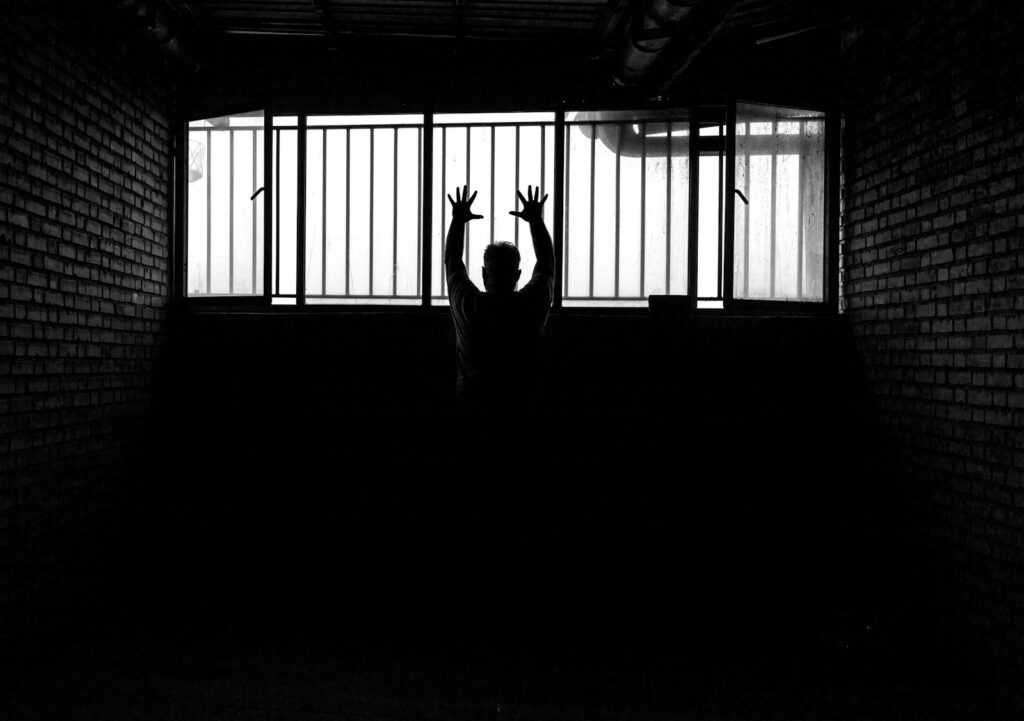
How would you recognize a mistaken belief if everyone around you shared it? The meaning of Plato’s allegory of the cave begins with that troubling question. Its prisoners accept shadows as reality because they have never been able to look beyond them.
Leaving the cave promises understanding, yet the journey brings pain and confusion before clarity. Through this strange story, Plato explores why familiar ideas can be hard to question and why learning involves more than gathering facts. He also asks what we owe others once our view of the world has changed.
What Does the Allegory of the Cave Mean?
Plato’s allegory describes the journey from accepting appearances to seeking a deeper understanding of reality. The prisoners mistake a limited view of the world for the whole of it. Their release represents an education that changes how they think, while the difficult climb reveals how unsettling that change can feel.
The story appears in Book VII of The Republic, where Socrates asks Glaucon to imagine the prisoners’ situation. Plato is the author, and Socrates is the speaker in the dialogue. Our collection of famous Plato quotes explores related questions about knowledge, education, and leadership.
The allegory’s meaning also reaches beyond one person’s discovery. Plato connects understanding with the duty to govern wisely, which helps explain why the journey cannot end with one person enjoying the sunlight.
A Short Summary of the Story
A group of prisoners has lived underground since childhood. Their legs and necks are chained, leaving them able to look only at the wall ahead.
Behind them burns a fire. Between the fire and the prisoners, people carry objects along a raised walkway, casting shadows onto the wall. The prisoners can see the shadows and hear echoes, but they cannot turn around to find their source.
“To them, I said, the truth would be literally nothing but the shadows of the images.”Socrates, Plato’s Republic, Book VII, 515c, translated by Benjamin Jowett.
The prisoners learn to recognize the passing shapes. They even award honors to those who are best at remembering and predicting them. In their limited world, this skill counts as wisdom.
Socrates then imagines a prisoner being freed and forced to turn toward the fire. The light hurts his eyes, and the objects seem less real than the familiar shadows. Dragged up the steep passage into daylight, he finds the brightness overwhelming.
His sight adjusts slowly. He first observes shadows and reflections, then objects, and eventually the sun. He comes to understand how sunlight makes the visible world possible.
When Socrates imagines him returning underground, another problem arises. His eyes struggle with the darkness, so the other prisoners conclude that leaving has damaged him. They would even kill someone who tried to free them, if they could get hold of that person.
What the Cave’s Symbols Represent
The allegory works through a series of connected images. This table gives a simple guide to their roles, while the sections below explain how they fit together.
| Image | What it represents |
|---|---|
| The prisoners | People who accept appearances and beliefs they have never questioned |
| The chains | Limits that prevent them from turning toward a wider understanding |
| The shadows | Images accepted as reality without knowing their source |
| The fire | The limited light inside the cave, which stands for the sun in the visible world |
| The ascent | The difficult process of learning and asking deeper questions |
| The world outside | The deeper reality understood through reason |
| The sun outside | The Good, which makes truth and understanding possible |
| The return | The philosopher’s duty to take part in public life and help govern |
Socrates connects the upward journey with the soul’s growth in understanding. The sun represents the Good, the highest goal of philosophical learning in this account.
For Plato, the Good helps explain how we can understand the world and judge how to act. Calling it simply “the truth” leaves out its connection with living and governing well.
The shadows also deserve care. They exist, but the prisoners misunderstand what they are seeing. An image can show something real while leaving us mistaken about the larger reality behind it.
Why Learning the Truth Hurts
The freed prisoner first prefers the shadows because he understands them. The objects and light disturb a world that had seemed familiar and safe, so he resists the change.
That detail gives the allegory much of its force. We can grow attached to a belief through habit, shared approval, or the confidence it gives us. Questioning it may also threaten our place among people who still accept it.
Plato’s view of education addresses this deeper change. Socrates argues that the learner already has the ability to understand.
“the power and capacity of learning exists in the soul already”Socrates, Plato’s Republic, Book VII, 518c, translated by Benjamin Jowett, excerpt.
Education must help turn that ability toward what deserves attention. In Book VII of The Republic, this involves the whole soul. Learning changes where we direct our minds, as well as what we know.
The practical lesson needs some care. Discomfort alone cannot prove that a new idea is true, but it can explain why we resist examining it. Understanding the allegory of the cave means allowing familiar beliefs to face questions they may have escaped for years.
Why the Prisoner Returns
A story about personal discovery could finish outside the cave. Plato continues because the link between knowledge and public life is central to The Republic.
The freed prisoner remembers his companions and feels pity for them. Later, Socrates argues that the philosophers educated by the ideal city must return to share its work and govern. They owe something to the community that helped educate them.
Their return also reveals how hard it can be to share unfamiliar knowledge. The prisoners judge the returning person by his ability to recognize shadows, the skill their world rewards. His trouble seeing in the dark seems to prove that the journey was harmful.
This creates a gap between understanding and reputation. Someone may know something valuable that a community is unable, or unwilling, to recognize.
Plato’s answer raises questions of its own. Who decides which people are wise enough to govern, and how can others challenge their power? We can value the duties he attaches to knowledge while questioning the authority he gives those who claim it.
Allegory of the Cave Examples Today
Modern examples can make the story easier to grasp, as long as we remember its wider concerns. The examples below explain parts of Plato’s argument about learning and reality, rather than the whole of it.
A Carefully Selected Feed
Imagine following accounts that present financial success as the normal result of hard work. You repeatedly see impressive earnings and people celebrating their achievements. Failed attempts and family wealth remain largely out of view.
The posts may describe real experiences. The mistake comes when that selection starts to look like a complete account of how success works. Looking beyond it means asking what has been left out and reviewing conclusions that once felt obvious.
This resembles the prisoners’ problem because the evidence they can see is limited. It also reminds us that a true claim may still tell only part of the story.
Learning Beyond the Answer
A student can memorize the steps needed to solve a familiar math problem and earn excellent marks. When the problem changes slightly, however, the memorized steps may offer little help.
A teacher who asks why each step works can first make the student feel less capable. An answer that once came quickly now requires thought, but the student gains knowledge that applies beyond the original exercise.
The example illustrates learning as a change in how we approach a subject. Confusion can be part of progress, even when it feels less rewarding than confidently repeating an answer.
What We Can Learn From the Cave
The allegory of the cave’s meaning is hardest to face when we apply it to ourselves. It is easy to imagine other people watching shadows while assuming we already stand outside.
A more useful reading asks which beliefs we have examined and which have merely grown familiar. Our discussion of what Socrates meant by “the only true wisdom” explores the related value of knowing the limits of our understanding.
Plato leaves us with a demanding lesson about learning. We need the humility to question what we trust and the patience to help others through the same difficulty. The first question is not who remains in the cave, but what we might still be mistaking for the whole world.
Leave a Reply