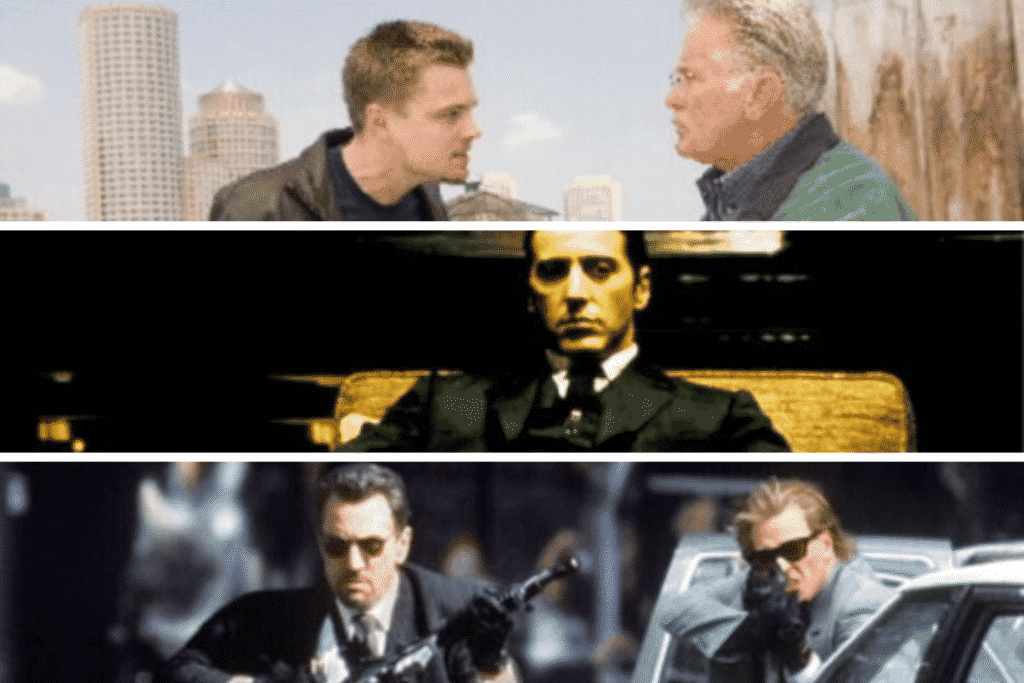
If you are looking for films like The Godfather, the best choices do more than feature men in dark suits making quiet threats. They explore families held together by loyalty and damaged by ambition. Their criminals often believe they are protecting something, even as protection turns into control.
The films below range from American mafia classics to intimate stories of fathers, sons, and divided identities. Each also has dialogue worth remembering, because one calm sentence can do the work of an entire gunfight.
JUMP TO:
Why These Films Feel Like The Godfather
The Godfather treats organized crime as a family story before anything else. Vito Corleone’s power comes from obligation, favors, and an ability to make intimidation sound almost courteous. Michael inherits that power, but he never learns how to carry it without losing part of himself.
Our collection of The Godfather movie quotes explores how the film uses dialogue to reveal its ideas about loyalty and respect. These films like The Godfather share some of those qualities, although each takes the crime genre somewhere different.
Some move faster. Others spend more time with regret than revenge. A few are much louder than Coppola’s film, which is not difficult when Tony Montana enters the conversation.
Family Dynasties and Inherited Power
1. The Godfather Part II (1974)
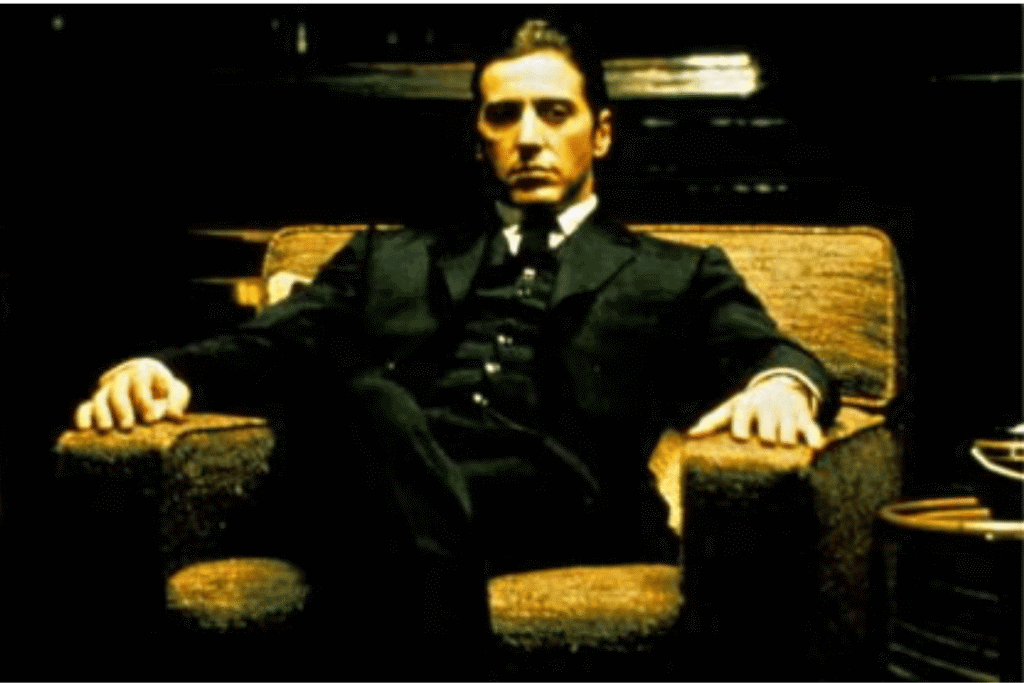
The obvious recommendation is also the closest match. Francis Ford Coppola’s sequel follows two Corleone stories at once. Young Vito builds influence in early twentieth-century New York, while Michael expands the family empire and quietly ruins nearly every relationship he has left.
Vito gains loyalty by solving problems for his neighbors. Michael approaches power differently. He studies people, waits for weakness, and removes threats without allowing affection to interrupt the plan.
Keep your friends close, but your enemies closer.
Michael Corleone, The Godfather Part II
The line sounds like sensible advice until we see what constant suspicion does to Michael. Everyone stays close because he trusts no one. By the end, the family business is stronger, while the family itself barely exists.
2. Once Upon a Time in America (1984)
Sergio Leone’s crime epic follows David “Noodles” Aaronson and his childhood friends from the Jewish neighborhoods of New York to the height of Prohibition. Decades later, Noodles returns to a city crowded with memories he would rather leave untouched.
Fat Moe: “What have you been doing all these years?” Noodles: “I’ve been going to bed early.”
Once Upon a Time in America
The answer is funny because it conceals an entire lifetime. Noodles has spent years hiding from guilt, betrayal, and the consequences of choices he can no longer repair.
Like The Godfather, the film moves across decades and watches friendship harden into business. Its account of the past is less reliable, however. Memory slips, time folds in on itself, and the audience is never entirely certain how much Noodles has changed to survive his own recollections.
The film is long, patient, and occasionally difficult to watch. It rewards the same kind of attention that Coppola asks from his audience.
3. Road to Perdition (2002)
Michael Sullivan works as an enforcer for an Irish crime family during the Great Depression. When his son witnesses a murder, Sullivan must protect the boy from the organization he once served without question.
The film’s emotional conflict lies between two fathers. Sullivan wants to save his son from inheriting his life, while crime boss John Rooney loves Sullivan as if he were family. That affection cannot erase what both men have done.
This is the life we chose, the life we lead. And there is only one guarantee. None of us will see heaven.
John Rooney, Road to Perdition
Rooney does not pretend that loyalty makes their violence honorable. His honesty separates him from criminals who call every murder an act of protection.
Fans drawn to the father-and-son relationships in The Godfather will find much to admire here. The violence is restrained, the photography is beautiful, and regret hangs over the story long before anyone admits feeling it.
4. A Bronx Tale (1993)
Calogero grows up between two models of manhood. His father, Lorenzo, works long hours as a bus driver and believes self-respect must be earned honestly. Sonny, the local crime boss, offers protection and the glamour of neighborhood power.
Neither man is reduced to an easy lesson. Sonny is dangerous, but he also recognizes Calogero’s potential. Lorenzo disapproves of the mob without losing sight of his son.
The saddest thing in life is wasted talent.
Lorenzo Anello, A Bronx Tale
That idea follows Calogero as he decides whose approval matters. The real choice is not simply between good and evil, but between building a life of his own and accepting a ready-made identity from the men around him.
Compared with The Godfather, this is a smaller and warmer film. Yet its central question is familiar. Can a young man grow up near organized crime without letting that world decide who he will become?
Ambition and the Price of Power
5. Goodfellas (1990)
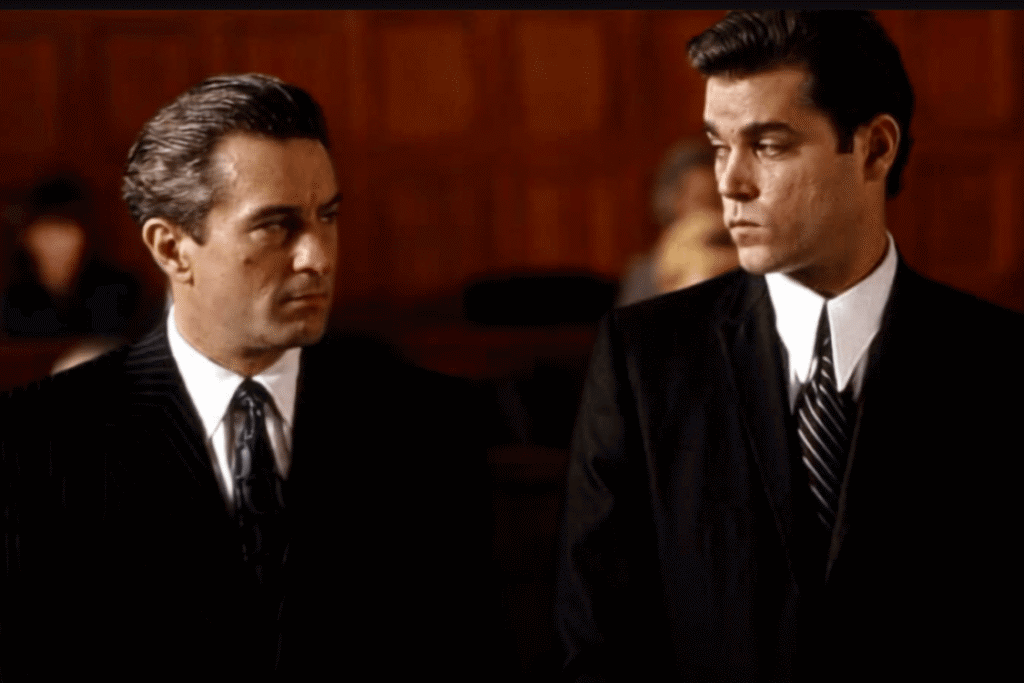
Henry Hill does not drift reluctantly into criminal life. He wants it from childhood.
As far back as I can remember, I always wanted to be a gangster.
Henry Hill, Goodfellas
That opening removes any illusion that Henry is an innocent victim of circumstance. The gangster life promises money, belonging, and freedom from ordinary rules. For a while, it delivers all three. Then paranoia arrives, usually at high speed and with cocaine involved.
Martin Scorsese trades Coppola’s formal grandeur for restless movement. His criminals interrupt one another, laugh over terrible stories, and turn violence into part of the working day. The result feels immediate and dangerously attractive before the glamour collapses.
Where Michael Corleone grows colder as his control increases, Henry becomes more frantic. Both discover that criminal loyalty lasts only while everyone remains useful.
6. Casino (1995)
Las Vegas gives Sam “Ace” Rothstein everything a careful operator could want. He receives money, authority, and a casino designed to run according to his exacting standards. Unfortunately, human beings keep entering the building.
There are three ways of doing things around here. The right way, the wrong way, and the way that I do it.
Ace Rothstein, Casino
Ace believes expertise can control chaos. His childhood friend Nicky Santoro prefers intimidation, while Ginger McKenna refuses to fit neatly into either man’s plans. Their competing appetites turn a profitable operation into a spectacular failure.
The film shares The Godfather’s interest in crime as an institution. Meetings, payments, favors, and quiet instructions matter as much as physical violence.
However, Casino is more openly abrasive. Everyone talks, argues, narrates, and explains. No one has mastered Vito Corleone’s useful habit of leaving a little silence in the room.
7. Scarface (1983)
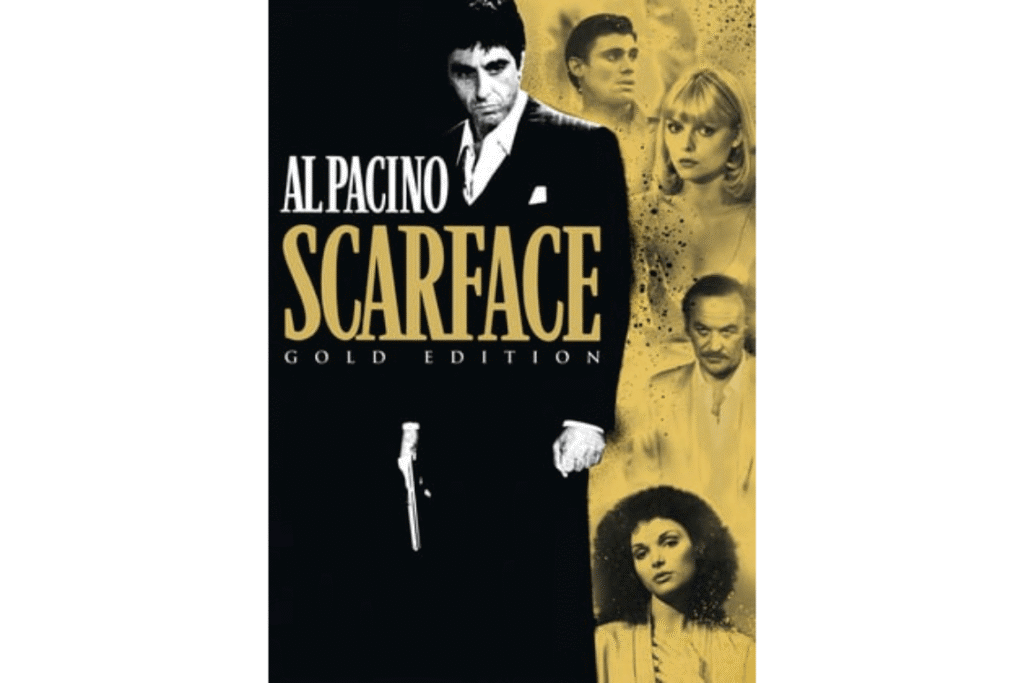
Tony Montana arrives in Miami with very little patience and an enormous appetite for more. He builds a cocaine empire through nerve and violence, yet success only increases his need to prove that he cannot be controlled.
In this country, you gotta make the money first. Then when you get the money, you get the power.
Tony Montana, Scarface
Tony sees money and power as steps in a simple sequence. What he misses is that power also creates exposure. The larger his empire grows, the fewer people he can trust.
This is The Godfather with the volume turned up and the curtains thrown open. If Michael hides his feelings behind restraint, Tony announces every grievance as if the room has poor acoustics.
Despite the stylistic difference, both stories follow outsiders who gain everything they thought they wanted. Their victories leave them isolated inside guarded homes, surrounded by possessions that cannot repair what ambition has damaged.
8. American Gangster (2007)
Frank Lucas builds a drug empire in 1970s Harlem by removing middlemen and keeping his public image controlled. Across the city, detective Richie Roberts pursues him while struggling with corruption inside his own department.
The loudest one in the room is the weakest one in the room.
Frank Lucas, American Gangster
The line summarizes Frank’s idea of power. A man who needs constant attention may be revealing insecurity, while the person who controls the room does not have to announce it.
That restraint recalls Vito Corleone, although Frank’s business is precisely the trade Vito refuses to enter. Both understand that power depends on discipline and reputation. Frank, however, underestimates how quickly visibility can undo a carefully constructed operation.
The film also gives the law a substantial role through Richie’s investigation. Instead of keeping the audience almost entirely inside the criminal family, it shows how an empire looks to the people trying to dismantle it.
Loyalty, Betrayal, and Double Lives
9. Donnie Brasco (1997)
FBI agent Joseph Pistone enters the mob under the name Donnie Brasco. His connection with aging gangster Lefty Ruggiero gives him access, but it also creates a moral problem that no professional briefing can solve.
Lefty trusts Donnie. The deeper the operation goes, the more certain Donnie becomes that exposing the organization will condemn the man who vouched for him.
A wise guy’s always right. Even when he’s wrong, he’s right.
Lefty Ruggiero, Donnie Brasco
Lefty’s remark is amusing until we recognize the system behind it. Rank decides truth. The powerful man is “right” because challenging him carries consequences.
Unlike The Godfather, which often views the hierarchy from the top, Donnie Brasco stays close to people waiting for small promotions that may never come. Lefty is not Vito Corleone. He is a tired employee in an organization that speaks about family while treating its members as replaceable.
10. The Departed (2006)
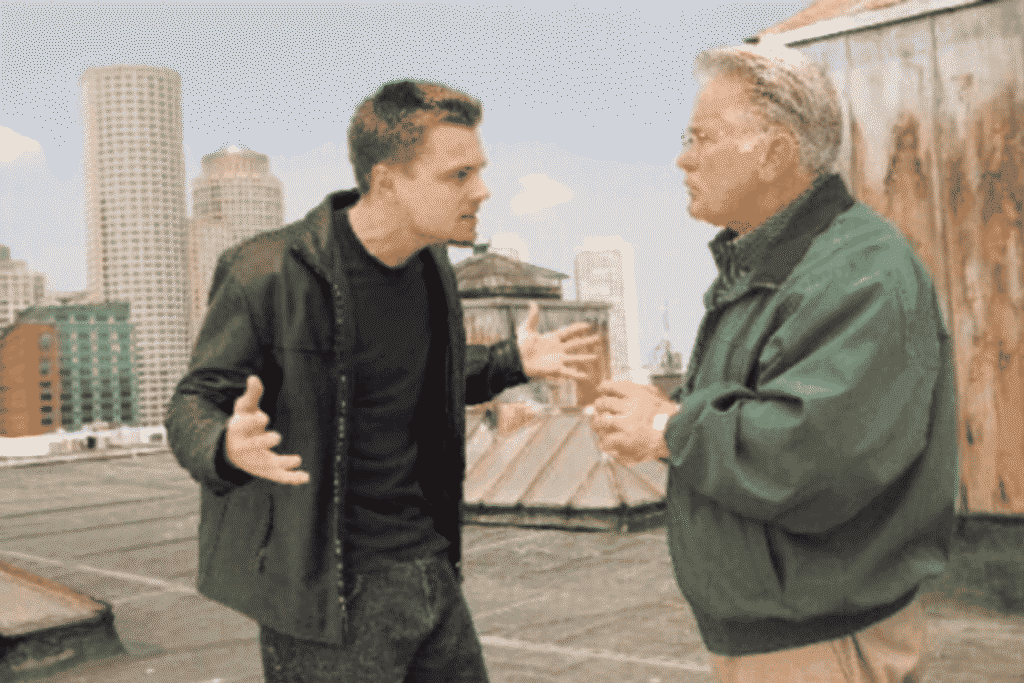
A police officer works secretly inside Boston’s criminal underworld. At the same time, a mob informant rises inside the police department. Each man tries to identify the other before his own false identity collapses.
Frank Costello, the crime boss manipulating both sides, introduces himself with a declaration of control.
I don’t want to be a product of my environment. I want my environment to be a product of me.
Frank Costello, The Departed
Vito Corleone also reshapes his surroundings, although he prefers patience and obligation. Costello uses mockery, fear, and deliberate unpredictability. Even his allies never know whether they are having a conversation or taking an exam they may fail fatally.
The film moves faster than The Godfather and replaces ritual with nervous energy. Its real similarity lies in the way institutions become families. Police officers and criminals demand loyalty, protect their own, and punish betrayal. The uniforms differ. The emotional machinery does not.
11. Eastern Promises (2007)
After a teenage girl dies while giving birth, London midwife Anna tries to identify the baby’s family. Her search leads to a Russian criminal organization and to Nikolai, a driver whose quiet obedience hides a more complicated role.
I’m just a driver.
Nikolai Luzhin, Eastern Promises
The sentence is a perfect piece of criminal understatement. Nikolai says very little because information is dangerous in his world. His body, marked with prison tattoos, tells a story he cannot safely explain aloud.
David Cronenberg strips away the warm domestic rituals that make the Corleones appear respectable. Family remains important, but here it is a weapon as often as a refuge. Children inherit debts, names carry threats, and belonging may require surrendering one’s identity.
Choose this if you prefer the quieter menace of The Godfather but want something leaner and more severe.
12. Miller’s Crossing (1990)
Tom Reagan serves as adviser to an Irish political boss during Prohibition. When competing factions threaten a gang war, Tom survives by appearing disloyal to nearly everyone.
His intelligence is useful, but it also leaves him emotionally stranded.
Nobody knows anybody. Not that well.
Tom Reagan, Miller’s Crossing
The line captures a film where friendship, romance, and business continually overlap. Tom reads other people brilliantly while giving them little reason to trust him. Even his sacrifices can look like betrayals.
The Coen brothers bring dry humor and elaborate plotting to the gangster genre. Beneath those twists, however, sits a question that The Godfather also asks. Is loyalty meaningful when it must always be tested?
Tom resembles a consigliere who has wandered into the center of the story. He lacks Vito’s authority and Michael’s inherited position, so words are often the only weapons he can use safely.
Crime, Time, and Consequence
13. The Irishman (2019)
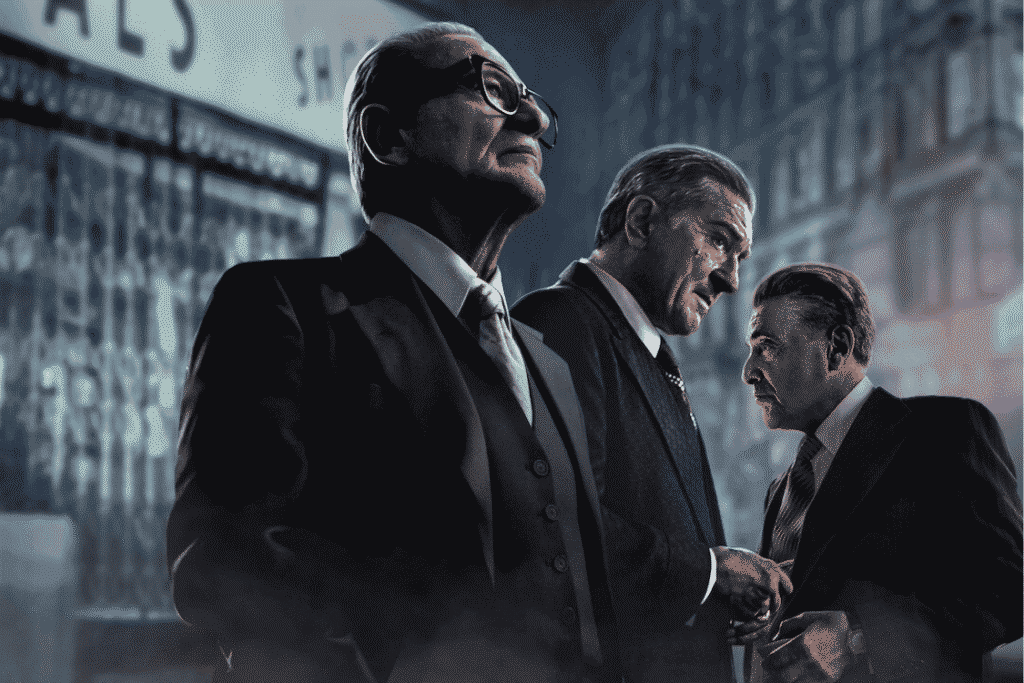
Frank Sheeran recalls his years working for crime boss Russell Bufalino and union leader Jimmy Hoffa. Unlike many gangster films, The Irishman does not stop when its characters achieve influence. It waits to see what remains afterward.
You don’t know how fast time goes by until you get there.
Frank Sheeran, The Irishman
The older Frank has survived nearly everyone, but survival offers little comfort. His family has withdrawn, his old associates are gone, and the stories that once made him important no longer impress anyone.
According to the British Film Institute, The Godfather works as both a mafia film and a family drama. The Irishman follows that combination to its bleakest conclusion. Frank claims that his work protected the people close to him, yet his daughter understands what that work required.
The film is long because time is its subject. Violence may last seconds. Living with it takes much longer.
14. Heat (1995)
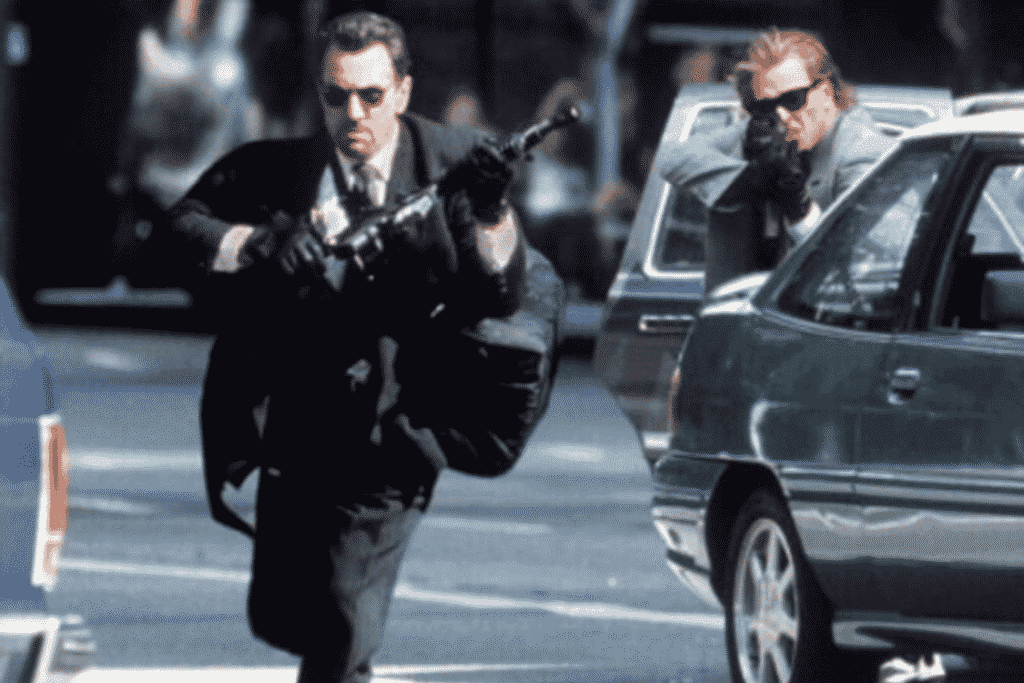
Neil McCauley leads a disciplined crew of professional thieves. Detective Vincent Hanna pursues him with equal intensity, gradually recognizing that the man across from him has built his life around the same consuming devotion to work.
Don’t let yourself get attached to anything you are not willing to walk out on in 30 seconds flat.
Neil McCauley, Heat
Neil treats detachment as a survival technique. It keeps him mobile and prevents enemies from using relationships against him. The rule works until he finds something he does not want to abandon.
Although Heat is a robbery film rather than a traditional mafia story, it shares The Godfather’s fascination with professional codes. Michael also believes emotions can be separated from business. Both men eventually discover that the separation is less clean than it sounds.
The film offers tension, sharp dialogue, and one of cinema’s great meetings between opposing characters. Its action scenes are louder than Coppola’s, but the most memorable confrontation happens over coffee.
15. The Untouchables (1987)
Federal agent Eliot Ness assembles a small team to pursue Al Capone during Prohibition. His principles face an immediate problem. Capone does not follow rules, and lawful methods appear painfully weak against an organization built on bribery and fear.
Veteran officer Jim Malone offers Ness a harsher strategy.
They pull a knife, you pull a gun.
Jim Malone, The Untouchables
Malone is not praising violence for its own sake. He believes Ness must understand the kind of fight he has entered. That reasoning resembles Michael Corleone’s claim that killing Sollozzo and McCluskey is simply business. Once extraordinary action becomes necessary, the moral boundary starts moving.
The Untouchables is less psychologically complex than The Godfather, but it is stylish, suspenseful, and wonderfully direct. Robert De Niro’s Capone enjoys attention far more than Vito ever would. He gives speeches, poses for reporters, and treats every dinner table as a stage.
Sometimes subtle menace is effective. Sometimes a baseball bat makes the point.
Which Film Should You Watch First?
Start with The Godfather Part II if you want the closest continuation of the Corleone story. For another sweeping crime epic, choose Once Upon a Time in America or The Irishman. Both require patience, but neither wastes it.
Road to Perdition and A Bronx Tale are the strongest choices if the family relationships matter more to you than criminal strategy. Meanwhile, Goodfellas and Casino offer a faster, rougher look at mob life from men who mistake access for security.
If power itself interests you, try Scarface or American Gangster. For divided loyalties, Donnie Brasco, The Departed, and Miller’s Crossing make trust feel almost reckless.
Final Thoughts
The best films like The Godfather understand that organized crime is not compelling merely because people break laws. The deeper drama comes from characters who turn loyalty into obligation, confuse control with protection, or discover too late that power cannot keep a family close.
Their dialogue lasts because it reveals the bargain underneath the violence. A gangster may call it business. A father may call it protection. The audience is left to decide how much difference the name really makes.
Leave a Reply