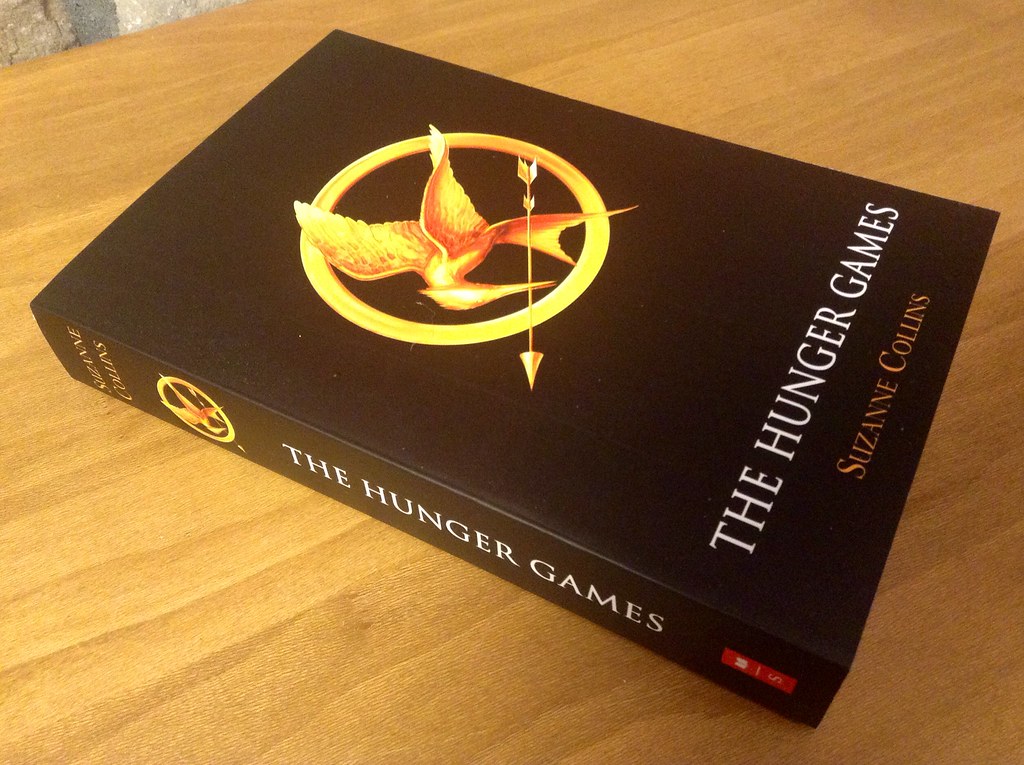
The best Hunger Games book quotes can be funny one moment and quietly devastating the next. Suzanne Collins gives Katniss a dry inner voice, Peeta an inconvenient amount of charm, and Haymitch, who has a talent for making good advice sound terrible.
Beneath the humor, however, the novel keeps returning to survival, kindness, identity, power, and the cost of turning human suffering into entertainment.
These 25 quotes all come from the first Hunger Games book, with enough context to show why the lines still mean more than their most famous fragments.
JUMP TO:
- Are These Quotes From the Book?
- Famous Hunger Games Quotes Everyone Remembers
- Funny Hunger Games Quotes With a Sharp Edge
- Meaningful Hunger Games Quotes About Love and Trust
- Peeta Mellark Quotes About Staying Yourself
- Hunger Games Quotes About Power and Rebellion
- Why “Happy Hunger Games” Is Really Propaganda
- Why Peeta’s Best Quotes Aren’t Really About Romance
- When Romance Becomes Part of the Show
- From Survival to Defiance
- Book Quotes vs. Movie Quotes
- What the Best Hunger Games Book Quotes Reveal
Are These Quotes From the Book?
The quotations in this collection come from Suzanne Collins’s original 2008 novel, The Hunger Games, rather than lines created or substantially changed for the 2012 movie.
I’ve also used chapter references instead of page numbers. Hardcover, paperback, ebook, and international editions can place the same passage on different pages, while the chapter remains consistent.
For more literary lines worth revisiting, browse our wider collection of quotes.
Famous Hunger Games Quotes Everyone Remembers
Some lines have become so closely associated with the series that they barely need an introduction. Returning them to the novel, however, often reveals something darker or more complicated than the version that survives on T-shirts and memes.
1. May the Odds
Happy Hunger Games! And may the odds be ever in your favor!
Effie Trinket, The Hunger Games, Chapter 1
It sounds almost cheerful until we remember what Effie is wishing them luck for. Children are about to be selected for a televised fight to the death, yet the Capitol wraps the event in the language of celebration and good fortune.
The contradiction is deliberate. Panem uses violence to control the districts while training everyone to accept the spectacle around it.
2. Katniss Volunteers
I volunteer! I volunteer as tribute!
Katniss Everdeen, The Hunger Games, Chapter 2
Katniss acts the instant Prim is chosen, pushing past the crowd before she has time to think through what volunteering will cost her. Protecting her sister is more immediate than protecting herself.
Her first great act of resistance is therefore intensely personal. Katniss does not volunteer to make a political statement, but District 12’s reaction transforms her sacrifice into one. The crowd refuses to applaud, offering silence and the three-finger salute instead.
3. The Girl on Fire
Katniss. The girl who was on fire.
Katniss Everdeen, narration, The Hunger Games, Chapter 5
Cinna’s costume gives Katniss something she desperately needs before the Games begin: an identity the audience will remember. She is no longer merely the girl from District 12.
What begins as clever styling gradually becomes much larger. Fire turns into a symbol attached to Katniss before she has any idea how politically dangerous a symbol can be.
4. Her Last Hope
You don’t forget the face of the person who was your last hope.
Katniss Everdeen, narration, The Hunger Games, Chapter 4
Katniss is remembering Peeta throwing her bread when her family was close to starving. She has never forgotten the moment because his kindness arrived when she had almost no reason left to expect help.
Bread becomes one of the quietest recurring symbols in their relationship. Before the romance, the cameras, or the arena, Peeta gave Katniss something simply because she needed it.
5. Radiant as the Sun
I am not pretty. I am not beautiful. I am as radiant as the sun.
Katniss Everdeen, narration, The Hunger Games, Chapter 9
Cinna’s work allows Katniss to see herself differently for a brief moment. She does not settle for “pretty,” a word that suddenly seems too ordinary for what she sees.
The line is memorable because it captures confidence without sounding like conventional beauty advice. Katniss recognizes power in her appearance, something the Capitol will soon try to turn into entertainment. The wording appears in Chapter 9 of the novel.
6. District Twelve’s Motto
District Twelve. Where you can starve to death in safety.
Katniss Everdeen, The Hunger Games, Chapter 1
Katniss mutters this while returning toward the district boundary, where the fence supposedly protects residents from danger. Her joke is bleak because official “safety” means very little when hunger remains an everyday threat.
Collins establishes Katniss’s political instincts before the reaping has even begun. She already recognizes the gap between what the government claims to provide and how people actually live.
Funny Hunger Games Quotes With a Sharp Edge
The Hunger Games is a brutal novel, but it is not humorless. Katniss has a wonderfully dry internal voice, Peeta jokes when he probably should conserve his energy, and Haymitch often delivers wisdom disguised as an insult.
The humor also serves a purpose. These characters live in a world where fear is ordinary, so sarcasm frequently becomes another survival skill.
7. Haymitch’s Master Plan
Here’s some advice. Stay alive.
Haymitch Abernathy, The Hunger Games, Chapter 4
Katniss and Peeta finally have a mentor who survived the arena, and his first piece of professional guidance amounts to: try not to die. Helpful.
The joke also hides something sadder. Haymitch has watched District 12 tributes leave for the Games year after year, knowing that most will never return, and cynicism has become easier than hope.
8. A Dead Slug
You’ve got about as much charm as a dead slug.
Haymitch Abernathy, The Hunger Games, Chapter 9
Haymitch says this after repeatedly failing to turn Katniss into the warm, delightful television personality nobody who knows Katniss has ever mistaken her for.
His insult is funny, but the problem is serious. Sponsors can help keep tributes alive, so Katniss must learn that surviving the Games requires more than weapons. She has to make strangers care whether she lives.
9. Peeta’s Secret Weapon
Yes, and I’m sure the arena will be full of bags of flour for me to chuck at people.
Peeta Mellark, The Hunger Games, Chapter 7
Katniss points out that Peeta can lift hundred-pound flour sacks, hoping he will stop underrating himself. Peeta immediately imagines an arena conveniently stocked with bakery supplies.
His self-deprecating humor makes the line memorable, but Katniss is right about the underlying point. Peeta is physically stronger than he admits, and his tendency to minimize himself is one of the reasons she has trouble deciding how dangerous he really is.
10. Too Likable
The more likable he is, the more deadly he is.
Katniss Everdeen, narration, The Hunger Games, Chapter 5
Peeta compliments Katniss after the tribute parade, and her immediate response to unexpected warmth is essentially to assume he is plotting her murder.
It is funny because we know Katniss is spectacularly bad at interpreting Peeta at this stage. Yet the suspicion makes sense in an arena where liking someone can make them harder to kill. The line appears immediately before Chapter 6 begins.
11. Finish Me Off
You here to finish me off, Sweetheart?
Peeta Mellark, The Hunger Games, Chapter 19
Katniss finally finds Peeta camouflaged beside the stream, injured, feverish, and almost indistinguishable from the muddy bank. Naturally, his opening contribution is sarcasm.
Peeta’s humor matters because their reunion could easily have been written as pure melodrama. Instead, Collins lets him remain recognizably Peeta even when he is in terrible shape.
12. Frosting Saves Lives
Yes, frosting. The final defense of the dying.
Peeta Mellark, The Hunger Games, Chapter 19
Katniss jokes that all those hours decorating cakes have finally paid off after seeing Peeta’s remarkable camouflage. Peeta, barely functional, still finds enough energy to improve the joke.
His answer also brings his ordinary life into the arena. A skill associated with cakes, color, and celebration becomes something that helps him survive a place designed for death.
13. Madly in Love
Remember, we’re madly in love, so it’s all right to kiss me anytime you feel like it.
Peeta Mellark, The Hunger Games, Chapter 19
Peeta manages to turn their highly strategic public romance into an opportunity to flirt while half-dead. Katniss laughs, which is probably the response he was hoping for.
The line is charming, but it also captures the bizarre position they occupy. They are performing love for Panem while trying to work out privately which parts of the performance might be real.
14. Dangerous Intelligence
Stupid people are dangerous.
Katniss Everdeen, narration, The Hunger Games, Chapter 11
Katniss thinks this after another tribute lights a fire at night, effectively advertising her location to anyone nearby. The observation is mercilessly concise.
Its appeal extends well beyond the arena, which probably explains why the line gets quoted so often. Bad decisions do not need malicious intentions to put everyone around them in danger.
Meaningful Hunger Games Quotes About Love and Trust
Katniss understands hunger, hunting, and responsibility far better than she understands affection. Kindness unsettles her because it creates debts she cannot repay neatly and attachments she may later be forced to lose.
Peeta makes that problem worse by being kind when Katniss would find it far easier if he simply acted like an enemy.
15. Kindness Gets Inside
Kind people have a way of working their way inside me and rooting there.
Katniss Everdeen, narration, The Hunger Games, Chapter 4
Katniss thinks specifically about Peeta, whose earlier kindness makes it difficult for her to treat him as just another tribute. Emotional attachment feels dangerous because she may soon have to choose between caring about him and staying alive.
The line reveals something essential about Katniss. She often presents herself as practical and guarded, yet compassion has an enormous hold over her precisely because she tries so hard to resist it.
16. Betrayal Needs Trust
For there to be betrayal, there would have to have been trust first.
Katniss Everdeen, narration, The Hunger Games, Chapter 9
Katniss feels betrayed when Peeta asks to be coached separately, then immediately scolds herself for the reaction. Tributes are supposed to be competitors, so why should his decision hurt?
Her logic is neat. Her feelings are less cooperative. The passage quietly reveals that she had begun trusting Peeta long before she was willing to admit it.
17. Protecting Her Past
They’re already taking my future! They can’t have the things that mattered to me in the past!
Katniss Everdeen, The Hunger Games, Chapter 9
Haymitch wants Katniss to share personal stories so the audience can know and like her. She resists because the Capitol has already claimed her future, and she refuses to hand over her private memories as entertainment too.
The line adds another dimension to the novel’s obsession with control. Katniss is not only fighting to preserve her body. She is also trying to keep some part of her identity outside the Capitol’s ownership.
18. Peeta’s Confession
Because…because…she came here with me.
Peeta Mellark, The Hunger Games, Chapter 9
Caesar Flickerman tells Peeta that winning the Games should help him impress the girl he loves. Peeta’s answer reveals to the entire nation that the girl is Katniss.
The confession launches the “star-crossed lovers” story, but its power comes from the ambiguity that follows. Haymitch immediately recognizes its strategic value, while Peeta’s feelings are much less manufactured than Katniss initially assumes.
19. The Boy With Bread
I do not want to lose the boy with the bread.
Katniss Everdeen, narration, The Hunger Games, Chapter 22
Late in the arena, Katniss finally admits that keeping Peeta alive is no longer only about sponsors, strategy, or fear of being alone. She simply does not want him to die.
Calling him the “boy with the bread” connects her present feelings to the first act of kindness that made him unforgettable. Years before Panem turned them into a love story, Peeta had already given Katniss hope when she desperately needed it.
Peeta Mellark Quotes About Staying Yourself
One of the strongest content gaps in many Hunger Games quote lists is the way they reduce Peeta to romance. His most important idea in the first novel has little to do with whether Katniss loves him back.
Before entering the arena, Peeta is already thinking about a harder problem: how much of yourself can you surrender in order to survive before survival stops feeling like victory?
20. Dying as Himself
I want to die as myself.
Peeta Mellark, The Hunger Games, Chapter 10
Peeta tells Katniss that he does not want the Games to transform him into someone he would no longer recognize. He accepts that he may need to fight, yet he is frightened by what the Capitol can force people to do to one another.
Katniss initially cannot understand why he is thinking about identity when they may be dead within hours. The idea stays with her anyway, and the arena eventually gives it meaning she could not grasp on the rooftop.
21. More Than a Piece
That I’m more than just a piece in their Games.
Peeta Mellark, The Hunger Games, Chapter 10
Peeta wants proof that the Capitol can control his circumstances without owning every part of him. The distinction sounds almost philosophical to Katniss, whose immediate goal is simply staying alive.
His words become one of the novel’s central ideas. Physical power may belong to the Capitol, but Peeta insists that identity, dignity, and moral choice do not automatically belong with it.
Hunger Games Quotes About Power and Rebellion
Katniss does not enter the Games hoping to become a revolutionary. She wants Prim safe, her family fed, and herself alive long enough to return home.
Her political awakening happens through experience. Rue’s friendship and death force Katniss to see the other tributes less as enemies and more as children trapped inside the same system.
22. Destruction Is Easier
Destroying things is much easier than making them.
Katniss Everdeen, The Hunger Games, Chapter 16
Katniss says this while working with Rue on a plan to destroy the Careers’ food supply. In the scene, she means it practically: ruining food is easier than producing it.
The sentence reaches beyond the immediate strategy almost effortlessly. Panem has built an entire political system around destruction and fear, while trust between districts takes far more courage to create.
23. The Real Enemy
It’s the Capitol I hate, for doing this to all of us.
Katniss Everdeen, narration, The Hunger Games, Chapter 18
After Rue dies, Katniss looks at both Rue and the District 1 boy and finds it difficult to direct her hatred toward another dead child. Her anger finally moves past individual opponents toward the institution that put them there.
This is a crucial shift. The Games depend on tributes seeing one another as the enemy, while Katniss begins to recognize that they are all being used by the same power.
24. Rue Was More
That Rue was more than a piece in their Games. And so am I.
Katniss Everdeen, narration, The Hunger Games, Chapter 18
Peeta’s rooftop idea returns after Rue’s death, but Katniss finally understands it emotionally rather than intellectually. She cannot undo what the Capitol has done, yet she can refuse to let Rue become nothing more than another body removed from the arena.
Covering Rue in flowers gives the cameras an image the Gamemakers did not create. Katniss turns grief into a message, and compassion becomes a form of defiance.
25. Pity, Not Vengeance
Pity, not vengeance, sends my arrow flying into his skull.
Katniss Everdeen, narration, The Hunger Games, Chapter 25
Cato has been Katniss’s most obvious enemy for much of the Games, but his final moments do not feel like triumph. After the muttations leave him suffering beneath the Cornucopia, Katniss kills him to end the agony.
The distinction between pity and vengeance matters because Cato, too, has ultimately been consumed by the arena. Katniss can kill him without pretending his death has turned the Games into something worth celebrating.
Why “Happy Hunger Games” Is Really Propaganda
“Happy Hunger Games” works so well as a slogan because its language is completely wrong for the event it describes. The Capitol takes children from their families, places them in an arena, and broadcasts their deaths, yet everything surrounding the violence is presented as celebration: parades, costumes, interviews, betting, sponsors, and applause.
Suzanne Collins has explained that the idea for The Hunger Games came partly while she was switching between reality television and footage of actual war. She also cites the myth of Theseus, Roman gladiatorial entertainment, and the idea of “bread and circuses” among the book’s influences.
Those influences help explain why appearance matters so much in the novel. The Capitol does not hide its violence; it packages violence so attractively that citizens can consume suffering as entertainment.
Why Peeta’s Best Quotes Aren’t Really About Romance
Peeta’s feelings for Katniss are important, but reducing him to the love interest misses what he contributes to the novel. He is the character who most clearly asks whether survival is enough.
Katniss understands the practical rules of the arena almost immediately. Find water, avoid the Careers, secure a weapon, stay awake, do whatever gives you another day. Peeta introduces a different measurement of survival when he worries about leaving the arena as someone the Capitol has created.
His wish to remain “more than just a piece” later shapes Katniss’s response to Rue. She does not suddenly adopt Peeta’s philosophy because he explained it well. Experience makes her understand why he cared about it.
When Romance Becomes Part of the Show
Katniss and Peeta’s relationship becomes especially interesting because Panem never allows it to remain entirely private. A confession can attract sponsors, a kiss can earn food or medicine, and an intimate moment can become material for millions of viewers.
As a result, Katniss often cannot tell whether she is acting, feeling, or doing both at once. The audience wants a love story, Haymitch needs a survival strategy, and Peeta is inconveniently sincere in the middle of it all.
Collins uses the romance to explore something bigger than a love triangle. When a government controls the cameras, even genuine emotion can be packaged, sold, and turned into part of the spectacle.
From Survival to Defiance
Katniss begins The Hunger Games with a remarkably practical understanding of life. She hunts because her family needs food, keeps dangerous opinions to herself, and enters the arena determined to survive rather than make a statement.
Peeta’s questions about identity initially sound almost indulgent to her. Rue changes that. Once Katniss sees how thoroughly the Games rely on turning children from different districts against one another, survival stops being the only question that interests her.
Flowers become protest. Kindness crosses district lines. The public romance gives Katniss and Peeta leverage because the Capitol needs its audience emotionally invested in the story.
By the time Katniss reaches the nightlock berries, she still does not think of herself as a revolutionary mastermind. She simply understands that the Gamemakers need a victor, and for once, their need gives her a choice they did not intend her to have.
Book Quotes vs. Movie Quotes
The novel and 2012 film share many famous lines, but they should not be treated as interchangeable sources. Some dialogue was shortened, expanded, or rewritten for the screen, while other memorable film lines do not appear in the first book in the same form.
President Snow’s frequently shared line about hope being stronger than fear is a good example. It is associated with The Hunger Games, but it belongs to the film adaptation rather than the original novel.
The difference is worth checking whenever a quote is being attributed specifically to Suzanne Collins’s book. A line can be perfectly genuine Hunger Games dialogue and still come from the wrong version of the story.
What the Best Hunger Games Book Quotes Reveal
The most memorable Hunger Games quotes rarely need long speeches to carry their weight. Bread can represent hope, fire can create an identity, flowers can turn mourning into protest, and a joke about frosting can remind us that the person bleeding beside a stream is still Peeta.
Collins also refuses to separate the personal from the political. Katniss protects Prim because she loves her, honors Rue because she cannot bear the alternative, and eventually resists the Capitol because survival has shown her exactly what its power costs.
The arena is designed to reduce twenty-four children to pieces in someone else’s game. The novel keeps asking what remains when those pieces insist on being people.
Leave a Reply