If you have come across the phrase “suicidal empathy,” you may have seen it in a debate about politics, culture, compassion, or the future of the West. These suicidal empathy quotes and key ideas from Gad Saad help explain why he believes empathy can become dangerous when it is separated from truth, reason, and consequences.
The phrase can sound alarming at first, but in Saad’s work, it is not about personal self-harm. It is a cultural and political concept. He uses it to describe what happens when compassion becomes so extreme or misdirected that it weakens the very people, institutions, or societies trying to be kind.
Below, you will find short quotes, quote-style takeaways, and reflections on Saad’s argument about empathy, truth, courage, and common sense.
Who Is Gad Saad?
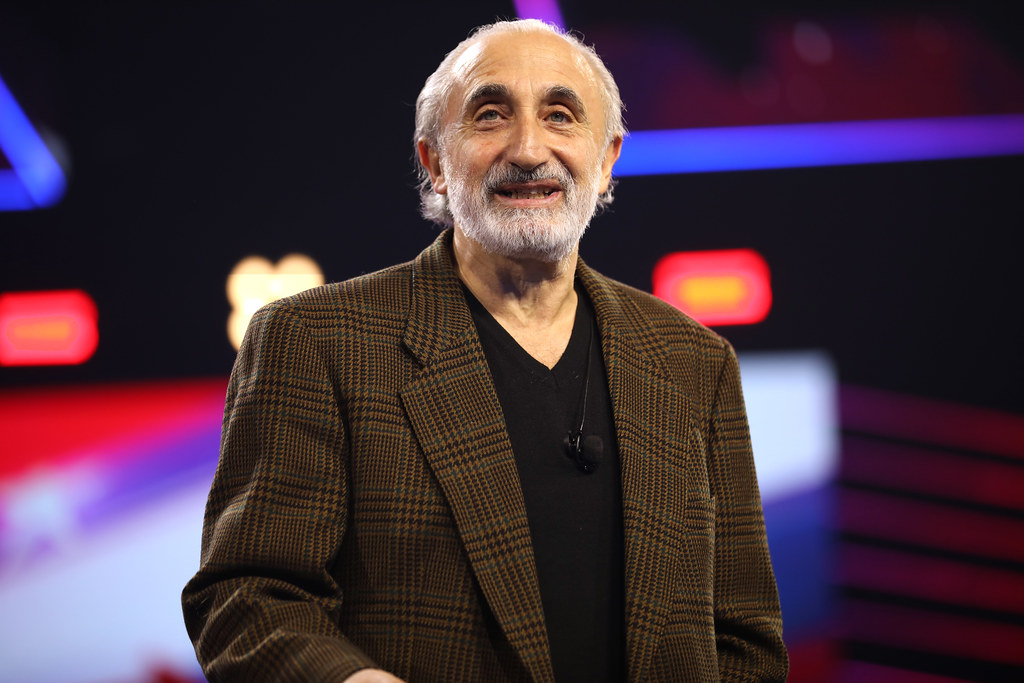
Gad Saad is a professor, author, public speaker, and evolutionary behavioral scientist known for applying evolutionary psychology to human behavior, consumer decisions, and culture. He is also known for books such as The Parasitic Mind, The Saad Truth About Happiness, and Suicidal Empathy: Dying to Be Kind.
Saad’s writing often focuses on reason, free speech, truth, intellectual courage, and what he sees as harmful ideas spreading through modern culture. If you want to explore more of his earlier work, you can also read these Gad Saad quotes from The Parasitic Mind.
What Does “Suicidal Empathy” Mean?
“Suicidal empathy” is Gad Saad’s term for empathy that becomes self-destructive when it ignores truth, consequences, and long-term harm. In his view, compassion is not the problem; compassion without reason is the problem.
In Suicidal Empathy: Dying to Be Kind, Saad argues that societies can weaken themselves when they elevate emotional displays of kindness above common sense, safety, and reality. His point is not that empathy should disappear, but that empathy needs wisdom, boundaries, and moral clarity.
Best Suicidal Empathy Quotes and Key Ideas by Gad Saad
Before the list, one important note: some lines below are direct public quotes from Gad Saad, while others are clearly labeled as “key ideas.” The key ideas are not presented as exact book quotations. They are short summaries of the themes Saad discusses around suicidal empathy, reason, and truth.
1. “A society dies when it cares more about exhibiting infinite tolerance and empathy than invoking its survival instinct.”
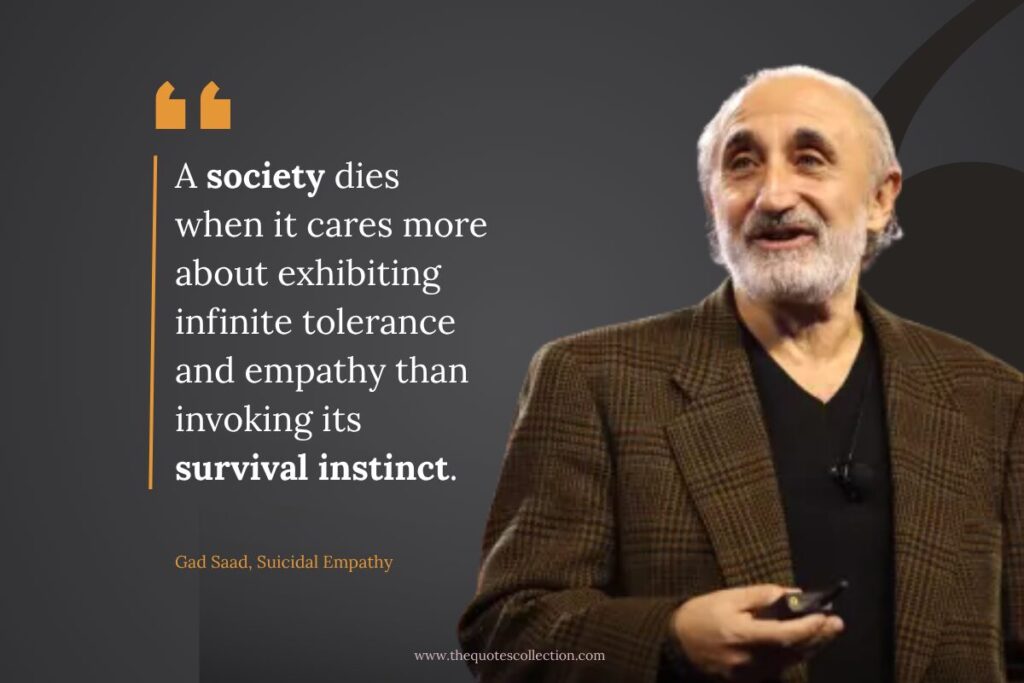
This quote captures the central warning behind Saad’s idea. He is arguing that empathy becomes dangerous when it overrides a society’s basic instinct to protect itself.
2. “I’m not saying that empathy is bad.”
This is an important clarification. Saad’s argument is not against kindness itself, but against empathy that becomes detached from reality.
3. “Empathy is an admirable virtue.”
Saad recognizes empathy as a real virtue. His concern is what happens when a good trait becomes excessive, misdirected, or used in the wrong context.
4. Key idea: Good intentions are not enough.
One of the strongest lessons in Saad’s argument is that good intentions can still create bad outcomes. A policy, belief, or personal choice must be judged not only by how compassionate it sounds, but by what it actually produces.
5. Key idea: Compassion needs consequences.
Empathy becomes healthier when it is connected to responsibility. Without consequences, compassion can become a way of excusing behavior that harms others.
6. Key idea: Kindness without wisdom can become weakness.
Saad’s warning is that kindness should not mean surrendering judgment. Wise compassion asks what is truly helpful, not only what feels emotionally comforting in the moment.
7. “Suicidal empathy + pathological generosity + parasitic thinking = death of the West.”
This short statement sums up Saad’s broader cultural concern. He links suicidal empathy with what he sees as destructive habits of thought that weaken Western societies from within.
8. Key idea: Empathy should not replace truth.
Truth is one of Saad’s recurring themes. In his view, empathy becomes dangerous when people refuse to say what is real because they fear sounding unkind.
9. “Science should be about the pursuit of truth, and not about the defense of one’s preferred political ideology or personal beliefs.”
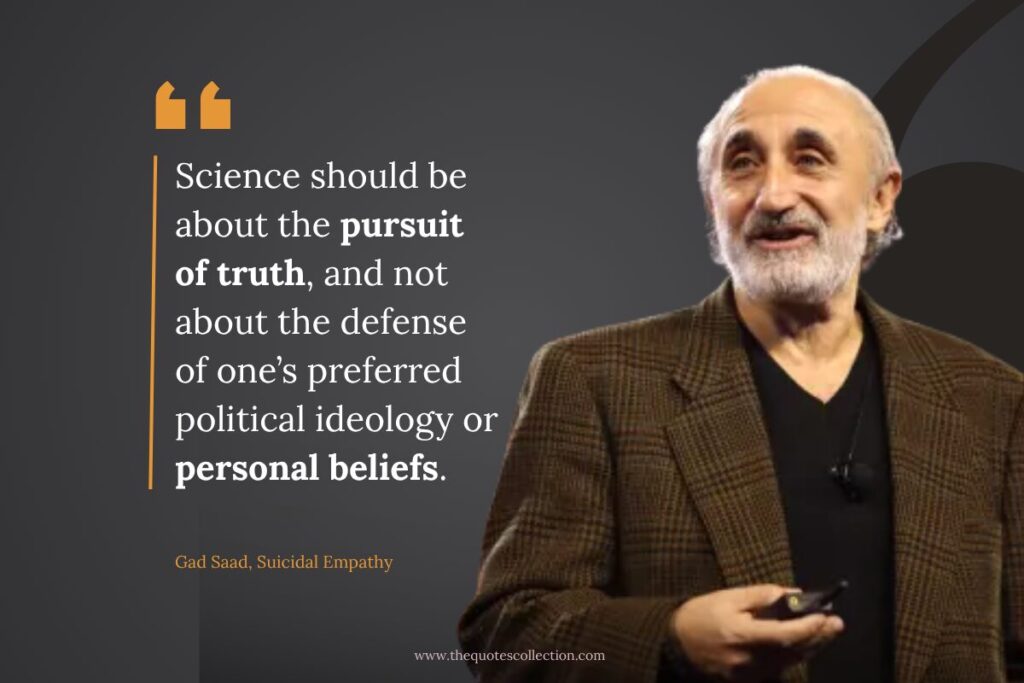
This quote connects strongly to the idea of suicidal empathy because Saad often warns against placing ideology above evidence. For him, truth must come before emotional comfort.
10. Key idea: Feelings can guide us, but they should not govern everything.
Emotion matters, but it cannot be the only tool for making decisions. Saad’s work often argues that reason must correct emotion when emotion becomes extreme.
11. “My purity manifests itself in countless ways, including an utter inability to sit idly when exposed to attacks on truth, reason, logic, and/or individual dignity.”
This quote shows why Saad’s arguments often sound urgent. He sees the defense of truth and reason as a moral responsibility, not just an intellectual preference.
12. Key idea: A society can be compassionate and still protect itself.
Saad’s argument does not require a society to become cruel. It suggests that a society must be able to care for others while also preserving order, safety, and responsibility.
13. “Empires implode from within due to their own excesses.”
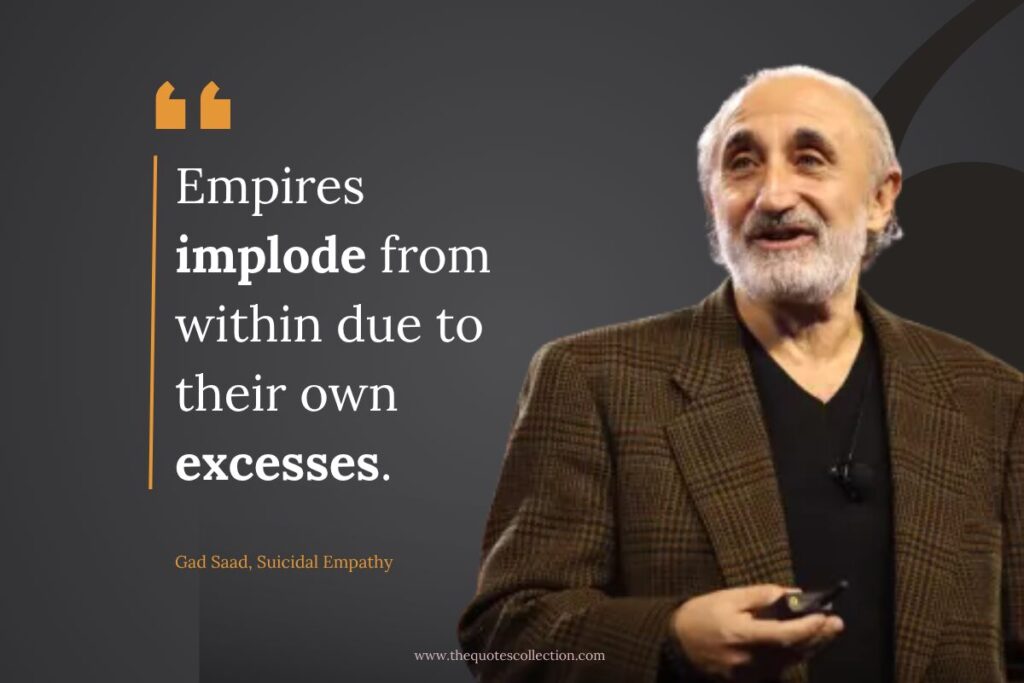
This line fits the civilizational theme of Suicidal Empathy. Saad often argues that societies do not only fall because of outside enemies. They can also weaken themselves through internal excesses.
14. Key idea: Virtues can become vices when taken too far.
This is one of the most important ideas behind the phrase. Empathy is good, but unchecked empathy can become harmful when it ignores proportion, justice, or reality.
15. Key idea: The target of empathy matters.
Saad’s argument asks who receives compassion and who pays the cost. Empathy can become distorted when it protects the wrong people while neglecting those who are harmed.
16. Key idea: Moral courage means saying what is true, even when it sounds unpopular.
Many of Saad’s quotes return to the cost of honesty. He often argues that a healthy society needs people who are willing to speak clearly, even when truth is uncomfortable.
17. “Why should people in a free country be afraid of saying what they believe?”
This quote reflects Saad’s concern about free expression. In the context of suicidal empathy, it warns against cultures where emotional sensitivity makes honest disagreement feel dangerous.
18. Key idea: Compassion should not be confused with moral signaling.
Saad frequently criticizes behavior that appears kind on the surface but is more concerned with public approval than real-world results. In his view, compassion must be more than performance.
19. Key idea: The most compassionate answer is not always the softest one.
Sometimes kindness requires firmness. A parent, teacher, leader, or society may need to set limits because boundaries can protect people from greater harm.
20. “Anyone who is willing to end a relationship because of a reasoned difference of opinion is not worthy of your friendship.”
This quote applies to more than politics. It is also about emotional maturity, disagreement, and the ability to remain human with people who think differently.
21. Key idea: Reason protects empathy from becoming reckless.
Reason does not destroy compassion. It helps compassion stay grounded, fair, and useful.
22. Key idea: A culture that fears facts will eventually fear freedom.
Saad’s defense of truth is tied to his defense of open debate. If people cannot discuss facts honestly, then public life becomes ruled by fear, slogans, and emotional pressure.
23. “Truth is anti-fragile. It is not brittle.”
This quote is a reminder that truth does not need to be protected from every difficult question. Saad’s view is that truth grows stronger when it is tested.
24. Key idea: Empathy should serve human flourishing, not self-destruction.
The best form of empathy helps people grow, heal, and live responsibly. Saad’s concern is empathy that creates dependency, disorder, or denial.
25. Key idea: Kindness needs courage.
The final lesson of suicidal empathy is that real kindness is not passive. It requires the courage to tell the truth, set boundaries, and think beyond the emotion of the moment.
Gad Saad on Reason and Truth
Many of Saad’s arguments return to the same warning: compassion becomes dangerous when it refuses to face reality. That is why truth, reason, and free inquiry appear so often in his work.
For Saad, reason is not cold or heartless. It is the tool that keeps compassion honest. Without reason, empathy can become selective, sentimental, or easily manipulated.
This is why quotes about truth matter so much in understanding suicidal empathy. The deeper question is not whether people should care. The deeper question is whether caring still counts as good when it ignores what is real.
Gad Saad on Empathy and Compassion
The phrase “suicidal empathy” can be misunderstood if it is read as an attack on compassion itself. A more careful reading is that Saad is criticizing empathy that becomes extreme, misplaced, or detached from consequences.
Empathy can move people to help others. It can soften pride, reduce cruelty, and remind us that people are more than statistics or arguments. But empathy also needs discernment.
A person can feel deeply and still make wise choices. A society can be generous and still protect its citizens. A leader can care about suffering and still uphold accountability. That balance is where Saad’s argument becomes most useful.
Gad Saad on Culture and Civilizational Decline
Saad often connects individual habits of thought with larger cultural outcomes. In his view, ideas do not stay private. They shape institutions, laws, education, media, and public life.
That is why he warns against what he sees as self-destructive compassion. If a society rewards emotion over truth for long enough, it may lose the ability to make difficult but necessary decisions.
Whether readers agree with Saad completely or not, his argument raises a serious question: can a culture survive if it treats every boundary as cruelty and every hard truth as harm?
How to Understand These Quotes Without Misreading Them
The phrase “suicidal empathy” should be understood as a political and cultural concept in Saad’s work. It should not be confused with personal mental health struggles or suicidal thoughts.
It is also important to read Saad’s argument with care. He is not saying that kindness is worthless. He is saying that kindness becomes dangerous when it is guided only by emotion and not by truth, responsibility, and consequences.
Readers can agree or disagree with Saad’s conclusions. But the central idea is still worth considering: a virtue can become harmful when it loses balance.
Why These Quotes Resonate With Readers
These quotes resonate because they touch on a difficult question: can good intentions lead to harmful outcomes?
Many people have seen situations where kindness helped someone heal. Many have also seen situations where kindness became enabling, avoidance, or denial. Saad’s phrase gives language to that tension.
That is why people search for suicidal empathy quotes. They are not only looking for short lines from a book. They are trying to understand a phrase that has entered public debate about compassion, politics, culture, and common sense.
Final Thoughts
Gad Saad’s suicidal empathy quotes and key ideas are meant to challenge easy assumptions about kindness. They ask whether compassion remains good when it refuses to consider consequences.
The strongest lesson is not that empathy is bad. It is that empathy, like any virtue, needs wisdom. When compassion is joined with truth, courage, and responsibility, it can heal. When it is cut loose from reality, Saad argues, it can become destructive.
That is why the phrase continues to spark debate. It forces readers to think about what real kindness requires: not only a soft heart, but also a clear mind.
Leave a Reply