
Niccolò Machiavelli wrote The Prince for a member of Florence’s ruling Medici family. More precisely, he dedicated the final version to Lorenzo di Piero de’ Medici, Duke of Urbino. Lorenzo was the grandson of Lorenzo the Magnificent, not the famous statesman himself.
Machiavelli had lost his government post after the Medici returned to power. By giving Lorenzo a guide to ruling, he could display his knowledge and perhaps return to public service. Yet The Prince was also a study of power and a plea for strong leadership in a divided Italy.
JUMP TO:
- Who Was The Prince Written For?
- What Happened Before Machiavelli Wrote the Book?
- Why Did Machiavelli Write The Prince?
- Was The Prince Really a Job Application?
- Was It Sincere Advice, Satire, or a Warning?
- What Did Machiavelli Want Lorenzo to Learn?
- Did Lorenzo Ever Read or Reward Machiavelli?
- Final Thoughts
Who Was The Prince Written For?
The final dedication names Lorenzo di Piero de’ Medici, a younger member of the family that again controlled Florence.
Readers sometimes confuse him with Lorenzo the Magnificent, who died in 1492. Machiavelli was addressing a less celebrated Lorenzo, but one who held power and might have restored his career.
Machiavelli first considered another recipient. In a 1513 letter, he told Francesco Vettori that he was thinking of giving his new work to Giuliano de’ Medici. He later changed the dedication to Lorenzo.
The dedication presents the book as a modest gift from a man with unusual experience:
To understand the nature of the people it needs to be a prince, and to understand that of princes it needs to be of the people.
Niccolò Machiavelli, The Prince, Dedication
A ruler can see the people from above, while a citizen can study rulers from below. Machiavelli claims the second view as his own. That practical focus also places the book within his wider thinking about power and political survival.
What Happened Before Machiavelli Wrote the Book?
Machiavelli wrote The Prince after a painful fall from public life. For about fourteen years, he served the Florentine Republic as a diplomat and official.
When the Medici returned to Florence in 1512, the republic fell, and Machiavelli lost his office. Officials later accused him of joining a conspiracy. He was imprisoned and tortured, then released after an amnesty.
He withdrew to his estate near San Casciano. In his December 1513 letter to Francesco Vettori, Machiavelli described reading ancient authors at night. He also said he had composed “a small work on principalities.” That work became The Prince.
Why Did Machiavelli Write The Prince?
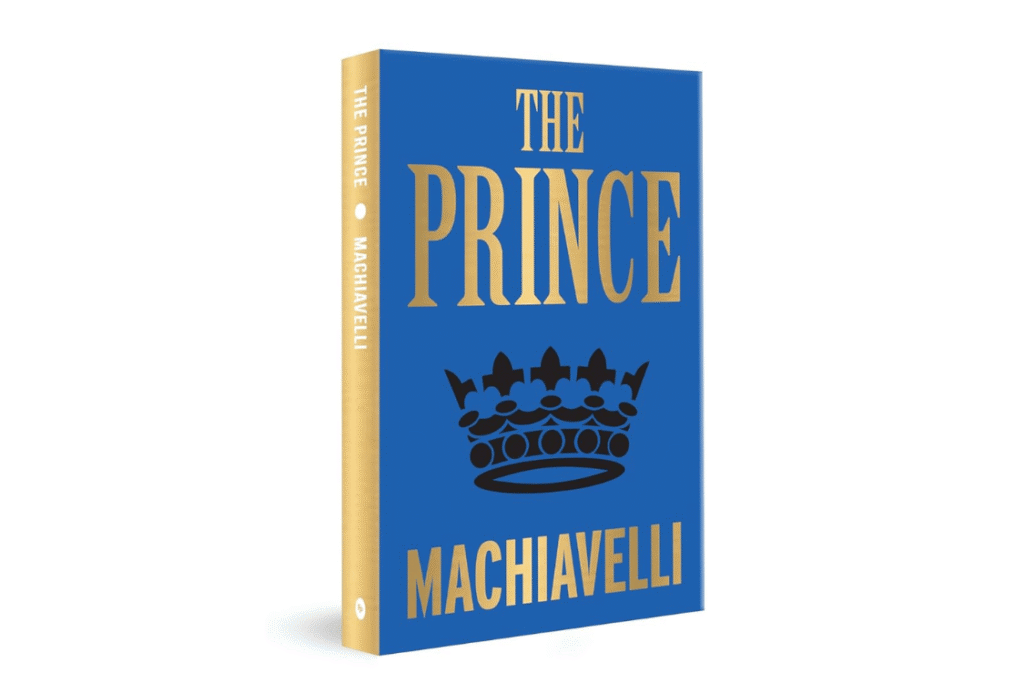
No single motive explains the book. It could be that Machiavelli had a personal need, a professional case to make, and a serious political argument.
To Return to Political Life
Machiavelli wanted useful work. Instead of simply asking Lorenzo for a position, he offered evidence of what he could do. Political knowledge was his most valuable possession.
This makes The Prince partly a bid for employment. Still, that label is too narrow. Machiavelli hoped to recover his place in politics, but he was also explaining what political action demanded.
To Prove His Experience Mattered
Machiavelli had negotiated with kings, popes, generals, and regional powers. He had observed Cesare Borgia at close range and watched Florence struggle to defend itself.
In The Prince, he turned experience and ancient history into lessons. The result was not a formal résumé, but a demonstration that he understood why states rise, endure, and fall.
To Describe Politics as It Worked
Machiavelli wrote against ideal portraits of rulers. He wanted to know what helped a state survive in the real world.
One of the book’s most meaningful lines states that method:
He who neglects what is done for what ought to be done, sooner effects his ruin than his preservation.
Niccolò Machiavelli, The Prince, Chapter 15
This is not a command to abandon morality. It warns against ignoring human behavior. A ruler who expects everyone to act well may become easy to deceive.
For Machiavelli, political wisdom begins with clear sight. Leaders must judge actual risks, imperfect choices, and likely results.
To Answer Italy’s Political Crisis
Machiavelli’s concern reached beyond Florence and his own career. Italy was divided among rival states and exposed to foreign armies. French, Spanish, papal, and imperial forces competed across the peninsula.
The final chapter urges a Medici leader to act:
This opportunity, therefore, ought not to be allowed to pass for letting Italy at last see her liberator appear.
Niccolò Machiavelli, The Prince, Chapter 26
The appeal flattered the Medici, but it also expressed a larger hope. Machiavelli wanted a leader who could end Italy’s weakness. A return to government would let him take part in that work.
Was The Prince Really a Job Application?
In part, yes. Machiavelli dedicated the book to a powerful man who might employ him. He stressed his experience and offered practical knowledge. The timing supports that reading.
But the book makes unsettling claims about violence, deception, and conventional virtue. Machiavelli was asking Lorenzo to face hard truths about ruling.
Its first audience was narrow, but its aim was broad. Machiavelli wanted to show what makes political power last, and what causes it to fail.
Was It Sincere Advice, Satire, or a Warning?
Most readers treat The Prince as serious political advice. Machiavelli wrote directly, drew on real events, and hoped to prove that his knowledge was useful.
Others see satire or a hidden warning about tyrants. Machiavelli had served a republic, while The Prince advises a single ruler. That tension keeps the debate alive.
There is no final proof that turns the whole book into a joke or secret trap. The stronger reading is that Machiavelli seriously examined princely rule, even when his conclusions disturbed conventional morality.
His republican ideas appear more fully in the Discourses on Livy. Together, the works reveal a thinker interested in several forms of government.
What Did Machiavelli Want Lorenzo to Learn?
Machiavelli wanted Lorenzo to understand that ruling required more than good intentions. A prince needed reliable arms, public support, a strong reputation, and the ability to adapt.
His most famous comparison concerns love and fear:
It is much safer to be feared than loved, when, of the two, either must be dispensed with.
Niccolò Machiavelli, The Prince, Chapter 17
The sentence is often treated as praise for cruelty. Machiavelli’s full argument is more controlled. A prince should be feared if he cannot be both loved and feared, but he must avoid becoming hated. Fear can support order, while hatred can inspire rebellion.
That distinction is central to the meaning of “better to be feared than loved”. Machiavelli weighs political risks; he does not tell rulers to cause needless suffering.
He makes a related point through two animals:
It is necessary to be a fox to discover the snares and a lion to terrify the wolves.
Niccolò Machiavelli, The Prince, Chapter 18
The lion represents force, while the fox represents cunning. A ruler who relies on force alone may miss traps. One who relies only on cleverness may not resist open threats. Lorenzo, in Machiavelli’s view, needed both abilities.
These lessons served the book’s purpose. Machiavelli was teaching Lorenzo to see power as unstable, human behavior as imperfect, and circumstances as subject to sudden change.
Did Lorenzo Ever Read or Reward Machiavelli?
There is no firm evidence that Lorenzo read The Prince because the dedication did not produce the result Machiavelli most wanted. He never returned to a government role equal to the one he had held under the republic.
Instead, he later received smaller Medici assignments, including a commission to write a history of Florence. In the end, The Prince did not restore his old career. Lorenzo died in 1519, and Machiavelli died in 1527.
The book appeared in print in 1532. Its intended recipient may have ignored it, but later readers did not. It remains one of the most debated works in political thought to this day.
Final Thoughts
Machiavelli wrote the final version of The Prince for Lorenzo di Piero de’ Medici. He hoped Lorenzo would recognize his political skill and perhaps bring him back into public service.
But the book had several purposes. It defended the value of Machiavelli’s experience, described politics without comforting illusions, and asked whether firm leadership could rescue a divided Italy.
That mix of personal need and public ambition helps explain the book’s power. Machiavelli wrote for one prince, but he left every reader with a lasting question: What must a leader understand when good intentions are not enough?
Leave a Reply