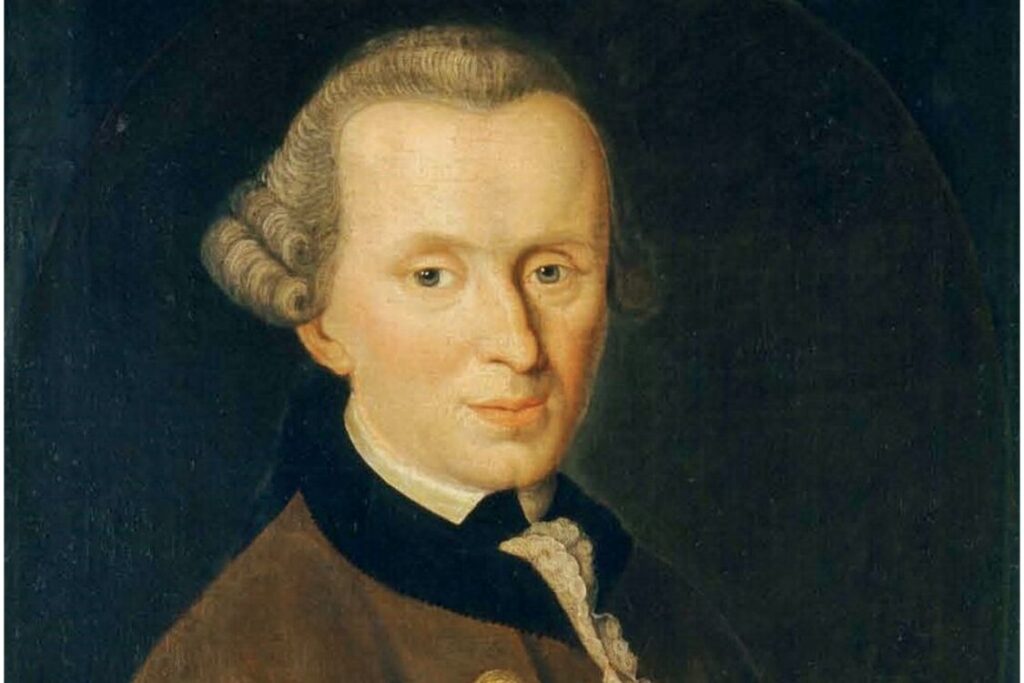
Immanuel Kant’s famous quotes explore some of life’s most difficult questions. What makes an action right? How much of what we know comes from experience? And why should we do the right thing when dishonesty or selfishness might benefit us?
The eighteenth-century German philosopher believed that reason allows us to think independently and recognize our moral responsibilities. His writings can be demanding, but many of his observations remain relevant today.
These 14 quotations from Kant’s major works explore his ideas about knowledge, duty, freedom, happiness, and human dignity, with explanations that make his philosophy easier to understand.
JUMP TO:
Kant’s Most Famous Quote About the Stars and Moral Law
1. The Stars and Conscience
“Two things fill the mind with ever new and increasing admiration and awe … the starry heavens above and the moral law within.”Immanuel Kant, Critique of Practical Reason, Conclusion (T. K. Abbott translation)
Kant places two extraordinary things side by side: the vast universe surrounding us and our ability to recognize moral obligations within ourselves.
The night sky reminds him of humanity’s small place in an immense world. Yet our capacity to reason about right and wrong gives human life a different kind of significance.
His admiration goes beyond the beauty of nature or the feeling of having a conscience. He is struck by the moral law that reason reveals, even when following it requires personal sacrifice.
Immanuel Kant Quotes on Reason, Education, and Freedom
For Kant, intellectual freedom involves more than having opinions. It requires the courage to question what we have been taught and the discipline to examine our own conclusions.
2. Think for Yourself
“Have courage to use your own understanding!”Immanuel Kant, An Answer to the Question: What Is Enlightenment? (1784), H. B. Nisbet translation
Kant believed many people surrender their judgment because allowing someone else to think for them feels easier. Independent thought takes effort, particularly when questioning an accepted belief carries social consequences.
Consider someone who shares a sensational news story because everyone in their circle believes it. Kant would encourage that person to examine the evidence rather than mistake popular agreement for proof.
His words reflect the Enlightenment ideal of intellectual independence, which we also explore in our article on the greatest philosophers of all time.
3. Beyond Personal Experience
“But, though all our knowledge begins with experience, it by no means follows that all arises out of experience.”Immanuel Kant, Critique of Pure Reason, Introduction (J. M. D. Meiklejohn translation)
Experience provides the material for knowledge, but Kant argues that the mind contributes something essential to how we understand it.
When we observe two events happening one after another, we do more than register separate impressions. Our understanding helps us organize those experiences and consider relationships such as cause and effect.
Knowing the world, then, involves both what we encounter and the ways our minds make sense of it.
4. Thought Needs Experience
“Thoughts without content are void; intuitions without conceptions, blind.”Immanuel Kant, Critique of Pure Reason, Transcendental Logic, Introduction (J. M. D. Meiklejohn translation)
Kant challenges the idea that reason and experience can produce complete knowledge independently.
Concepts without anything to apply them to cannot tell us about actual objects. Likewise, sensory experiences must be organized through concepts before they become meaningful knowledge.
His argument recognizes the limits of abstract reasoning and observation, showing why neither is sufficient on its own.
5. The Importance of Education
“Man can only become man by education.”Immanuel Kant, Kant on Education, Introduction (Annette Churton translation)
Kant regarded education as essential to developing human abilities. Children need more than information to become responsible adults; they must also learn discipline, judgment, and how to exercise their freedom.
A student who memorizes every answer but never learns to question an argument may perform well in examinations without developing independent thought.
For Kant, education should prepare people to use their abilities responsibly rather than simply repeat what others have taught them.
Kant Quotes About Ethics, Duty, and Human Dignity
Kant’s moral philosophy asks us to examine the principles behind our choices. An action may bring rewards or produce a favorable result, but those outcomes alone cannot determine whether it is morally right.
6. The Value of Good Will
“Nothing can possibly be conceived … which can be called good, without qualification, except a good will.”Immanuel Kant, Groundwork of the Metaphysics of Morals, Section I (T. K. Abbott translation)
Intelligence, determination, and courage are admirable qualities, but they can also serve harmful purposes. A clever person might use those abilities to deceive or manipulate others.
For Kant, a good will means acting according to moral principles because they are right, rather than merely useful.
This goes beyond claiming to have good intentions. Genuine moral worth requires a commitment to duty, even when doing what is right brings no personal advantage.
7. A Universal Moral Rule
“Act only on that maxim whereby thou canst at the same time will that it should become a universal law.”Immanuel Kant, Groundwork of the Metaphysics of Morals, Section II (T. K. Abbott translation)
This is Kant’s famous categorical imperative, which asks whether the principle guiding our behavior could consistently apply to everyone.
Imagine promising to repay borrowed money while secretly intending to keep it. If making false promises became an accepted rule, people would no longer trust such promises, undermining the very practice the dishonest borrower depends upon.
Kant’s concern goes beyond the unpleasant consequences of lying. He questions whether we can reasonably justify making an exception for ourselves.
8. Respecting Human Dignity
“So act as to treat humanity … in every case as an end withal, never as means only.”Immanuel Kant, Groundwork of the Metaphysics of Morals, Section II (T. K. Abbott translation)
Kant argues that people possess a worth that cannot be reduced to their usefulness. We may depend on others for work, services, and cooperation, but we must also respect them as individuals with their own purposes.
A manager who pressures an employee to conceal a serious mistake treats that employee’s honesty as a tool for protecting the company’s reputation.
The principle asks us to consider whether our decisions respect another person’s freedom to make informed choices rather than merely advance our interests. The Stanford Encyclopedia of Philosophy’s discussion of Kant’s ethics examines this idea in greater depth.
9. Acting From Duty
“Duty is the necessity of acting from respect for the law.”Immanuel Kant, Groundwork of the Metaphysics of Morals, Section I (T. K. Abbott translation)
By law, Kant means the moral law recognized through reason, not simply rules established by a government.
Suppose someone returns a lost wallet. They might do so because they expect a reward, fear being caught, or believe keeping another person’s property would be wrong.
Kant distinguishes these motives because acting from moral duty differs from doing the same thing solely for personal benefit.
10. The Worth of a Person
“In the kingdom of ends everything has either value or dignity.”Immanuel Kant, Groundwork of the Metaphysics of Morals, Section II (T. K. Abbott translation)
Kant distinguishes things that can be exchanged for something of equal value from those that possess dignity and cannot be assigned a price.
Within his moral philosophy, rational beings deserve respect because they can recognize moral principles and choose to act according to them.
This distinction challenges the habit of judging people entirely by their wealth, status, or usefulness. A person’s dignity cannot be measured like the price of an object.
Immanuel Kant Quotes on Happiness, Love, and Human Nature
Kant did not dismiss happiness or affection, although he resisted making either the final measure of morality. His observations explore the difference between what we desire and what we owe to others.
11. The Meaning of Happiness
“Happiness is not an ideal of reason but of imagination.”Immanuel Kant, Groundwork of the Metaphysics of Morals, Section II (T. K. Abbott translation)
Kant recognizes how difficult it is to define happiness in a way that applies equally to everyone. Our desires differ, and even our own expectations can change over time.
One person may imagine happiness as professional success, while another prefers a quiet life with family. Neither can know for certain how every choice will affect their future contentment.
This uncertainty leads Kant to question whether happiness can provide a universal rule for deciding what is right.
12. Being Worthy of Happiness
“Morality is not properly the doctrine how we should make ourselves happy, but how we should become worthy of happiness.”Immanuel Kant, Critique of Practical Reason, Part I, Book II (T. K. Abbott translation)
For Kant, happiness and moral goodness are not the same achievement. Someone can prosper through dishonesty, while another person may suffer despite acting with integrity.
He argues that we should not choose what is right simply because we expect it to make us happy.
Happiness still matters, but moral principles must retain their importance even when following them makes life less comfortable.
13. Kindness Without Affection
“It is a duty to do good to other men according to our power, whether we love them or not.”Immanuel Kant, The Metaphysical Elements of Ethics, Introduction (T. K. Abbott translation)
Kant distinguishes the affection we feel from the kindness we choose to practice. We cannot force ourselves to love another person, but we can still recognize a responsibility to treat them well.
You might help a difficult coworker understand an important task even though you have little affection for them. Their need for fair treatment remains, regardless of how you feel about them.
For Kant, benevolence has moral significance because it need not depend on personal fondness.
14. The Crooked Timber of Humanity
“From such crooked timber as humankind is made of nothing entirely straight can be made.”Immanuel Kant, Idea for a Universal History with a Cosmopolitan Aim (1784), Proposition VI
Kant uses crooked timber as an image of humanity’s imperfections. People must establish fair laws and institutions, yet those entrusted with authority have weaknesses and competing interests of their own.
His observation goes beyond the familiar idea that nobody is perfect. It addresses the difficulty of building a just society when both its citizens and leaders are fallible.
Rather than dismissing the possibility of improvement, Kant recognizes why achieving justice requires continued effort instead of faith in a flawless system.
Quotes Often Misattributed to Immanuel Kant
Not every popular quotation credited to Kant can be traced to his writings.
The saying “Science is organized knowledge. Wisdom is organized life” is frequently attributed to him, although quotation research connects its wording to Herbert Spencer and Will Durant.
Another familiar saying offers three rules for happiness: something to do, someone to love, and something to hope for. Its attribution to Kant also lacks a reliable original source.
These sayings may be appealing, but popularity is no substitute for evidence. The quotations above come from identifiable works, with their English translations noted where available.
The Challenge in Kant’s Words
The enduring value of Immanuel Kant’s famous quotes lies in the questions they raise. Are we thinking independently, acting from principle, and respecting people whose interests differ from our own?
His philosophy challenges us to examine not only the choices we make, but also the reasons behind them. Doing what is right begins with taking those reasons seriously.
Leave a Reply