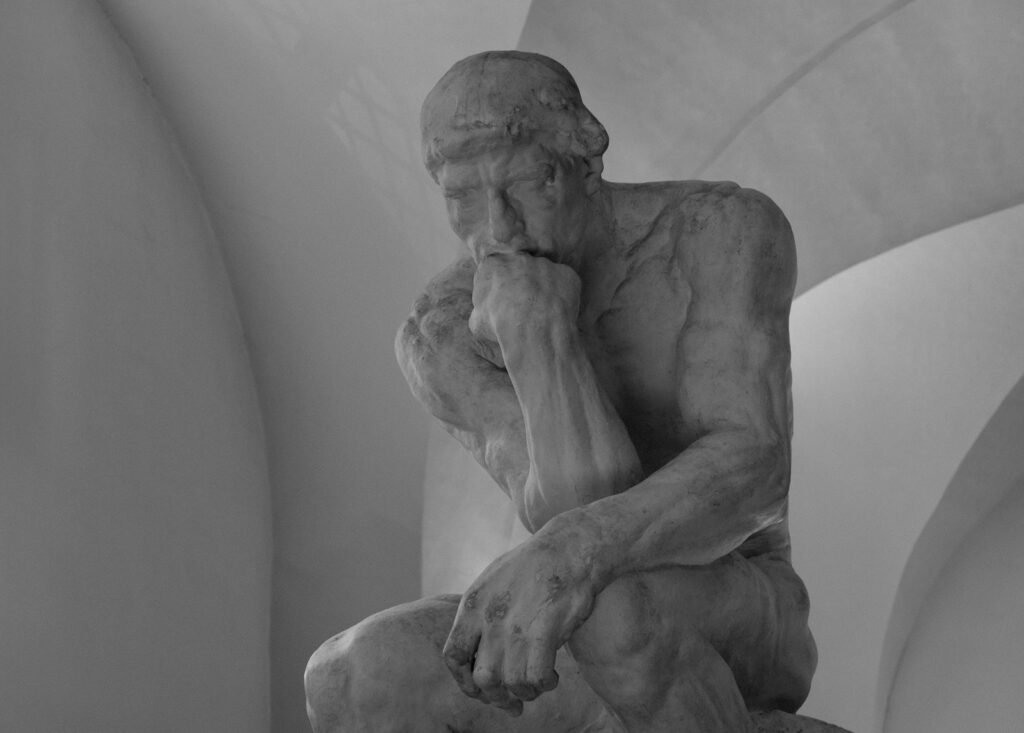
A good philosopher can make an ordinary question difficult to ignore. How should we live? What can we know? Who deserves power? Among the greatest philosophers of all time, Confucius, Socrates, Aristotle, Kant, and others offered answers that shaped whole traditions of thought. Their disagreements can be just as revealing as their conclusions.
This selection introduces 15 influential thinkers through their ideas and one meaningful quotation each. It spans several traditions, without claiming to cover them all or rank one mind above another.
Each quotation includes its source, with context to help you understand what the thinker was arguing.
JUMP TO:
How these philosophers were chosen
The selection considers lasting influence, distinctive contributions, and the questions each thinker helps us explore. It includes religious teachers and political theorists whose work crosses the boundaries of philosophy.
Influence does not mean every claim deserves agreement, and a short list inevitably leaves important voices out.
For more passages to explore, browse our philosophy quotes. Here, the focus is on understanding the person and the argument behind each line.
| Philosopher | An important contribution |
|---|---|
| Confucius | Moral character, education, and responsibility in relationships |
| The Buddha | An account of suffering and a path toward its release |
| Socrates | Testing beliefs through sustained questioning |
| Plato | Dialogues about knowledge, justice, and reality |
| Aristotle | Systematic inquiry into reasoning, nature, and human flourishing |
| Ibn Rushd, or Averroes | Defending philosophical inquiry within an Islamic framework |
| Thomas Aquinas | Bringing Aristotelian reasoning into Christian theology |
| Niccolò Machiavelli | Examining how political power operates |
| René Descartes | Using doubt to search for certain knowledge |
| David Hume | Examining experience, belief, and human motivation |
| Immanuel Kant | Exploring reason, moral duty, and intellectual independence |
| Mary Wollstonecraft | Arguing for women’s education and rational independence |
| Friedrich Nietzsche | Challenging inherited values and their origins |
| Simone de Beauvoir | Connecting freedom with responsibility toward others |
| Hannah Arendt | Distinguishing collective political power from violence |
Ancient philosophers on learning and living
1. Confucius on Thoughtful Learning
“Learning without thought is labour lost; thought without learning is perilous.”Confucius, Analects, Book II, chapter 15; translated by James Legge.
Confucius placed moral growth within daily relationships. A good society depended on people learning how to act with care and judgment, whether they governed a state or cared for their families. Education helped shape that character.
In this saying, study and reflection need each other. Memorizing a teaching achieves little if you never consider what it means. Confucius asks students to absorb what others have discovered, then do the harder work of thinking it through.
2. Buddha on Ending Hatred
“Hatred is never appeased by hatred in this world. By non-hatred alone is hatred appeased. This is a law eternal.”Dhammapada, chapter 1, verse 5; teachings attributed to the Buddha, translated by Acharya Buddharakkhita.
The Buddha’s teachings examine suffering, its causes, and the possibility of release. Although Buddhism is a religious tradition, its accounts of desire, conduct, and the mind also make it central to the history of philosophy.
The verses before this one describe people dwelling on injuries they have suffered. An old wrong keeps feeding a present hatred. Responding with more hatred continues the process, even when the anger feels justified. The teaching concerns freedom from that cycle; it does not require pretending that the original injury never happened.
3. Socrates on Examining Life
“the life which is unexamined is not worth living”Socrates speaking in Plato’s Apology, 38a; translated by Benjamin Jowett. Excerpt.
Socrates left no writings of his own. We meet him through other authors, especially Plato, whose dialogues show him questioning people about courage, justice, and virtue. A confident answer often leads to an awkward discovery: the speaker cannot quite explain what they thought they knew.
In the Apology, Socrates speaks after his conviction, while discussing his penalty. He considers the suggestion that he might live quietly and stop questioning people. For him, that would mean abandoning the activity that gives life its value.
The quotation therefore carries more weight than advice to reflect occasionally. Socrates is defending an examined life when that commitment may cost him his own. His example also sets a demanding standard for debate. Finding holes in someone else’s beliefs is easy to enjoy; submitting your own beliefs to the same test takes considerably more honesty.
4. Plato on Philosophical Wonder
“wonder is the feeling of a philosopher, and philosophy begins in wonder.”Socrates speaking in Plato’s Theaetetus, 155d; translated by Benjamin Jowett. Excerpt.
Plato explored knowledge and justice through conversations in which an answer rarely escapes further questioning. His dialogues helped establish philosophy as a sustained search for reasons, rather than a collection of statements to accept.
Here, the young Theaetetus admits that difficult questions make his head swim. Socrates treats his confusion as a promising beginning. Wonder opens a gap between what seems obvious and what we can explain. Plato gives that uneasy moment a purpose: it is an invitation to investigate.
5. Aristotle on Human Curiosity
“All men by nature desire to know.”Aristotle, Metaphysics, Book I, chapter 1; translated by W. D. Ross.
Aristotle investigated an extraordinary range of subjects, from animals and logic to ethics and politics. His work helped give later thinkers organized ways to ask questions and assess explanations.
This sentence opens the first book of Aristotle’s Metaphysics. He begins with our pleasure in the senses, especially sight, before moving toward experience and the search for causes. Knowing that something happens is useful. Understanding why it happens takes inquiry further.
Philosophers on faith, power, and certainty
6. Averroes on Seeking Truth
“For truth does not oppose truth; rather, it agrees with and bears witness to it.”Ibn Rushd, known as Averroes, The Decisive Treatise, Section 12; translated by Charles E. Butterworth.
Ibn Rushd was an Andalusian philosopher whose commentaries on Aristotle became influential beyond the Islamic world. In The Decisive Treatise, he considers whether religious law permits or requires philosophical study.
His answer gives careful reasoning a place within religious life. If sound demonstration and revelation appear to conflict, the problem calls for attention to interpretation. An apparent contradiction need not force the rejection of inquiry.
The sentence does not claim that all opinions are equally true. Ibn Rushd expects arguments to meet demanding standards, and he distinguishes different ways of understanding a text. His confidence rests on the belief that truth cannot genuinely contradict itself, however difficult human interpretation may be.
7. Aquinas on Curious Minds
“Now wonder is a kind of desire for knowledge”Thomas Aquinas, Summa Theologiae, I–II, question 32, article 8; translated by the Fathers of the English Dominican Province, second revised edition, 1920. Excerpt.
Thomas Aquinas brought philosophical reasoning into a vast examination of Christian belief. His method gives objections room to speak before he offers an answer, making disagreement part of the work of understanding.
In this passage, he asks why wonder can be pleasurable. Something happens, and we do not understand its cause. Curiosity then carries the hope of finding out. The pleasure comes from that movement toward knowledge, rather than from ignorance itself. Anyone who has stayed up too late trying to solve a puzzle has experienced the attraction he describes.
8. Machiavelli on Public Appearances
“Every one sees what you appear to be, few really know what you are”Niccolò Machiavelli, The Prince, Chapter XVIII; translated by W. K. Marriott. Excerpt.
Machiavelli examines political leadership with close attention to how rulers gain and keep control. In The Prince, the gap between admirable conduct and effective rule can be deeply uncomfortable.
This passage concerns a ruler’s public image. Most people cannot inspect a prince’s motives or private actions, so they judge the qualities he seems to possess and the results he achieves. A reputation for virtue may therefore protect someone who does not consistently practice it.
Read alone, the line can sound like a complaint about being misunderstood. Its political setting makes it sharper. Machiavelli is explaining how appearances influence judgment, and why a ruler might exploit that weakness. The reader must then ask how much confidence public reputation deserves.
9. Descartes on Finding Certainty
“I think, therefore I am”René Descartes, Discourse on the Method, Part IV; translated by John Veitch. Excerpt.
Descartes made doubt a method of inquiry. If the senses sometimes deceive us, and dreams can feel real, what belief can survive the strongest possible challenge?
His answer begins with the act of thinking itself. Even if he is mistaken about everything else, there must be a thinker undergoing that mistake. Doubt cannot remove the existence of the person doubting.
The claim establishes a starting point for his search for knowledge. It does not suggest that thinking makes wishes real, or that people must constantly think to deserve existence. Its force comes from a precise problem: how to find something certain while questioning almost everything.
Modern philosophers on reason and freedom
10. Hume on Human Motivation
“Reason is, and ought only to be, the slave of the passions”David Hume, A Treatise of Human Nature, Book II, Part III, section III. Excerpt.
Hume examined how experience shapes belief and how feelings move people to act. His account challenges the familiar picture of a rational mind struggling to keep unruly emotions under control.
By “passions,” he means more than anger or intense excitement. Desires and concerns supply our reasons for pursuing a goal. Reason can help us find effective means, or expose a mistaken belief, but bare reasoning does not give us something to care about.
Imagine planning a visit to a sick friend. Reason helps you choose a route and a useful time to arrive; concern for the friend makes the journey worth taking. Hume’s claim is controversial, but it identifies a real question beneath everyday decisions. Where does the impulse to act come from?
11. Kant on Independent Thought
“Have courage to use your own understanding!”Immanuel Kant, “An Answer to the Question: What Is Enlightenment?”, opening paragraph; translated by H. B. Nisbet.
Kant reshaped debates about knowledge and moral duty. In this shorter essay, he asks why people so often let others think on their behalf, even when they possess the ability to judge for themselves.
His answer includes comfort and fear. Someone else can supply our opinions, spare us effort, and warn us against the dangers of independent judgment. Over time, dependence can feel natural.
Courage allows the process of learning to begin, including the risk of getting things wrong. The demand is to exercise understanding, which involves examining reasons and evidence. Simply rejecting advice would be another way to avoid that work.
12. Wollstonecraft on Women’s Independence
“I do not wish them to have power over men; but over themselves.”Mary Wollstonecraft, A Vindication of the Rights of Woman, chapter IV.
Wollstonecraft challenged an education that trained women to please men while denying them the means to develop sound judgment. Her argument connects equal moral standing with the opportunity to exercise reason.
This sentence answers Rousseau’s claim that educating women like men would reduce their power over men. She accepts the loss of that kind of influence. The ability to charm or manipulate someone is a poor substitute for directing your own life.
Her response also exposes the weakness of praise that keeps people dependent. Calling women delicate, charming, or naturally selfless can sound generous while limiting what they are allowed to learn and do. Wollstonecraft asks for a more substantial form of respect, grounded in women’s capacity to think and act responsibly.
13. Nietzsche on Fighting Monsters
“He who fights with monsters should be careful lest he thereby become a monster.”Friedrich Nietzsche, Beyond Good and Evil, section 146; translated by Helen Zimmern.
Friedrich Nietzsche questioned the origins of moral values and the motives concealed within judgments of good and evil. He often wrote in brief, challenging passages that leave readers with work to do.
One natural reading of this warning concerns what conflict does to the person engaged in it. An opponent’s cruelty can seem to excuse cruelty in return, until the methods of resistance begin to resemble what they oppose. A worthy cause does not automatically protect its supporters from that change. Nietzsche leaves the reader to examine the person taking shape through the struggle.
Philosophers on freedom and public life
14. Beauvoir on Shared Freedom
“To will oneself free is also to will others free.”Simone de Beauvoir, The Ethics of Ambiguity, Part II, “Personal Freedom and Others”; translated by Bernard Frechtman.
Simone de Beauvoir explored freedom as something people exercise within real conditions. Our choices take place among other people, whose opportunities and restrictions shape what any of us can do.
In this passage, she argues that a serious commitment to freedom reaches beyond personal independence. We pursue projects in a shared world, and other people can extend their meaning beyond our own lives. Treating those people merely as obstacles or tools undermines the freedom we claim to value.
The principle does not make every choice easy. Beauvoir immediately acknowledges the conflicts that arise between separate people with different aims. Freedom brings responsibility precisely because we must act without a simple rule that settles every difficult case.
15. Arendt on Political Power
“Power and violence are opposites; where the one rules absolutely, the other is absent.”Hannah Arendt, “Reflections on Violence,” section IV, The New York Review of Books, February 27, 1969.
Hannah Arendt studied political action, freedom, and totalitarian rule. Her work asks how people create a public world together, and what happens when that shared capacity breaks down.
In her essay on power and violence, power depends on people acting together. Violence can force obedience, but obedience under threat differs from the support that sustains a political community.
The distinction is easy to miss because governments often possess both public support and weapons. Arendt does not deny that they can coexist. She separates their sources and effects: force can destroy an organized group without creating the shared commitment that held it together. A government with the means to threaten everyone may have less secure power than its displays of force suggest.
Which philosopher should you read first?
Choose a question that already interests you. Plato’s Apology gives you a vivid encounter with a person defending his way of life, while selected passages from the Analects offer a different approach to learning and character. Read a few sayings slowly rather than treating the book as a page of slogans.
For political questions, compare The Prince with Arendt’s “Reflections on Violence.” Their different accounts of rule and power make the contrast productive. If education and independence draw your attention, begin with chapter IV of Wollstonecraft’s A Vindication of the Rights of Woman.
The greatest philosophers of all time do not supply one agreed set of answers. Reading them closely can change the questions you ask, the reasons you accept, and the ease with which you trust your first conclusion. A quotation offers a beginning; the surrounding argument gives you something to think with.
Leave a Reply